NASA is preparing to launch Artemis II with four astronauts on a roughly 10-day mission around the Moon, marking its most ambitious human spaceflight in decades and a key step towards returning astronauts to the lunar surface ahead of China.
Mission managers have given the go-ahead for the Artemis II launch, which could take place as early as Wednesday at 6:24 p.m. EDT (22:24 GMT). The flight will use the 322-foot Space Launch System rocket, carrying the Orion crew capsule.
The launch is set to take place from the Kennedy Space Center, close to the historic site used by Apollo-era astronauts more than 50 years ago.
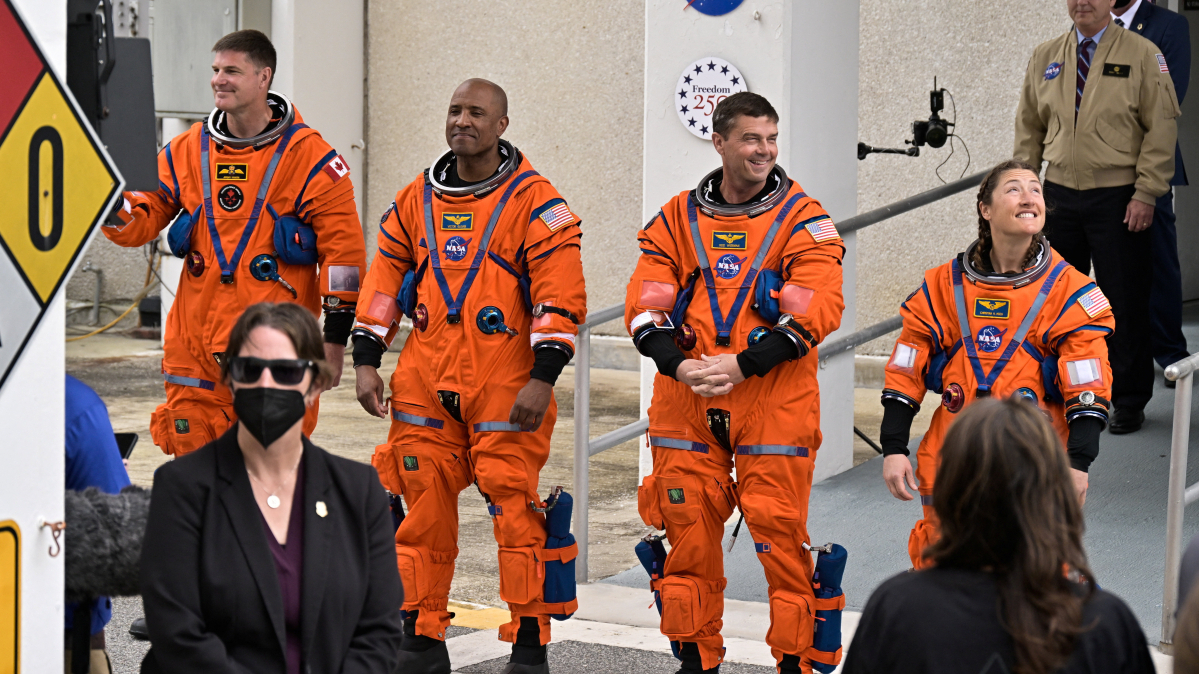
The crew includes NASA astronauts Christina Koch, Victor Glover and Reid Wiseman, alongside Canadian astronaut Jeremy Hansen. They arrived in Florida days earlier and have been in quarantine ahead of liftoff, following standard pre-mission health protocols.
On launch day, the astronauts began preparations hours in advance, including final briefings and checks before travelling to the launch pad.
NASA engineers began fuelling the rocket early on Wednesday, loading it with more than 700,000 gallons of super-cooled propellant to power its four RS-25 engines - hardware previously used on the Space Shuttle.
“Everything is going very well right now,” assistant launch director Jeremy Graeber said during the fuelling process.
Weather conditions were largely favourable, with only a small chance of disruption during the two-hour launch window. If delayed, backup opportunities are available later in the week and into early April.
“Certainly all indications are right now, we are in excellent, excellent shape as we get into count,” launch director Charlie Blackwell-Thompson said.
The mission had previously been delayed from February and March due to a hydrogen leak, which required engineers to roll the rocket back for further inspection.
Farthest human journey in decades
Artemis II will take astronauts on a looping path around the Moon, travelling about 252,000 miles (406,000 km) from Earth - farther than any human mission in history.
The current record is held by the crew of Apollo 13, which reached about 248,000 miles in 1970 during an aborted lunar landing.
No humans have travelled beyond Earth’s orbit since the final Apollo mission in 1972.
NASA previously tested the Orion spacecraft during the uncrewed Artemis I mission in 2022. Artemis II will go further by placing astronauts on board to test life-support systems, communications and manual flight controls.
The Orion capsule is built by Lockheed Martin, while the Space Launch System has been developed by Boeing and Northrop Grumman. The programme has faced criticism over its cost, estimated at between $2 billion and $4 billion per launch.
Meanwhile, private firms, including SpaceX and Blue Origin, are developing lunar landers for future missions.
Artemis II is an early step in NASA’s broader Artemis programme, which aims to establish a sustained human presence on the Moon’s south pole. The agency is targeting a crewed landing later this decade, part of a renewed space race with China, which is also planning a human lunar mission around 2030.






















What is your opinion on this topic?
Leave the first comment