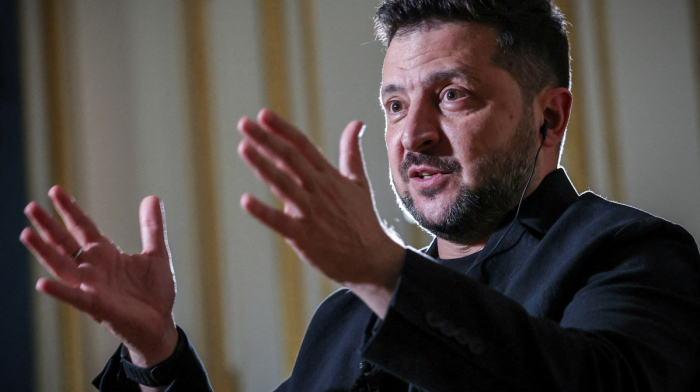
Russia's 2026 parliamentary election: what to watch
Russia will hold parliamentary elections from 18 to 20 September 2026, the country's first State Duma vote since Moscow launched its full-scale...
The European Space Agency (ESA) has outlined an ambitious vision for human settlements in space by 2040, with autonomous “space oases” on the Moon, Mars, and beyond.
A new ESA report envisions that within 15 years, humans could live in independent space habitats in low Earth orbit, on the Moon, on Mars, and even farther into deep space. These “space oases” would be fully self-sufficient, meeting their own energy and food needs - eliminating the need to transport supplies from Earth.
According to ESA experts, the next stage of human space exploration will focus on longer missions and reaching more distant locations. Success will depend on developing infrastructure that is not reliant on Earth.
“This is an exciting vision,” the report states, “but achieving it in just 15 years will require major advancements.”
NASA and SpaceX, for example, have plans to send humans to Mars in the next two decades, but existing spacecraft are not yet capable of such missions.
ESA’s concept emphasizes that building space infrastructure independent of Earth is key to long-term exploration and sustainable living beyond our planet.

U.S. Central Command said 101 commercial vessels have been redirected in the Strait of Hormuz, while oil prices rose more than three per cent amid fresh regional attacks and supply concerns.
U.S. President Donald Trump has again said Iran is keen to reach a deal quickly, but a senior Iranian security official rejected the claim, saying Tehran will not negotiate until its conditions are met.
A Russian strike on a farm warehouse in Pryluky, north-central Ukraine, has killed at least three people, local police said. Meanwhile, EU foreign policy chief Kaja Kallas said an attack on a train near the Polish border was an attempt to intimidate Ukraine's allies.
A Danish military helicopter came within “metres” of being struck by flares fired by a Russian warship, Denmark's Defence Minister Jeppe Bruus said on Tuesday. Russia accused Denmark of carrying out “dangerous manoeuvres” near its ship, and said it was investigating the incident.
European Commission President Ursula von der Leyen is outlining the EU's priorities in her annual State of the Union address, covering security, support for Ukraine, trade with China, migration, climate and artificial intelligence.
Warnings from researchers at leading U.S. artificial intelligence (AI) developer Anthropic, that increasingly powerful AI models could escape human control have drawn attention in China, where policymakers have already been preparing for some of the same risks.
The U.S. has deployed weapons in Earth’s orbit capable of defending its forces against hostile action, Air Force Secretary Troy Meink said, marking the first public acknowledgement of such capabilities.
Shares in artificial intelligence-related companies fell sharply across Asian markets on Monday, after some of the industry's most prominent chief executives warned that the breakneck pace of AI development needs to slow down.
The head of artificial intelligence company Anthropic has called for the industry to slow the pace at which it develops increasingly capable artificial intelligence (AI) systems, arguing that more time is needed to address the risks they may create.
GITEX AI Türkiye opened in Istanbul on Wednesday, bringing the international technology exhibition network to the country for the first time.
You can download the AnewZ application from Play Store and the App Store.
What is your opinion on this topic?
Leave the first comment