Pakistan seeks Turkish investment as Shehbaz Sharif and Erdoğan deepen strategic partnership
Pakistan is seeking fresh Turkish investment after Prime Minister Shehbaz Sharif and President Recep Tayyip Erdoğan agreed to deepen economic coopera...
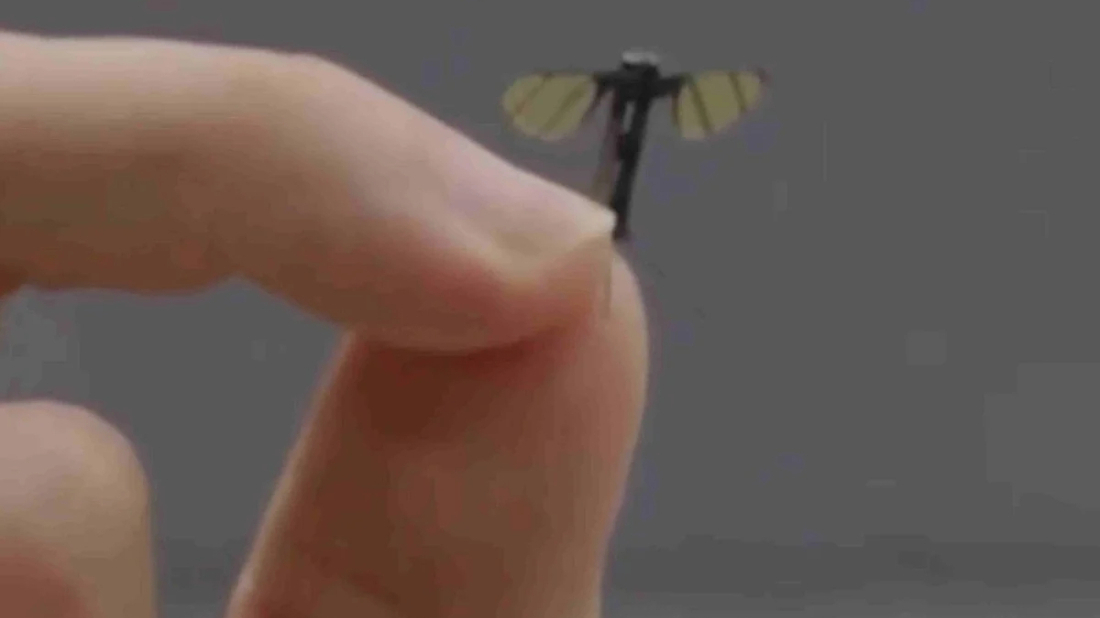
China has unveiled a mosquito-sized bionic drone designed for covert military operations and battlefield reconnaissance, marking a major advance in micro-robotics and stealth technology as part of the country’s growing focus on next-generation warfare capabilities.
The micro aerial vehicle, developed by the National University of Defense Technology (NUDT) in central China’s Hunan province, was showcased in a recent broadcast by China Central Television’s military channel, CCTV-7.
The miniature drone was introduced by Liang Hexiang, a student at the Central Military Commission-affiliated university. Holding the device during the broadcast, Liang described the drone as a mosquito-like bionic robot especially suited to information reconnaissance and special missions. He noted that its small scale and biomimetic design allow it to operate discreetly in battlefield environments, offering unique advantages in intelligence gathering and stealth navigation.
Shaped like a stick with tiny wing structures on either side, the device resembles an insect in both appearance and scale. Its slender frame and three ultra-fine legs enhance its manoeuvrability in tight or densely built spaces, enabling it to conduct surveillance in urban or fortified locations with minimal detection. The integration of biological inspiration with micro-electromechanical systems positions this drone at the cutting edge of China's military innovation.
The development does not stand alone. In a separate breakthrough, Chinese engineers have reportedly tested artillery-launched drones capable of withstanding forces over 3,000 times their own weight. These drones, built to survive the intense stress of being launched from a 155mm cannon shell, could dramatically expand tactical drone deployment by allowing rapid insertion of reconnaissance units directly onto the battlefield from long range.
Together, these advancements reflect China’s accelerating pursuit of next-generation warfare technologies. From bionic micro-drones to artillery-deployed UAVs, the integration of robotics and military strategy signals a shift in how modern armies may conduct reconnaissance, electronic warfare, and precision operations in the coming years.

The death toll from Venezuela's devastating twin earthquakes has risen to 3,342, according to the country's information ministry, as rescue teams continue searching affected areas and survivors face an uncertain recovery.
Mexico's national football team has returned luxury Rolex watches gifted by American content creator Stevewilldoit after concerns that they could conflict with FIFA's ethics rules.
Governments are tightening restrictions on teenagers’ use of social media amid growing concerns over mental health, online safety and platform design, but questions remain over enforcement and whether bans can meaningfully change behaviour.
President Donald Trump said Iran is keen to reach a deal with the United States, claiming Washington had paused engagement to allow funeral ceremonies for late Iranian Supreme Leader Ali Khamenei.
Thousands of mourners gathered in Tehran on Sunday as Iran held funeral prayers for Ayatollah Ali Khamenei and four members of his family on the second day of mass processions. Three of Khamenei's sons attended the ceremony, while his successor, Mojtaba Khamenei, made no public appearance.
Humanoid robots stumbled, collided and recovered as they battled for the RoboCup 2026 football title on Sunday (5 July), showcasing the latest advances in robotics and artificial intelligence at the world's largest competition of its kind.
India is investigating a data breach at Tata Electronics that exposed sensitive documents linked to Apple's unreleased iPhone 18 Pro, marking the government's first public comments on the incident.
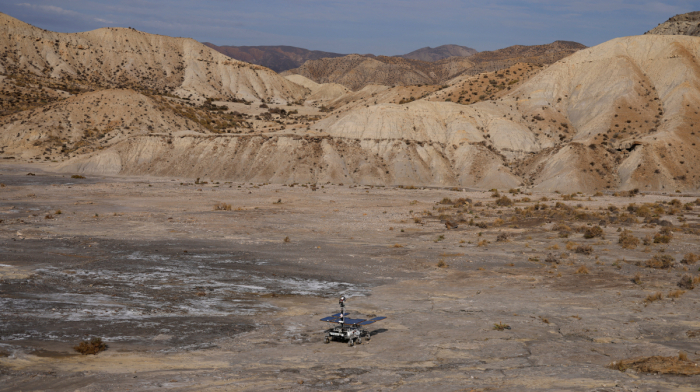
Humanity’s return to the Moon is about far more than planting flags and collecting samples. Under NASA’s Artemis programme, the goal is to establish a lasting human presence, with lunar rovers set to play a vital role in making that vision possible.
American technology company Snap has launched its first augmented-reality (AR) glasses for consumers, marking a major push into wearable computing as tech firms race to redefine personal devices in the AI era.
The Canadian government has introduced a digital safety bill that would ban children under the age of 16 from using social media, unless platforms meet specific safety standards.
You can download the AnewZ application from Play Store and the App Store.
What is your opinion on this topic?
Leave the first comment