England to face Norway after Haaland double knocks Brazil out of World Cup
England will face Norway in the World Cup quarter-finals after Erling Haaland scored twice late on to stun five-time champions Brazil 2-1 and send Nor...
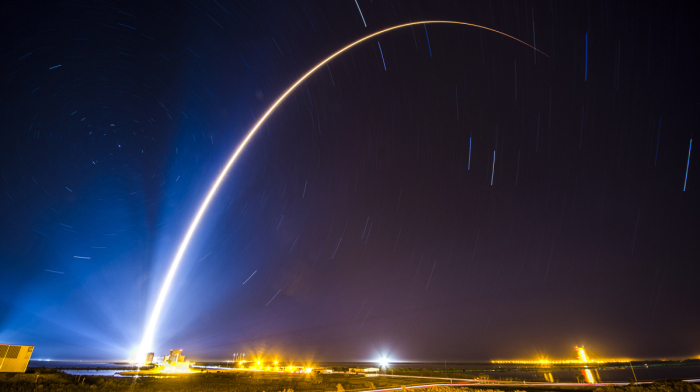
NASA successfully completed a critical fueling rehearsal on Thursday (19 February) for its giant moon rocket, Artemis II, after earlier hydrogen leaks disrupted preparations for the next crewed lunar mission. The launch is scheduled for 6 March, according to the latest information from NASA.
For the second time this month, launch teams loaded more than 700,000 gallons (2.6 million litres) of supercold propellant into the 322-foot (98-metre) Space Launch System rocket at Kennedy Space Center.
Engineers counted down to the final 30 seconds before resetting the clock to repeat the last 10 minutes of the simulation.
The test recorded only minimal hydrogen leakage - well within safety limits - marking a significant improvement from the previous attempt, when dangerous amounts of liquid hydrogen escaped from connections between the launch pad and the rocket.
Engineers had replaced a pair of seals and a clogged filter following the earlier test. NASA said the latest results provided confidence in the upgraded hardware.
The Artemis II mission would send four astronauts on a 10-day journey around the Moon and back. The flight would mark the first crewed lunar mission since Apollo 17 in 1972. The crew will neither land on the lunar surface nor enter lunar orbit.
Hydrogen leaks have long posed challenges for NASA, dating back to the space shuttle era, whose engines were adapted for the Space Launch System. The uncrewed Artemis I mission was delayed for months by similar fuel issues before launching in November 2022.
NASA Administrator Jared Isaacman said the agency will not proceed unless safety standards are fully met. He has pledged to redesign the rocket-to-pad fuel connections ahead of the future Artemis III mission, which aims to land astronauts near the moon’s south pole.
Isaacman also reiterated safety concerns amid scrutiny of Boeing’s Starliner capsule programme, following issues that left two astronauts stranded aboard the International Space Station for months.
“We will not launch unless we are ready,” Isaacman said, stressing that astronaut safety remains the agency’s top priority.

The death toll from Venezuela's devastating twin earthquakes has risen to 3,342, according to the country's information ministry, as rescue teams continue searching affected areas and survivors face an uncertain recovery.
Russia's Defence Ministry has said its forces are clearing the town of Lyman in Donetsk of Ukrainian forces, Moscow's state news agency Tass reported. Meanwhile, Russian attacks killed at least six people across three Ukrainian regions on Friday, regional officials said.
Governments are tightening restrictions on teenagers’ use of social media amid growing concerns over mental health, online safety and platform design, but questions remain over enforcement and whether bans can meaningfully change behaviour.
President Donald Trump said Iran is keen to reach a deal with the United States, claiming Washington had paused engagement to allow funeral ceremonies for late Iranian Supreme Leader Ali Khamenei.
Thousands of mourners gathered in Tehran on Sunday as Iran held funeral prayers for Ayatollah Ali Khamenei and four members of his family on the second day of mass processions. Three of Khamenei's sons attended the ceremony, while his successor, Mojtaba Khamenei, made no public appearance.
Humanoid robots stumbled, collided and recovered as they battled for the RoboCup 2026 football title on Sunday (5 July), showcasing the latest advances in robotics and artificial intelligence at the world's largest competition of its kind.
India is investigating a data breach at Tata Electronics that exposed sensitive documents linked to Apple's unreleased iPhone 18 Pro, marking the government's first public comments on the incident.
Humanity’s return to the Moon is about far more than planting flags and collecting samples. Under NASA’s Artemis programme, the goal is to establish a lasting human presence, with lunar rovers set to play a vital role in making that vision possible.
American technology company Snap has launched its first augmented-reality (AR) glasses for consumers, marking a major push into wearable computing as tech firms race to redefine personal devices in the AI era.
The Canadian government has introduced a digital safety bill that would ban children under the age of 16 from using social media, unless platforms meet specific safety standards.
You can download the AnewZ application from Play Store and the App Store.
What is your opinion on this topic?
Leave the first comment