Why Tashkent's summer storms are becoming more intense
Unusually heavy rain, thunderstorms and hail during Uzbekistan's hottest season have sparked widespread debate over the causes. While some blame clima...
Hangzhou-based AI startup DeepSeek, known for its groundbreaking large language models that have challenged Western systems at a fraction of the cost, is now making its way into the home appliance sector.
Leading Chinese brands, including Haier, Hisense, and TCL Electronics, have announced plans to integrate DeepSeek’s models into their next-generation TVs, refrigerators, and robotic vacuum cleaners.
DeepSeek’s R1 reasoning model, which has already garnered significant attention for its performance, is being hailed as proof that U.S. efforts to contain China’s technological advances are likely to falter. The company’s founder, Liang Wenfeng, has received accolades from Chinese authorities, and insiders reveal that DeepSeek is preparing to launch R2, the successor to R1, in the near future.
In recent weeks, several major home appliance manufacturers have joined the ranks of automakers and tech giants like Huawei and Tencent in adopting DeepSeek’s technology. While many current smart devices are already capable of responding to voice commands, the integration of DeepSeek’s advanced semantic parsing is expected to significantly enhance device functionality.
“For instance, a robotic vacuum cleaner powered by DeepSeek-R1 could more accurately interpret complex instructions like ‘Gently wax the wooden floor in the master bedroom but avoid the Legos,’” said Liu Xingliang, an independent industry analyst based in Beijing. “This level of precision and speed in obstacle avoidance and navigation marks a notable advancement in smart home technology.”
As Chinese consumers increasingly demand smarter, more intuitive home devices, the adoption of DeepSeek’s models is poised to redefine user interactions with everyday technology. With the impending release of R2 and continued partnerships across various sectors, DeepSeek’s influence is set to grow, further establishing China’s prominence in the global AI landscape.

The death toll from Venezuela's devastating twin earthquakes has risen to 3,342, according to the country's information ministry, as rescue teams continue searching affected areas and survivors face an uncertain recovery.
Russia's Defence Ministry has said its forces are clearing the town of Lyman in Donetsk of Ukrainian forces, Moscow's state news agency Tass reported. Meanwhile, Russian attacks killed at least six people across three Ukrainian regions on Friday, regional officials said.
Governments are tightening restrictions on teenagers’ use of social media amid growing concerns over mental health, online safety and platform design, but questions remain over enforcement and whether bans can meaningfully change behaviour.
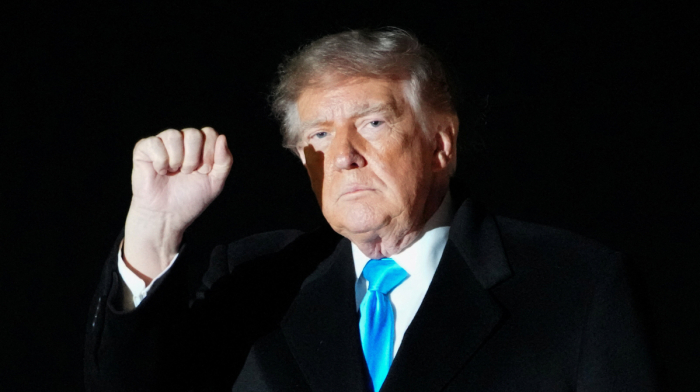
President Donald Trump said Iran is keen to reach a deal with the United States, claiming Washington had paused engagement to allow funeral ceremonies for late Iranian Supreme Leader Ali Khamenei.
Mexico's national football team has returned luxury Rolex watches gifted by American content creator Stevewilldoit after concerns that they could conflict with FIFA's ethics rules.
Humanoid robots stumbled, collided and recovered as they battled for the RoboCup 2026 football title on Sunday (5 July), showcasing the latest advances in robotics and artificial intelligence at the world's largest competition of its kind.
India is investigating a data breach at Tata Electronics that exposed sensitive documents linked to Apple's unreleased iPhone 18 Pro, marking the government's first public comments on the incident.
Humanity’s return to the Moon is about far more than planting flags and collecting samples. Under NASA’s Artemis programme, the goal is to establish a lasting human presence, with lunar rovers set to play a vital role in making that vision possible.
American technology company Snap has launched its first augmented-reality (AR) glasses for consumers, marking a major push into wearable computing as tech firms race to redefine personal devices in the AI era.
The Canadian government has introduced a digital safety bill that would ban children under the age of 16 from using social media, unless platforms meet specific safety standards.
You can download the AnewZ application from Play Store and the App Store.
What is your opinion on this topic?
Leave the first comment