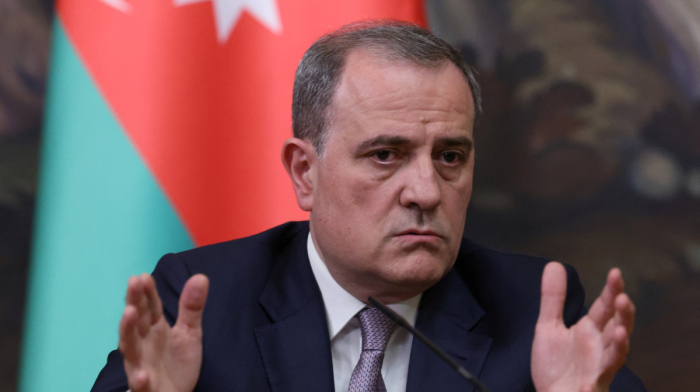
Azerbaijan's President Aliyev arrives in Turkmenistan for CIS summit
Azerbaijan’s President Ilham Aliyev has arrived in Turkmenistan for the Commonwealth of Independence States (CIS) summit. ...
British chipmaker Fractile will invest £100 million over the next three years to expand its artificial intelligence hardware operations in the UK, opening a new engineering facility in Bristol as it ramps up production of next-generation AI systems.
The London-headquartered semiconductor firm said the investment, worth approximately $136 million, will strengthen its domestic engineering capabilities and accelerate development of advanced chips designed to run increasingly complex AI models faster than existing hardware.
Central to the expansion is a new hardware engineering site in Bristol, in western England. The facility will assemble Fractile’s proprietary chips into complete AI systems and include a dedicated testing laboratory for software tailored to emerging compute technologies.
The move is expected to significantly increase the company’s production capacity while enhancing research and development efforts.
The UK government welcomed the announcement, describing it as a vote of confidence in Britain’s technology sector, which it says is now valued at more than £1 trillion. Officials view semiconductor innovation and AI infrastructure as strategically important industries amid intensifying global competition.
AI Minister Kanishka Narayan, who is due to formally announce the investment at a London event, said Fractile’s plans demonstrate how British firms can play a leading role in advanced computing. He added that expanding domestic chip production strengthens the UK’s position in the rapidly evolving AI landscape.
The investment comes at a time of surging demand for AI processing power worldwide, as businesses and governments race to deploy faster, more efficient systems capable of supporting next-generation machine learning models.

Russia's health watchdog said on Tuesday that no cases of plague had been detected among anyone who had come into contact with a Siberian plague institute laboratory worker who died last week, and locals said their lives had barely been disrupted.
Russia struck Ukraine overnight in one of the biggest attacks of the conflict, killing at least 19 people, Kyiv's Foreign Ministry said on Wednesday. Around 70 missiles were fired at Ukraine during the attack, as well as drones, the Ministry said.
An Azerbaijani citizen died and another is missing after a cargo ship was attacked by a drone in the Black Sea, near the coast of Romania on Monday, 5 October, Baku's Foreign Ministry has said.
A large Ukrainian drone attack on Moscow and the surrounding region has killed two people, damaged homes and sparked a major fire at a key fuel facility, according to Russian officials and military bloggers.
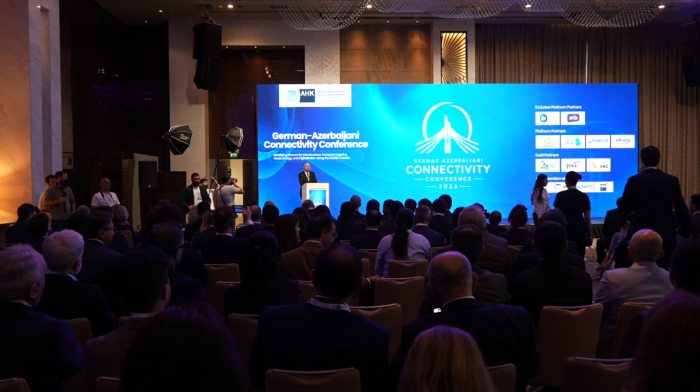
The German-Azerbaijani Connectivity Conference 2026 commenced on 6 October in Baku under the title “Mobilising Finance for Infrastructure, Transport, Logistics, Green Energy, and Digitalisation along the Middle Corridor.”
Picture three scenarios: a hospital that can spot a disease before the patient feels sick, a power grid that feeds thousands of data centres and a government network that is attacked daily. All three depend on artificial intelligence, and one question matters most: who is really in charge?
OpenAI and Anthropic told Australian parliament on Tuesday they would welcome laws requiring them to report data breaches carried out by their AI agents, acknowledging the decision to notify authorities was currently at their discretion.
Most people meet artificial intelligence (AI) through a phone. It suggests the next word, sorts the photos, flags the odd charge on a bank card. But the technology has been quietly moving into places where mistakes cost more: the systems that run banks, hospitals, businesses and government offices.
A four-person crew aboard SpaceX's Crew-13 mission, consisting of two U.S. astronauts, a Canadian astronaut and a Russian cosmonaut, arrived at the International Space Station (ISS) on Thursday (1 October), for a long-duration science mission focused on human health and performance in orbit.
The European Space Agency (ESA), Airbus and European partners have put a six-wheeled Mars rover prototype through its paces in Spain’s Tabernas desert, simulating conditions expected on a future mission to the Red Planet.
You can download the AnewZ application from Play Store and the App Store.
What is your opinion on this topic?
Leave the first comment