Washington signals new economic drive in Central Asia at Bishkek B5+1 forum
A landmark gathering of commercial and political minds has convened in the Kyrgyz capital, signalling a significant shift in Washington’s foreign po...
The United States has clarified that its recent military strikes on Iranian nuclear facilities were not intended to overthrow the Iranian government, but to neutralise what it described as urgent threats to national security, amid rising tensions and fears of broader regional conflict.
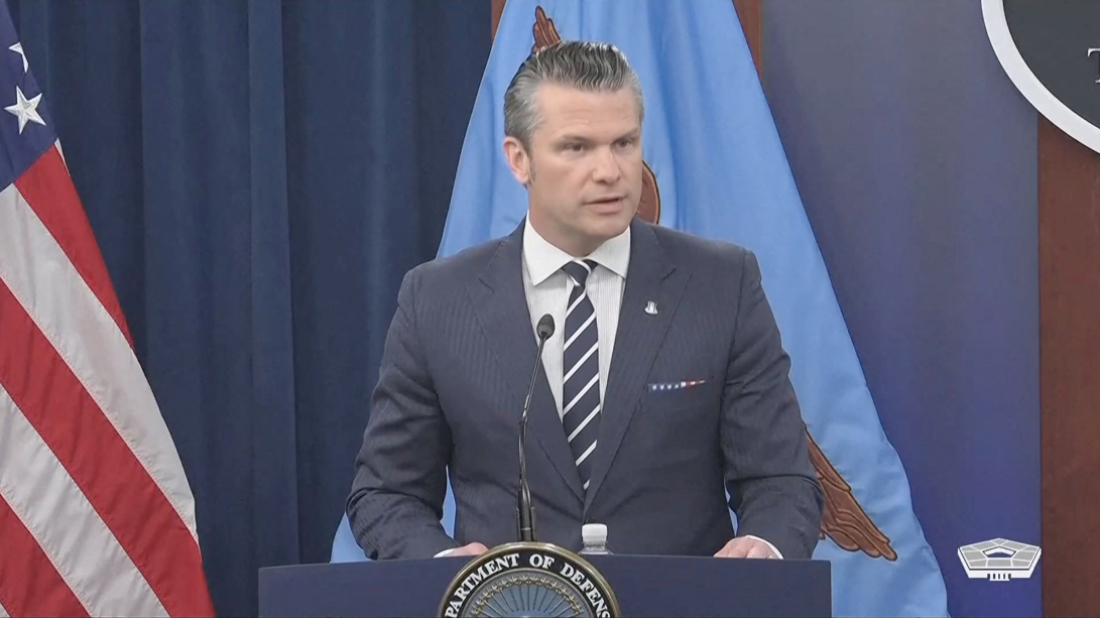
The United States’ military strikes on Iranian nuclear facilities were not intended to overthrow the Iranian government, U.S. Defense Secretary Pete Hegseth clarified on Sunday. Addressing reporters at the Pentagon, Hegseth said the operation was a targeted action designed to neutralise threats posed by Iran’s nuclear programme and was accompanied by diplomatic efforts to reduce tensions.
"This mission was not and has not been about regime change," Hegseth stated. "The president authorised a precision operation to neutralise the threats to our national interests posed by the Iranian nuclear programme."
The strikes, carried out under the codename Operation Midnight, involved 14 bunker-buster bombs, more than two dozen Tomahawk missiles, and over 125 military aircraft. General Dan Caine, who led the operation, said early assessments showed all three targeted sites had sustained "extremely severe damage and destruction." He declined to speculate on whether any nuclear capabilities remained.
General Caine confirmed that U.S. troops in the region, particularly in Iraq and Syria, remain on high alert.
"Our forces are fully postured to respond to any Iranian retaliation or proxy attacks, which would be an incredibly poor choice," he said.
The Pentagon also noted that private diplomatic communications were sent to Tehran, encouraging de-escalation and the possibility of negotiations, a signal that Washington remains open to dialogue despite the scale of the military response.

Talks with the U.S. should be pursued to secure national interests as long as "threats and unreasonable expectations" are avoided, President Masoud Pezeshkian posted on X on Tuesday (3 February).
Cuba’s Deputy Foreign Minister Carlos Fernández de Cossío has denied that Havana and Washington have entered formal negotiations, countering recent assertions by U.S. President Donald Trump, while saying the island is open to dialogue under certain conditions.
Mexico said it will stop sending oil to Cuba as U.S. President Donald Trump ramped up pressure on the Caribbean nation.
Iranian media outlets have backtracked on claims President Masoud Pezeshkian ordered a return to nuclear talks with the United States, fuelling fresh uncertainty over the state of diplomacy between the two rivals.
Web Summit Qatar 2026 opened in Doha on Sunday, drawing tens of thousands of founders, investors, policymakers and technology leaders to what organisers describe as one of the region’s largest digital economy gatherings.
Thousands of documents linked to the late sex offender Jeffrey Epstein have been taken down from the U.S. Justice Department’s (DOJ) website after victims and their lawyers warned that sensitive personal information had been exposed.
Start your day informed with AnewZ Morning Brief: here are the top news stories for the 4rd of February, covering the latest developments you need to know.
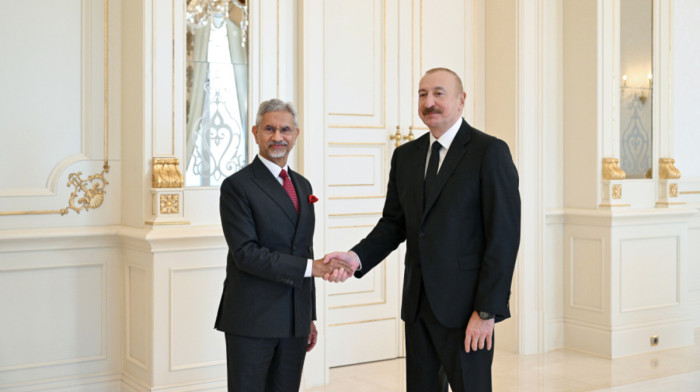
U.S. Secretary of State Marco Rubio met with Indian Foreign Minister Subrahmanyam Jaishankar on Tuesday (February 3) one day after the U.S. and India signed a trade deal.
British Prime Minister Keir Starmer spoke to U.S. President Donald Trump on Tuesday and discussed the situation in Ukraine, including the overnight Russian attacks on the country, the UK government said.
U.S. President Donald Trump on Tuesday (3 February) signed a spending deal into law that ends a partial U.S. government shutdown and gives lawmakers time to negotiate potential limits on his immigration crackdown.
You can download the AnewZ application from Play Store and the App Store.
What is your opinion on this topic?
Leave the first comment