A massive glacier collapse triggered a devastating landslide in the Swiss Alps on Wednesday, burying most of the village of Blatten under ice, mud, and rock. Authorities report one person missing and widespread destruction.
A huge chunk of a glacier in the Swiss Alps broke off on Wednesday, causing a deluge of ice, mud, and rock that buried most of a mountain village that had been evacuated due to the risk of a rockslide, authorities said.
One person is currently missing, officials said.
Drone footage broadcast by Swiss national broadcaster SRF showed a vast plain of mud and soil completely covering part of the southwestern village of Blatten, the river running through it, and the wooded sides of the surrounding valley.
"We've lost our village," Matthias Bellwald, the mayor of Blatten, told a press conference after the slide. "The village is under rubble. We will rebuild."
Stephane Ganzer, an official in the canton of Valais where Blatten is located, told Swiss media that about 90% of the village was covered by the landslide.
"An unbelievable amount of material thundered down into the valley," said Matthias Ebener, a spokesperson for local authorities.
One person was missing, Ebener said. Officials gave no further details on the person during the press conference.
Officials said millions of cubic metres of rock and soil have tumbled down since Blatten was first evacuated this month, when part of the mountain behind the glacier began to crumble, sparking warnings it could bring the ice mass down with it.
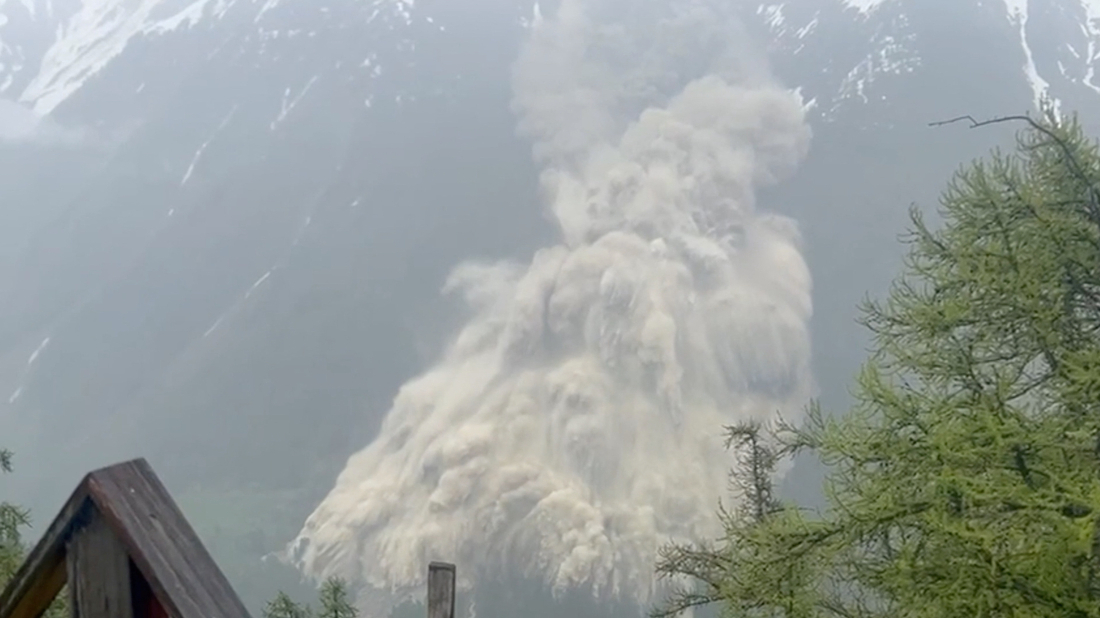
A video shared widely on social media showed the dramatic moment when the glacier partially collapsed, creating a huge cloud that covered part of the mountain as rock and debris came cascading down toward the village.
Experts said it was difficult to assess the extent to which rising temperatures spurred by climate change had triggered the collapse, because of the role the crumbling mountainside had played.
Christian Huggel, a professor of environment and climate at the University of Zurich, said while various factors were at play in Blatten, it was known that local permafrost had been affected by warmer temperatures in the Alps.
The loss of permafrost can negatively affect the stability of the mountain rock, which is why climate change had likely played a part in the deluge, Huggel said.
The extent of the damage to Blatten had no precedent in the Swiss Alps in the current or previous century, he added.
The rubble of shattered wooden buildings could be seen on the flanks of the huge mass of earth in the drone footage.
Buildings and infrastructure in Blatten, whose roughly 300 inhabitants were evacuated on May 19 after geologists identified the risk of an imminent avalanche of rock and ice from above, were battered by the rockslide, officials said.
SRF said houses were destroyed in the village nestled in the Loetschental Valley in southern Switzerland.
Swiss President Karin Keller-Sutter expressed her solidarity with the local population as emergency services warned people the area was hazardous and urged them to stay away, closing off the main road into the valley.
"It's terrible to lose your home," Keller-Sutter said on X.
















What is your opinion on this topic?
Leave the first comment