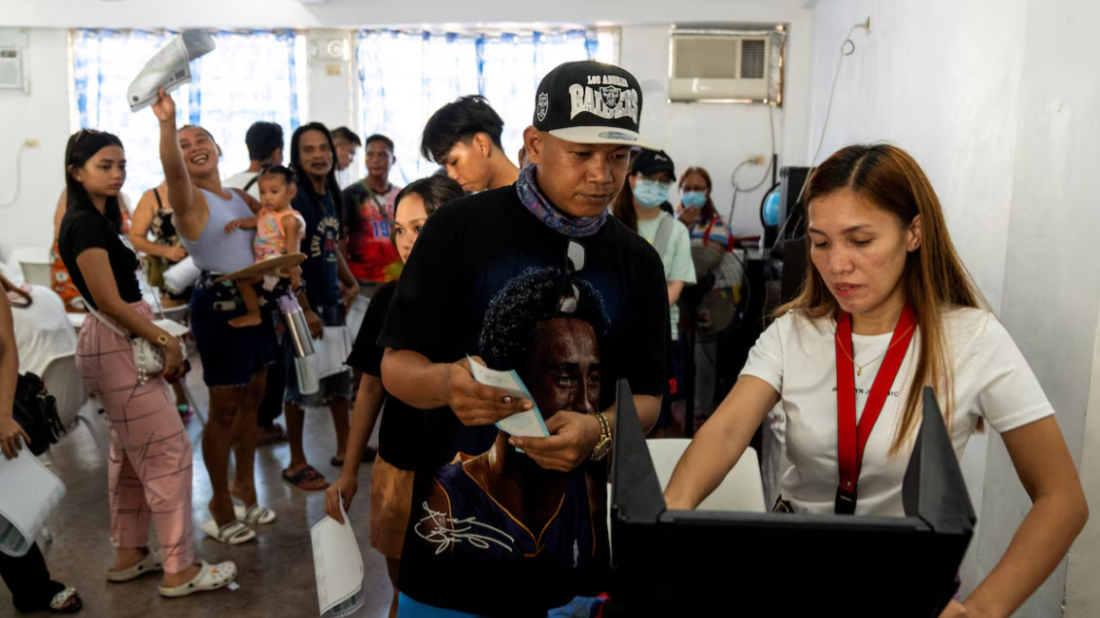
Voting was underway in the Philippines on Monday for a midterm election marked by a fierce and emotional rivalry between President Ferdinand Marcos Jr. and Vice President Sara Duterte, setting the stage for a high-stakes political showdown.
While more than 18,000 positions are up for election, Marcos and Duterte, who are not on the ballot, have been aggressively campaigning for their chosen candidates. Their battle for influence is at the forefront of this election, which has become a proxy fight with significant consequences for the future of the country’s political landscape.
For Marcos, the election is crucial for securing his policy agenda, his legacy, and ensuring influence over his potential successor in 2028. For Duterte, the stakes are even higher—her political survival is on the line, with an impeachment trial looming that could end any future ambitions to follow in the footsteps of her father, former President Rodrigo Duterte.
The central focus of the election is the Senate, where a dozen coveted seats are at stake. These seats carry significant legislative influence and political power, shaping public opinion and potentially determining presidential ambitions.
Both Marcos and Duterte cast their votes early on Monday in their respective hometowns. Duterte, in a conversation with reporters, shared that she had recently spoken with her father, who is currently detained in The Hague facing trial over his controversial "war on drugs" policies. Duterte expressed confidence that at least two of her father’s endorsed Senate candidates, including the former police chief responsible for overseeing the drug war, would win.
“This election is more than an informal referendum on the Marcos administration,” said Aries Arugay, a political science professor at the University of the Philippines. “The Senate race is the key proxy battle... Marcos needs to retain a majority or supermajority to push forward his legislative and economic agenda.”
Reports indicated that voting, which runs from 5 a.m. to 7 p.m., was proceeding largely without issue, aside from some minor delays caused by glitches in the vote-counting machines.
Rising Tensions:
The election has gained new significance in the wake of the breakdown of the once-solid alliance between the Marcos and Duterte families. What began as a united political front in the 2022 elections has dissolved into a bitter feud, with both sides accusing each other of undermining their power.
Marcos has distanced himself from the ongoing impeachment proceedings against Duterte, which accuse her of misusing funds, accumulating unexplained wealth, and allegedly threatening the lives of the president, first lady, and house speaker. Should the impeachment trial move forward, the Senate will play a crucial role as jurors, and at least 16 votes—two-thirds of the chamber—are needed for a conviction.
“Whatever happens with the impeachment, whether a guilty or acquittal verdict, I’m ready for whatever happens,” Duterte stated after casting her vote.
Adding to the tensions, former President Rodrigo Duterte was arrested by Philippine authorities in March at the request of the International Criminal Court (ICC). Duterte has accused Marcos of compromising the country’s sovereignty by allowing the former president to face trial in a foreign court. Despite his detention, Duterte remains on the ballot for mayor in his hometown.
Both Dutertes have denied all wrongdoing and continue to challenge the cases against them.
Marcos, in turn, has campaigned on his economic successes and tough stance on national sovereignty, particularly in his approach to China’s activities in the South China Sea—an issue that has become a major point of contention in the election.
















What is your opinion on this topic?
Leave the first comment