Israeli airstrikes kill nine in Gaza, Palestinian officials report
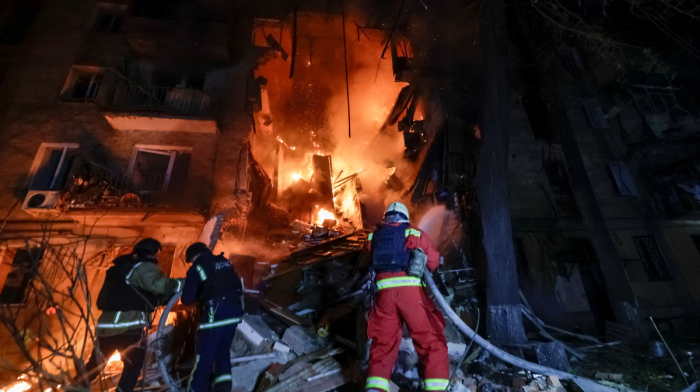
At least nine Palestinians were killed in Israeli airstrikes in the northern and southern Gaza Strip on Sunday (15 February), Palestinian civil defenc...
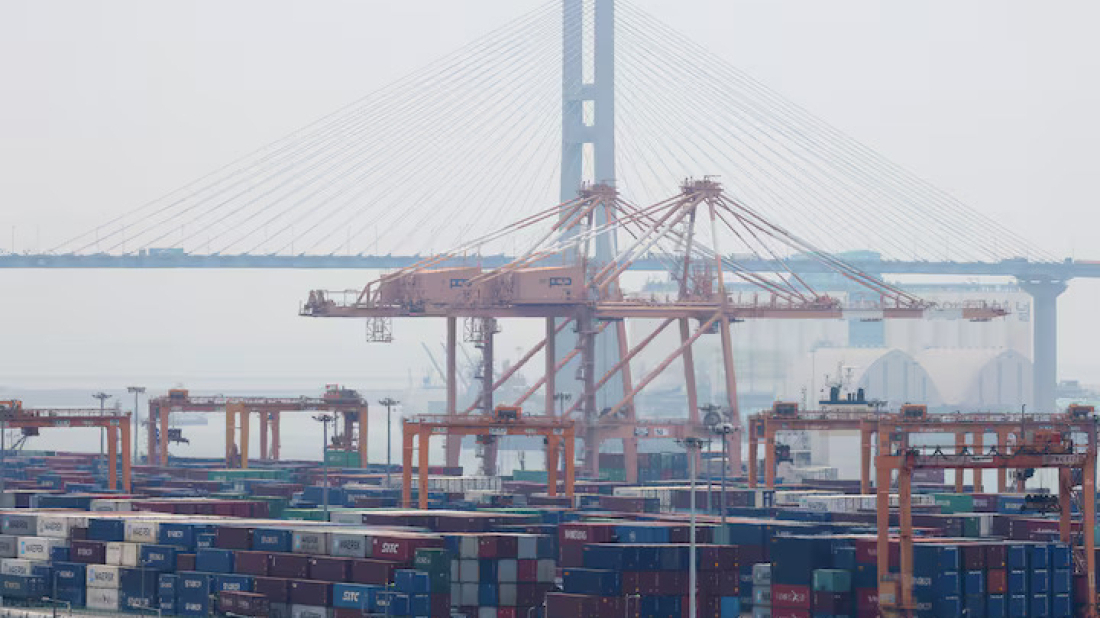
South Korea aims to delay new U.S. tariffs, prioritizing economic stability amid trade tensions. Finance Minister Choi Sang-mok emphasized the importance of reducing uncertainty for export industries, while ongoing talks with the U.S. seek a mutually beneficial resolution.
South Korea is aiming to delay the implementation of new U.S. tariffs, prioritising national interest and economic stability amid mounting trade tensions. Finance Minister Choi Sang-mok told parliament that Seoul would push to postpone the tariffs “as much as possible” during negotiations with the U.S., seeking to reduce uncertainty for export-reliant industries.
U.S. President Donald Trump recently imposed sweeping tariffs, including 25% duties on steel, aluminium, and vehicles, hitting South Korea hard. Although a 90-day pause was introduced for some goods, key sectors remain affected. A snap presidential election on 3 June, following the ousting of Yoon Suk Yeol, has added political complexity.
Acting President Han Duck-soo has engaged in discussions with Trump and top U.S. officials, aiming to shape a mutually beneficial trade path. Talks have focused on potential cooperation in shipbuilding and South Korea’s participation in a U.S. gas pipeline project in Alaska.
As Seoul ramps up support for its semiconductor industry with a £23 billion package, concerns linger over Trump’s upcoming tariff announcement on chips. Trade Minister Ahn Duk-geun may travel to Washington next week for further negotiations, underlining Seoul’s diplomatic push to protect its global trade interests.

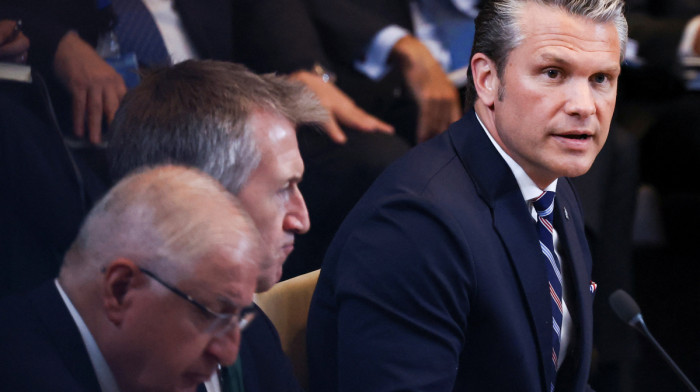
U.S. Ambassador to NATO Matthew Whitaker said China has the power to bring an end to Russia’s war in Ukraine, arguing that Beijing is enabling Moscow’s military campaign.
American figure skating star Ilia Malinin endured a dramatic collapse in the men’s free skate on Friday night, falling twice and tumbling out of medal contention at the Milan Cortina Winter Olympics as Kazakhstan’s Mikhail Shaidorov surged to a surprise gold medal.
“Respected and feared globally,” U.S. President Donald Trump told troops at Fort Bragg on Friday (13 February), framing America’s renewed strength against to mounting pressure on Iran amid stalled nuclear talks.
Dubai-based global ports operator DP World said on Friday that its long-serving chairman and chief executive, Sultan Ahmed Bin Sulayem, has stepped down following mounting pressure linked to alleged ties to disgraced financier Jeffrey Epstein.
Speaking at Munich Security Conference, Ukrainian foreign minister Andrii Sybiha calls for decisive steps ahead of expected Geneva talks
U.S. Secretary of State Marco Rubio will begin a two-day visit to Slovakia and Hungary on Sunday (15 February), aimed at strengthening ties with the two Central European nations, whose leaders have maintained close relations with President Donald Trump.
The Munich Security Conference concludes on Sunday (15 February) with discussions centred on Europe’s role in an increasingly unstable global landscape, including security coordination, economic competitiveness and the protection of democratic values.
Start your day informed with AnewZ Morning Brief: here are the top news stories for the 15th of February, covering the latest developments you need to know.
Australia will spend A$3.9bn to build a new shipyard for AUKUS nuclear-powered submarines, Prime Minister Anthony Albanese has announced, marking a major step in the trilateral defence pact with the U.S. and Britain.
Britain, France, Germany, Sweden and the Netherlands said on Saturday (14 February) they are convinced that late Kremlin critic Alexei Navalny was poisoned with a lethal toxin in a Russian penal colony two years ago.
You can download the AnewZ application from Play Store and the App Store.
What is your opinion on this topic?
Leave the first comment