China’s decade of planning cushions economy as oil prices surge
China is emerging as one of the more stable economies amid the latest global oil shock, thanks to years of planning, diversified energy sources and...
As the world adjusts to the trade shockwaves triggered by U.S. tariffs, Brussels and Abu Dhabi are forging a new path. On Thursday, the European Union and the United Arab Emirates confirmed they will launch formal negotiations on a free trade agreement.
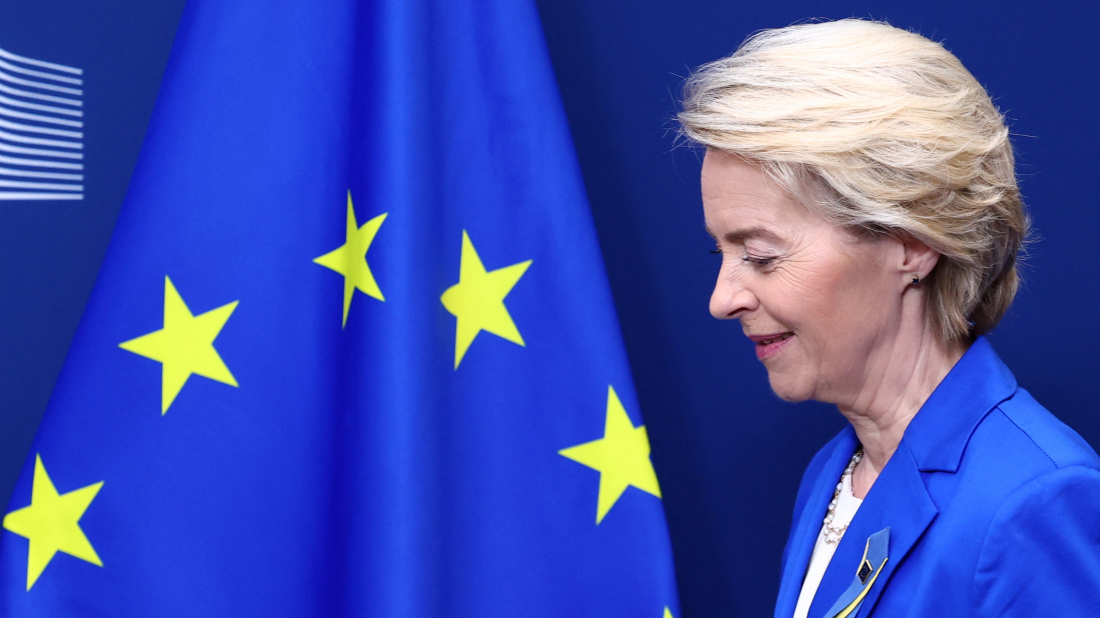
The announcement followed a phone call between European Commission President Ursula von der Leyen and UAE President Sheikh Mohamed bin Zayed Al Nahyan, both sides said in separate statements.
The decision comes at a time of global economic uncertainty, just days after President Donald Trump raised import duties, only to scale some of them back under pressure from markets and trade partners. For the EU and UAE, the move signals a clear intention to deepen economic ties and sidestep instability.
The talks will aim to cut tariffs and trade barriers, open up market access for goods and services, and strengthen cooperation in sectors such as renewable energy, green hydrogen and critical raw materials, according to the EU.
The UAE's state news agency WAM called the agreement a step toward a Comprehensive Economic Partnership Agreement, one that could unlock opportunities in advanced manufacturing, logistics, healthcare and artificial intelligence. The pact is also expected to promote bilateral investment and long-term commercial growth.
The European Union is already the UAE’s second-largest trading partner, making up 8.3 percent of its total non-oil trade. It is also the Emirates’ top export destination and largest investment source in the Middle East and North Africa.
Abu Dhabi has pushed for deeper economic ties with Europe for years, and Reuters reported in March 2024 that the UAE had been quietly urging Brussels to start direct trade talks, independently of the Gulf Cooperation Council.
Now, those talks are becoming reality.

The Iran-U.S.-Israel conflict is intensifying, with fresh strikes near Tehran, European calls for restraint, and Iran threatening to target U.S. firms in the region, raising fears of a broader escalation across the Middle East.
There are fears of an oil spill after a drone strike hit a Kuwaiti oil tanker near Dubai on Tuesday, while U.S.-Israeli strikes in Iran reportedly killed at least two people. A loud explosion was heard in Beirut in southern Lebanon early Wednesday, as oil prices climbed above $100 a barrel.
Fears of wider escalation grow despite President Donald Trump saying U.S. strikes on Iran could end within weeks. Meanwhile missile attacks, tanker incidents and rising casualties across Israel, Lebanon and the Gulf heighten risks to regional stability and energy routes.
Russian-flagged tanker carrying approximately 700,000 barrels of crude oil docked at Cuba's Matanzas oil terminal on Tuesday, shipping data confirmed, marking a vital and controversial delivery to an island paralysed by severe energy shortages and a suffocating U.S. blockade.
A Russian military An-26 aircraft has crashed in Crimea, killing all 30 people on board, Russia’s Defence Ministry has confirmed.
China is emerging as one of the more stable economies amid the latest global oil shock, thanks to years of planning, diversified energy sources and a steady shift towards renewable power.
In a major policy reversal, the U.S. Treasury has removed Venezuela’s acting president, Delcy Rodríguez, from its sanctions list, signalling a sharp shift in Washington’s approach to Caracas.
A technical team from the United States Federal Bureau of Investigation (FBI) has touched down in Cuba this week to launch an "independent investigation" into a deadly maritime shootout that happened on 25 February.
“He is not… the owner!” U.S. District Judge Richard J. Leon wrote, temporarily halting construction of President Donald Trump’s $400 million White House ballroom, underscoring a cascade of legal, regulatory and public opposition that has engulfed the controversial expansion.
Start your day informed with the AnewZ Morning Brief. Here are the top stories for 2 April, covering the latest developments you need to know
You can download the AnewZ application from Play Store and the App Store.
What is your opinion on this topic?
Leave the first comment