Munich Security Conference final day focuses on Europe’s global role
The Munich Security Conference concludes on Sunday (15 February) with discussions centred on Europe’s role in an increasingly unstable global landsc...
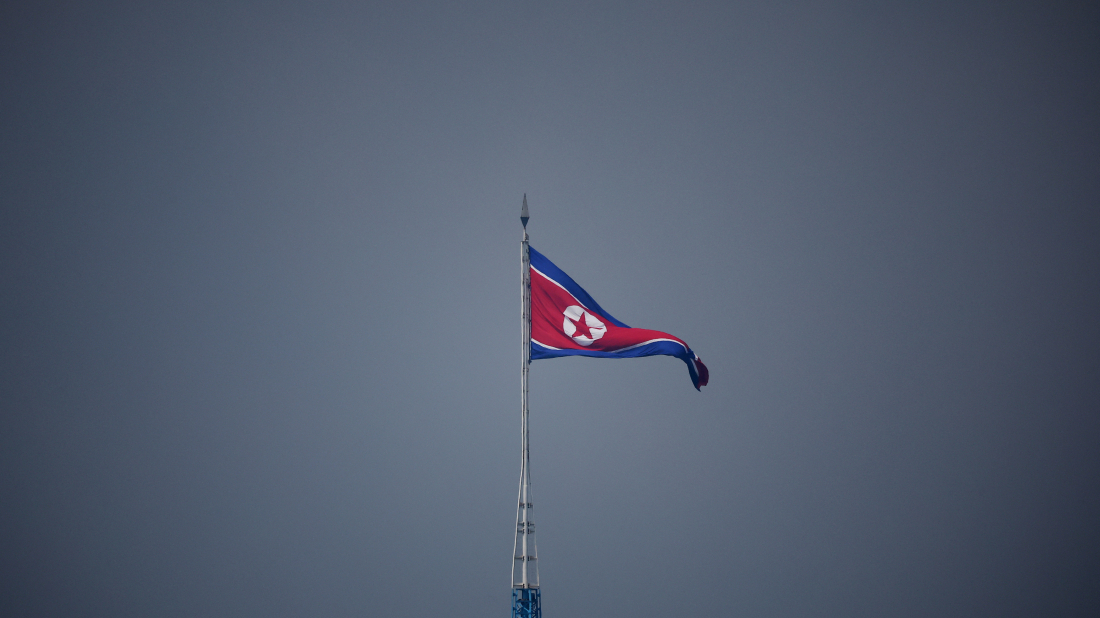
North Korea held its first Pyongyang International Marathon in six years, with foreign runners from China and Ethiopia. The event marked the country's gradual reopening post-pandemic, celebrating Kim Il Sung's birthday. The marathon symbolized North Korea's cautious return to normalcy.
North Korea hosted its first Pyongyang International Marathon in six years on Sunday, marking a significant moment as the country gradually reopens after the pandemic. Foreign runners from countries including China and Ethiopia participated in the event, which took place as part of the celebrations for the April 15 birthday of Kim Il Sung, the nation's founder.
Around 200 international participants arrived in Pyongyang for the race, which was organised with assistance from Koryo Tours, a Beijing-based company. Despite the country's isolation, which saw its borders closed in 2020 due to COVID-19, North Korea has begun to lift some restrictions, welcoming tourists from Russia and now allowing limited international participation in events.
The marathon course ran through the heart of Pyongyang, passing notable landmarks before heading into the countryside and returning to the city for a dramatic finish at a stadium packed with 50,000 spectators. State television footage showed enthusiastic crowds, some of whom wore masks, cheering on the runners. A North Korean athlete crossed the finish line first, as reported by state media.
This marathon is seen as a symbolic return to normalcy for the isolated nation, which remains cautious in its approach to reopening.

American figure skating star Ilia Malinin endured a dramatic collapse in the men’s free skate on Friday night, falling twice and tumbling out of medal contention at the Milan Cortina Winter Olympics as Kazakhstan’s Mikhail Shaidorov surged to a surprise gold medal.
“Respected and feared globally,” U.S. President Donald Trump told troops at Fort Bragg on Friday (13 February), framing America’s renewed strength against to mounting pressure on Iran amid stalled nuclear talks.
U.S. Ambassador to NATO Matthew Whitaker said China has the power to bring an end to Russia’s war in Ukraine, arguing that Beijing is enabling Moscow’s military campaign.
Dubai-based global ports operator DP World said on Friday that its long-serving chairman and chief executive, Sultan Ahmed Bin Sulayem, has stepped down following mounting pressure linked to alleged ties to disgraced financier Jeffrey Epstein.
Speaking at Munich Security Conference, Ukrainian foreign minister Andrii Sybiha calls for decisive steps ahead of expected Geneva talks
The Munich Security Conference concludes on Sunday (15 February) with discussions centred on Europe’s role in an increasingly unstable global landscape, including security coordination, economic competitiveness and the protection of democratic values.
Start your day informed with AnewZ Morning Brief: here are the top news stories for the 15th of February, covering the latest developments you need to know.
Australia will spend A$3.9bn to build a new shipyard for AUKUS nuclear-powered submarines, Prime Minister Anthony Albanese has announced, marking a major step in the trilateral defence pact with the U.S. and Britain.
Britain, France, Germany, Sweden and the Netherlands said on Saturday (14 February) they are convinced that late Kremlin critic Alexei Navalny was poisoned with a lethal toxin in a Russian penal colony two years ago.
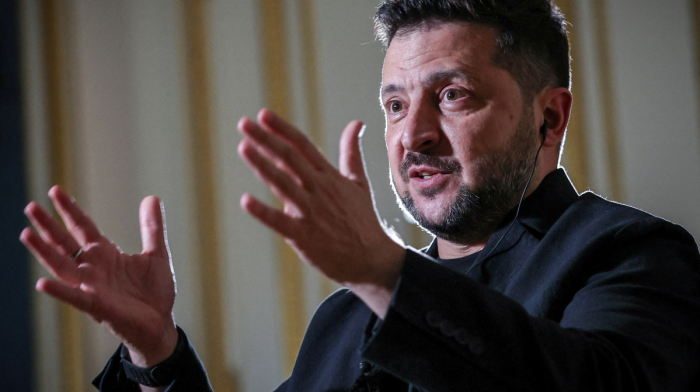
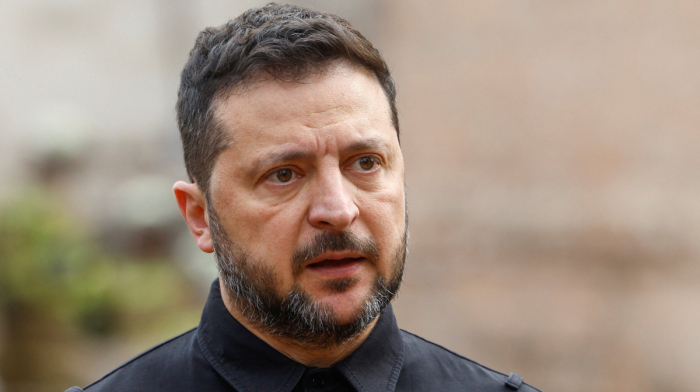
Ukrainian President Volodymyr Zelenskyy said on Saturday that Russia’s decision to change the leadership of its delegation for upcoming peace talks in Geneva appeared to be an attempt to delay progress.
You can download the AnewZ application from Play Store and the App Store.
What is your opinion on this topic?
Leave the first comment