France pledged €2 billion in military aid to Ukraine as European leaders met in Paris to discuss strengthening Kyiv’s defense and potential roles in future peace talks. The summit, led by Macron and Starmer, focuses on military support, ceasefire monitoring, and Europe’s strategic involvement.
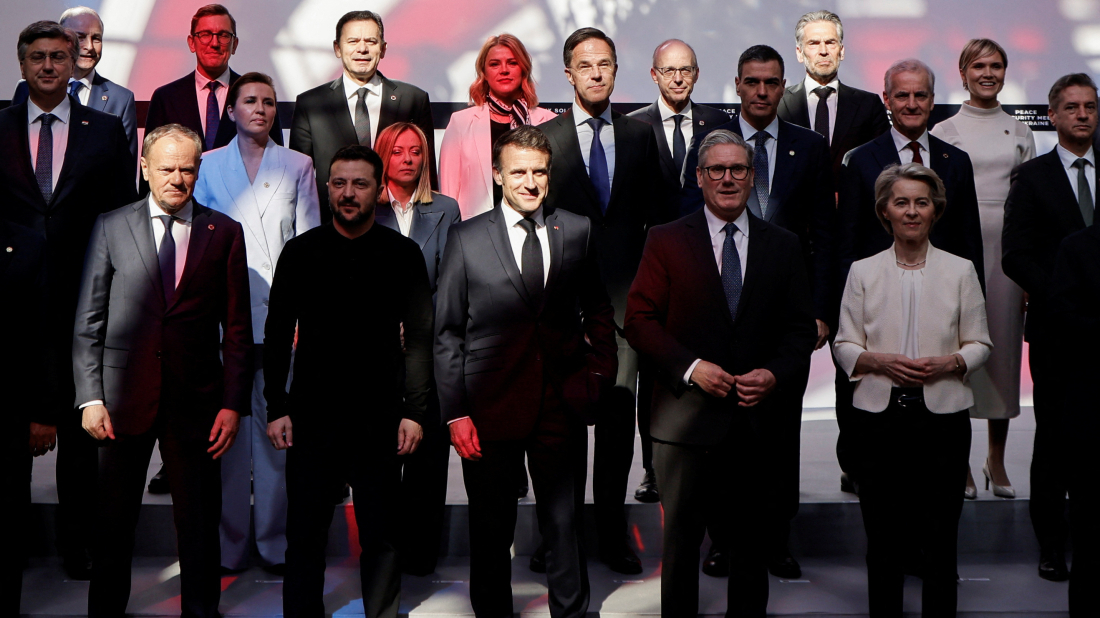
France pledged 2 billion euros in military aid to Ukraine as some 30 leaders met with President Volodymyr Zelenskyy in Paris on Thursday to discuss how to strengthen Kyiv's position and assess how they could play a role if a peace deal is struck with Russia.
The third summit of what France and Britain have called the "coalition of the willing" brings together the likes of British Prime Minister Keir Starmer, NATO Secretary General Mark Rutte, Polish Prime Minister Donald Tusk, Italian Prime Minister Giorgia Meloni and Turkish Vice President Cevdet Yılmaz.
It is taking place after Zelenskyy agreed earlier this month to proceed with ceasefire talks to ensure a resumption of U.S. aid and intelligence sharing. But Russia has placed additional demands on implementation of a ceasefire deal in the Black Sea and on energy targets, and many European nations believe a peace accord remains distant.
"First and foremost (we will discuss) the immediate support for Ukraine. It must go on because it is necessary to continue the resistance," President Emmanuel Macron told reporters on Wednesday evening at a press conference with Zelenskyy.
Macron committed to a further 2 billion euros in French military support, including missiles, warplanes and air defence equipment. Zelenskyy said other partners could announce aid packages on Thursday.
The format aims to forge a role for Europe in any talks on ending the conflict. While the United States is not present, French officials say the outcome of the summit will be shared with the U.S. administration.
The discussions will focus on how to strengthen Ukraine militarily to deter future attacks, and how to monitor the limited ceasefires over sea targets and energy infrastructure, as discussed at U.S.-led talks this week in Saudi Arabia.
European efforts, led by Macron and Starmer, to create security arrangements for Ukraine are shifting from sending troops to considering alternatives as they face political and logistical constraints, and the prospect of Russia and the United States opposing their plans, officials have told Reuters.
"The Prime Minister will underline that all must come together to support Ukraine to remain in the fight and back US efforts to make real progress despite continued Russian obfuscation," Starmer's office said in a statement.
Planning so far has looked at the full range of European military capabilities including aircraft, tanks, troops, intelligence and logistics. Discussions have centred on what European nations can contribute to support any future force, it said.











What is your opinion on this topic?
Leave the first comment