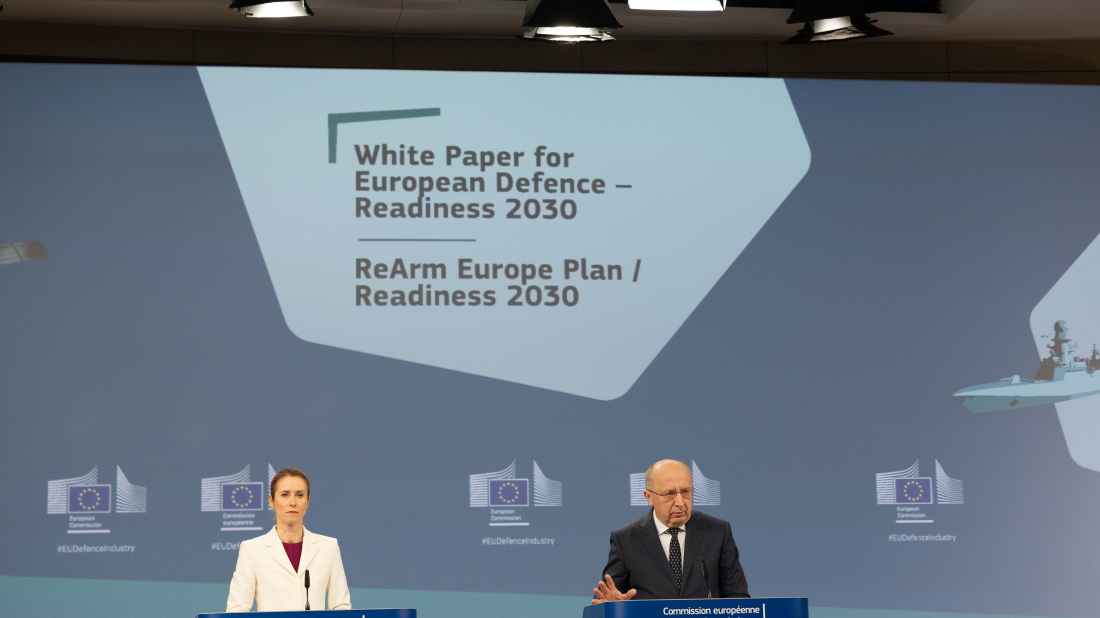
EU Commission and the High Representative have introduced a White Paper on European Defence – Readiness 2030 along with an ambitious defence package, offering financial tools to support EU Member States in boosting investments in defence capabilities.
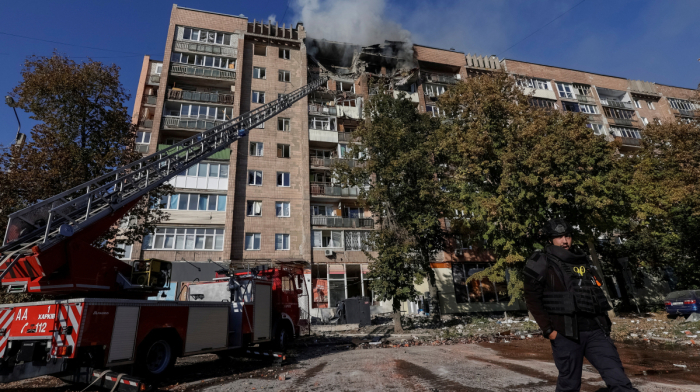
These measures aim to respond to the short-term urgency of supporting Ukraine, but also to address the pressing long-term need to boost Europe's security and defence.
"We must invest in defence, strengthen our capabilities, and take a proactive approach to security. We are taking decisive action, presenting a roadmap for 'Readiness 2030', with increased defence spending, important investments in European defence industrial capabilities. We must buy more European. Because that means strengthening the European defence technological and industrial base. That means stimulating innovation. And that means creating an EU-wide market for defence equipment,” - stated Commission President Ursula von der Leyen.
As announced by President von der Leyen, the ReArm Europe Plan/Readiness 2030 enables spending of over €800 billion.
The proposed financing mechanisms for the required investments in defence and the opportunities for the partner countries arising therefrom:
The first one – National Escape clause – will free up to EUR 650 billion of fiscal space in the national budgets of the EU member states. It will have no conditions attached in terms of origin of the defence equipment. Military equipment from partner countries can therefore directly benefit from it.
The second one – “SAFE”, a new instrument for Security Action for Europe – SAFE, a scheme to support joint procurement from the European defence industry with up to €150 billion in loans to Member States backed by the EU budget.
Norway and Iceland can already directly participate, since they are members of the EU's single market. Other countries, such as the UK, Canada or Türkiye, can immediately provide up to 35% of a defence product. To increase the industrial participation beyond 35%, a Security & Defence Partnership and a subsequent association agreement are necessary.
President von der Leyen also made a reference to the EU's continued support to Ukraine in the context of Readiness 2030: “Because Ukraine's security is also the European Union's security, Ukraine and its amazing defence industry will be able to participate in the joint procurement in SAFE.”
The ReArm Europe Plan/Readiness 2030 also relies on the European Investment Bank Group to widen the scope of its lending to defence and security projects, while safeguarding its financing capacity.
White Paper for European Defence – Readiness 2030
The White Paper presents solutions to close critical capability gaps and build a strong defence industrial base. It proposes ways for Member States to massively invest in defence, procure defence systems and build up the readiness of the European defence industry over the long run.
Europe must invest in the security and defence of the continent, while continuing to support Ukraine to defend itself from Russia's aggression. To effectively address these challenges, the White Paper outlines a number of key lines of action:
- Closing capability gaps, with a focus on critical capabilities identified by Member States.
- Supporting the European defence industry through aggregated demand and increased collaborative procurement.
- Supporting Ukraine through increased military assistance and deeper integration of the European and Ukrainian defence industries.
- Deepening the EU-wide defence market including through simplifying regulations.
- Accelerating the transformation of defence through disruptive innovations such as AI and quantum technology.
- Enhancing European readiness for worst-case scenarios, by improving military mobility, stockpiling and strengthening external borders, notably the land border with Russia and Belarus.
- Strengthening partnership with like-minded countries around the world.
ReArm Europe Plan/Readiness 2030












What is your opinion on this topic?
Leave the first comment