Trump hails Türkiye as ‘tremendous ally’, says U.S. decides its own arms sales
President Donald Trump has dismissed Israeli Prime Minister Benjamin Netanyahu's opposition to a potential sale of F-35 fighter jets to Türkiye, sayi...
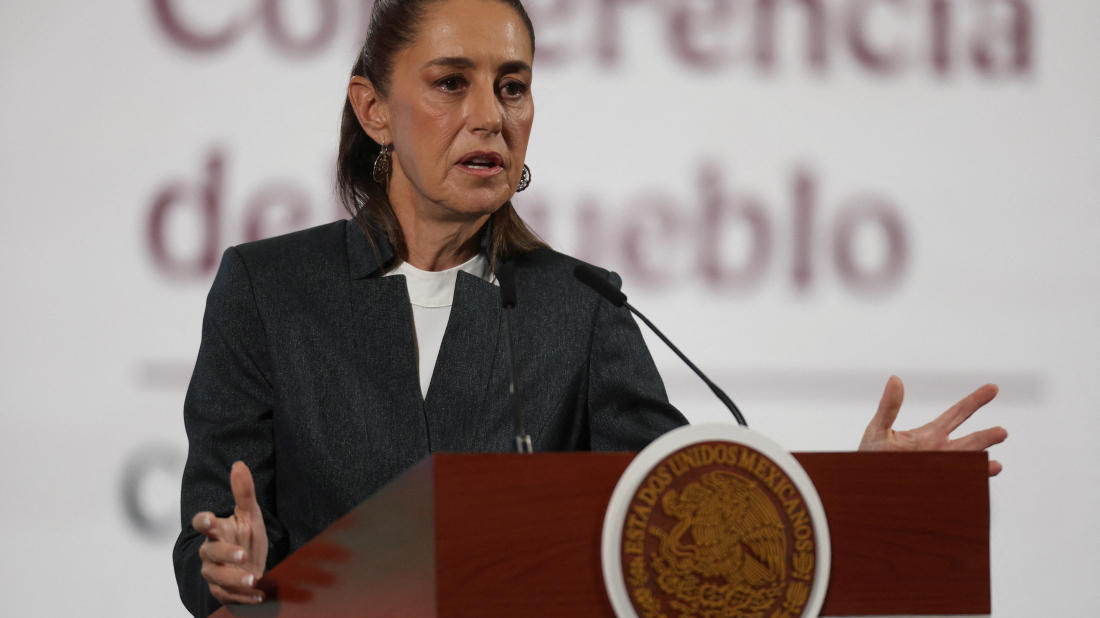
In response to the 25% tariffs recently imposed by the United States, President Claudia Sheinbaum announced Tuesday that Mexico will implement its own retaliatory tariffs on U.S. goods.
he specific products targeted by the new measures will be revealed on Sunday at a public event held in Mexico City’s central plaza.
Addressing the decision, Sheinbaum stated, “There is no motive or reason, nor justification that supports this decision that will affect our people and our nations.” Her remarks suggest that while Mexico is taking a firm stance against the U.S. tariff regime, the country may also be seeking ways to de-escalate the broader trade dispute initiated by President Donald Trump.
The move comes as tensions between the two nations continue to simmer over trade policies. By announcing its intent to impose retaliatory tariffs, Mexico aims to protect its economic interests and signal its dissatisfaction with the U.S. measures. However, the public nature of the announcement and the planned disclosure of targeted products indicate a potentially measured approach, balancing economic defense with efforts to avoid further escalation.
As the situation develops, market analysts and trade experts will be watching closely for signs of how these tariffs might affect bilateral trade flows between Mexico and the United States.

U.S. President Donald Trump said on Monday that there is a good chance” of reaching a deal with Iran, but warned that Washington would resume military operation if negotiations fail.
Iran will halt its own attacks as long as the United States maintains its pause on strikes, but Tehran remains sceptical of U.S. intentions, a senior Iranian source told on Sunday.
The Russia-Ukraine war is increasingly reshaping the Caspian region. From threats to energy infrastructure to renewed diplomatic efforts, countries across the region are adapting to the wider consequences of a conflict that continues to disrupt trade, transport and security.
A New York school district has put plans to introduce a humanoid robot into classrooms on hold after fierce criticism from teachers, Indigenous community members and state education officials over the use of artificial intelligence in schools.
Russian President Vladimir Putin has signed laws introducing stricter financial requirements for foreign workers, as Moscow continues to tighten migration controls affecting millions of labour migrants, particularly from Central Asia.
Meteorologists in China have used a swarm of drones to observe Typhoon Noul as it passed through Guangdong province, aiming to improve weather monitoring and forecasting during extreme storms.
Tehran has stressed that its commercial vessel hit by a Ukrainian drone in the Caspian Sea on Saturday was carrying only civilian cargo and vowed to respond appropriately while holding Kyiv responsible for the attack.
Since 1946, nine people have served as UN Secretary-General, the closest thing the world has to a chief diplomat. The role carries no army and little hard power, yet its occupants have shaped how nations respond to war, famine and global crises. Here are five who left the deepest mark.
Two shallow earthquakes hit a remote area of China's Qinghai province on Tuesday, with authorities reporting no casualties or collapsed buildings so far.
Australia is considering building its first new oil refinery in more than six decades as conflict in the Middle East exposes the country's heavy reliance on imported fuel.
You can download the AnewZ application from Play Store and the App Store.
What is your opinion on this topic?
Leave the first comment