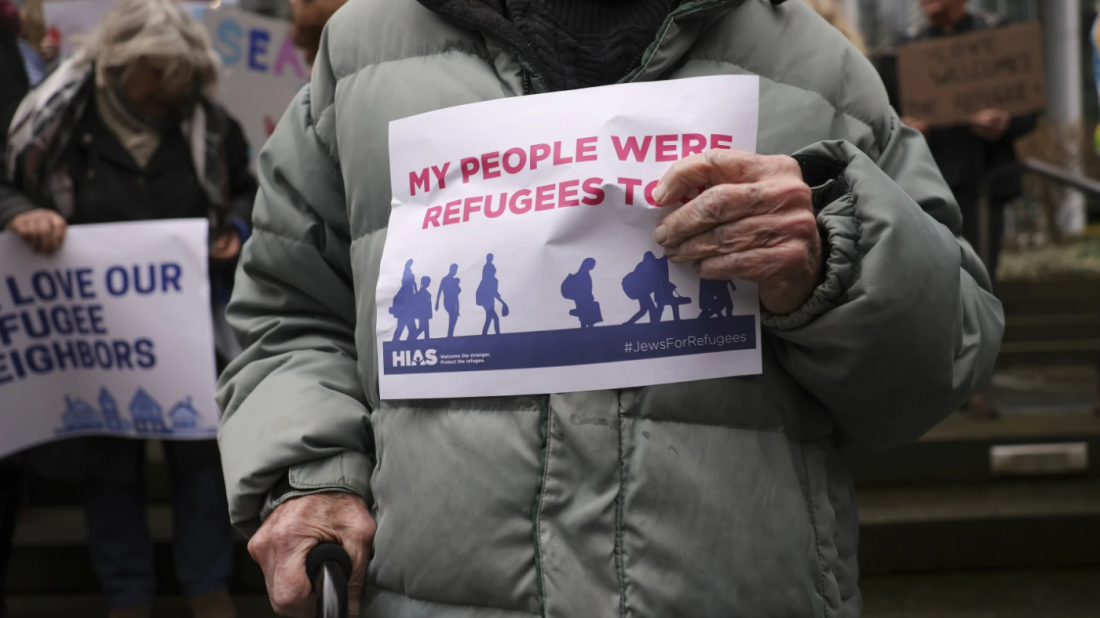
Crowds gathered outside the U.S. District Court after a federal judge blocked President Trump’s attempt to suspend the nation’s refugee admissions system.
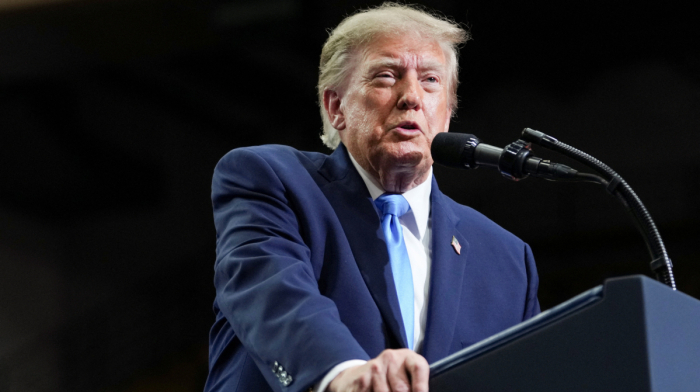
A federal judge in Seattle on Tuesday blocked President Donald Trump’s suspension of the nation’s refugee admissions system, ruling that while the president has broad authority over immigration, he cannot override laws passed by Congress establishing the program.
The decision came in response to a lawsuit filed by individual refugees whose resettlement efforts were halted, as well as major refugee aid organizations that argued they were forced to lay off staff due to the administration's freeze on funding for processing refugee applications and support services, such as short-term rental assistance for those already in the U.S.
U.S. District Judge Jamal Whitehead, appointed in 2023 by former President Joe Biden, stated that the president’s actions amounted to an “effective nullification of congressional will” in setting up the nation’s refugee admissions program. He promised to provide a more detailed explanation in a forthcoming written opinion.
“The president has substantial discretion to suspend refugee admissions,” Whitehead said. “But that authority is not limitless.” Justice Department attorney August Flentje indicated that the administration might quickly appeal the ruling.
Trump’s order cited concerns that cities and communities were overwhelmed by “record levels of migration” and lacked the capacity to absorb additional refugees. The administration reported that approximately 600,000 people were in the process of being admitted as refugees worldwide.
Despite historically bipartisan support for accepting thoroughly vetted refugees, the program has become increasingly politicized. Trump had also temporarily halted it during his first term before significantly reducing the annual refugee admissions cap.
During the hearing, Flentje argued that the order fell within Trump’s authority under a law permitting the president to deny entry to foreigners deemed “detrimental to the interests of the United States.” He also contended that the plaintiffs had not suffered “irreparable” harm, asserting that many refugees whose travel was canceled had already been relocated to safer third countries and that funding cancellations for aid groups amounted to a contract dispute.
The judge rejected these arguments.
“I’ve read the declarations,” Whitehead said. “I have refugees stranded in dangerous places. I have families who have sold everything in anticipation of travel that was abruptly canceled. I have spouses and children indefinitely separated from family members in the U.S., and resettlement agencies that have already laid off hundreds of staff.
“Aren’t these textbook examples of harms that can’t be undone by money damages?” he asked.
The plaintiffs included the International Refugee Assistance Project, Church World Service, the Jewish refugee resettlement agency HIAS, Lutheran Community Services Northwest, and individual refugees and their families. They argued that Trump’s order had severely disrupted their ability to provide essential services to refugees, including those already residing in the U.S.
IRAP attorney Deepa Alagesan called Trump’s efforts to dismantle the refugee program “far-reaching and devastating.” She argued that the president had failed to demonstrate how admitting these refugees would be detrimental to the country. At a press conference following the hearing, supporters described refugees as a benefit rather than a burden to the U.S.
Tshishiku Henry, an activist for refugee rights in Washington state, called his presence outside the courthouse “the miracle of the second chance.” He and his wife resettled in the U.S. in 2018 after fleeing war in the Democratic Republic of Congo.
“It wasn’t just a shelter. It was a lifeline,” Henry said. “You didn’t offer us just safety, but you gave us back our future.”
Last week, a federal judge in Washington, D.C., declined to immediately block the Trump administration’s actions in a similar lawsuit filed by the United States Conference of Catholic Bishops.
Another hearing in that case is scheduled for Friday.














What is your opinion on this topic?
Leave the first comment