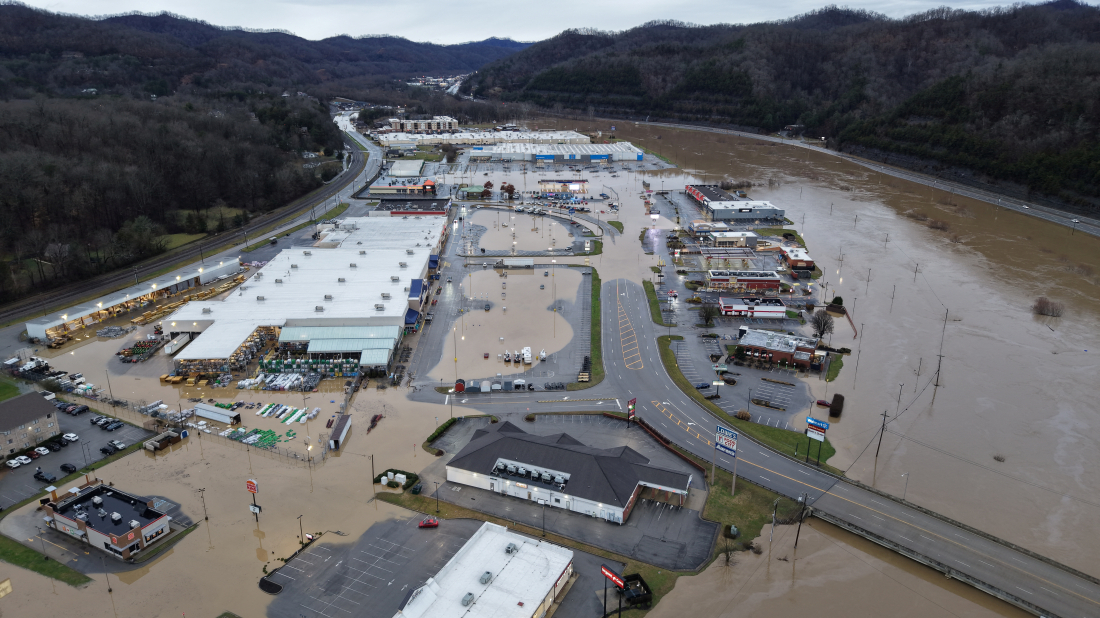
February 23, 2025 - Recent storms have once again overwhelmed Kentucky, causing severe flooding that has displaced residents, closed roads, and left thousands without power. The state, already battered by extreme weather in recent years, now faces additional challenges as snowfall is expected in the
Storms bring devastation to Kentucky
Sheets of rain inundated the region, turning roads and neighborhoods into rivers. Since Friday, up to seven inches of rainfall has swelled riverbanks and forced evacuations in several communities, some of which were still recovering from the catastrophic 2022 floods. The Kentucky National Guard, along with search-and-rescue crews from Ohio, North Carolina, and Indiana, have been mobilized to assist in relief efforts.
Governor warns of further weather challenges
As floodwaters persist, Kentucky Governor Andy Beshear has cautioned that an approaching cold front could bring up to six inches of snow, further complicating recovery and rescue operations. “This is one of the most serious weather events that we’ve dealt with in at least a decade,” Beshear stated.
Timeline of the storm
The torrential rain began Friday night and continued through Saturday, rapidly raising water levels. The situation worsened as melting snow added to the deluge, overwhelming infrastructure and emergency response teams.
Impact of the storm
The flooding has already claimed the lives of at least 11 people, according to Governor Beshear. Additionally, more than 14,000 customers remain without power, over 1,000 rescues have been conducted, and approximately 300 roads are closed. Seven wastewater systems are also out of service. While the extent of damage has not reached the level of the 2022 floods, which left at least 45 people dead, the devastation remains significant.
Worst-hit areas
Pike County, located on Kentucky’s eastern border with West Virginia and Virginia, has borne the brunt of the storm. In neighboring states, an estimated 40,000 residents were without power as of Monday afternoon, according to PowerOutage.us.
Kentucky’s ongoing battle with severe seather
Kentucky has faced a relentless string of natural disasters in recent years, from tornadoes to mudslides and multiple flooding events. Over the past four years, flooding alone has resulted in more than 50 fatalities. In December 2022, western Kentucky was hit by devastating tornadoes that claimed 80 lives.
While the current flood’s toll will take time to assess fully, Governor Beshear emphasized that the state was better prepared than in past disasters. Improved forecasting, enhanced emergency warnings, and pre-positioned response teams helped mitigate some of the damage.
“We knew this was coming,” Beshear stated, underscoring the importance of preparedness.
The Climate factor
Though research into the effects of climate change on Appalachia is ongoing, scientists at the University of Kentucky suggest that rising precipitation levels are straining the region’s soil, which struggles to absorb excessive water. This leads to rapid runoff, river overflows, and widespread flooding.
“It’s hard to answer the why,” Beshear acknowledged. “I think we know climate change is making more and more weather events happen, but we keep getting hit over and over.”
More storms on the horizon
Unfortunately, relief may not come soon. Forecasts predict further snowfall in the coming days, adding another layer of difficulty for residents and emergency responders.
Governor Beshear urged Kentuckians to prioritize staying warm and seek assistance from state shelters or emergency services if needed.
As Kentucky faces another round of extreme weather, communities brace for ongoing challenges while continuing efforts to recover from yet another devastating storm.



















What is your opinion on this topic?
Leave the first comment