In an interview, the Ukrainian President Volodymyr Zelenskyy offers mineral partnership to US, emphasizes Ukraine's need for security guarantees and says he is keen to speak to Trump before Putin does, and proposes using gas storage for U.S. LNG supplies.
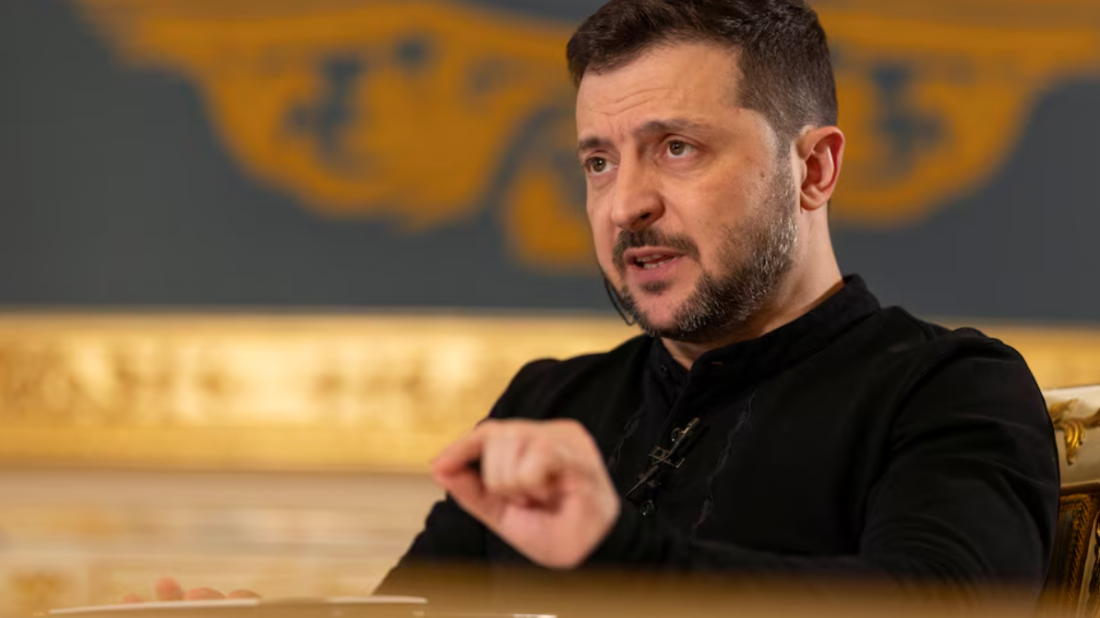
Ukrainian President Volodymyr Zelenskiy pored over a once-classified map of vast deposits of rare earths and other critical minerals during an interview with Reuters on Friday, part of a push to appeal to Donald Trump's penchant for a deal.
The U.S. president, whose administration is pressing for a rapid end to Ukraine's war with Russia, said on Monday he wanted Ukraine to supply the U.S. with rare earths and other minerals in return for financially supporting its war effort.
"If we are talking about a deal, then let's do a deal, we are only for it," Zelenskiy said, emphasising Ukraine's need for security guarantees from its allies as part of any settlement.
Ukraine floated the idea of opening its critical minerals to investment by allies last autumn, as it presented a "victory plan" that sought to put it in the strongest position for talks and force Moscow to the table.
Zelenskiy said less than 20% of Ukraine's mineral resources, including about half its rare earth deposits, were under Russian occupation.
Rare earths are important in the manufacture of high-performance magnets, electric motors and consumer electronics; Zelenskiy said Moscow could open those resources to its allies North Korea and Iran, both sworn U.S. enemies.
"We need to stop Putin and protect what we have - a very rich Dnipro region, central Ukraine," he said.
Russian troops have been gaining ground in the east for months, throwing huge resources into an unrelenting offensive while Kyiv's much smaller army grapples with a shortage of soldiers and frets over future weapons supplies from abroad.
Zelenskiy unfurled a map on a table in the heavily-defended president's office in Kyiv, showing numerous mineral deposits, including a broad strip of land in the east marked as containing rare earths. Around half of it looked to be on Russia's side of the current frontlines.
He said Ukraine had Europe's largest reserves of titanium, essential for the aviation and space industry, and uranium, used for nuclear energy and weapons.
Many of the titanium deposits were marked in northwestern Ukraine, far from the fighting.
Ukraine has rapidly retuned its foreign policy approach to align with the transactional world view set out by the new occupant of the White House, Ukraine's most important ally.
But Zelenskiy emphasised that Kyiv was not proposing "giving away" its resources, but offering a mutually beneficial partnership to develop them jointly:
"The Americans helped the most, and therefore the Americans should earn the most. And they should have this priority, and they will. I would also like to talk about this with President Trump."
He said Russia knew in detail where Ukraine's critical resources were from Soviet-era geological surveys that had been taken back to Moscow when Kyiv gained independence in 1991.
In addition, Zelenskiy said Kyiv and the White House were discussing the idea of using Ukraine's vast underground gas storage sites to store U.S. liquefied natural gas.
"I know that the Trump administration is very interested in it ... We're ready and willing to have contracts for LNG supplies to Ukraine. And of course, we will be a hub for the whole of Europe," he said.
ZELENSKIY WANTS MEETING WITH TRUMP BEFORE US-RUSSIA TALKS
The interview comes days before the February 14-16 Munich Security Conference, where officials from dozens of Western countries will converge at an unpredictable juncture in the nearly three-year-old war.
Zelenskiy said he planned to attend the forum, where Keith Kellogg, Trump's special envoy for Russia and Ukraine, is also expected.
The Ukrainian leader said it was essential that he met Trump in person before the U.S. president meets Russian President Vladimir Putin, "otherwise it will look like a dialogue about Ukraine without Ukraine".
Trump said on Friday that he expected to talk to Zelenskiy next week. Zelenskiy said his own priority would be raising Ukraine's need for security guarantees as part of any deal, to prevent Russia launching another invasion in the future.
In general though, it was vital the West determined a broad strategy before entering into talks with Moscow.
He said there were already regular contacts between his team and Kellogg and Trump national security adviser Michael Waltz.
"Every day we have contacts, we talk about general things, but the specifics will come a little later," he said.
Trump's peace push comes as advancing Russian forces threaten the major Ukrainian logistics hub of Pokrovsk.
On the battlefield, Zelenskiy confirmed for the first time that his troops had launched a new offensive on Thursday, advancing 2.5 km (1.5 miles) further into Russia's Kursk region.
Russia had reported a Ukrainian attack in the area that day, but said it was repelled.
Zelenskiy said thousands of North Korean troops fighting on Russia's side had now returned to active combat against Kyiv's forces in Kursk after a pause of several weeks.
Next week, the government intends to launch lucrative recruitment contracts to entice young men aged 18-24 - below draft age - into the armed forces to help ease a manpower shortage. Zelenskiy declined to say how many men were expected to sign up.










What is your opinion on this topic?
Leave the first comment