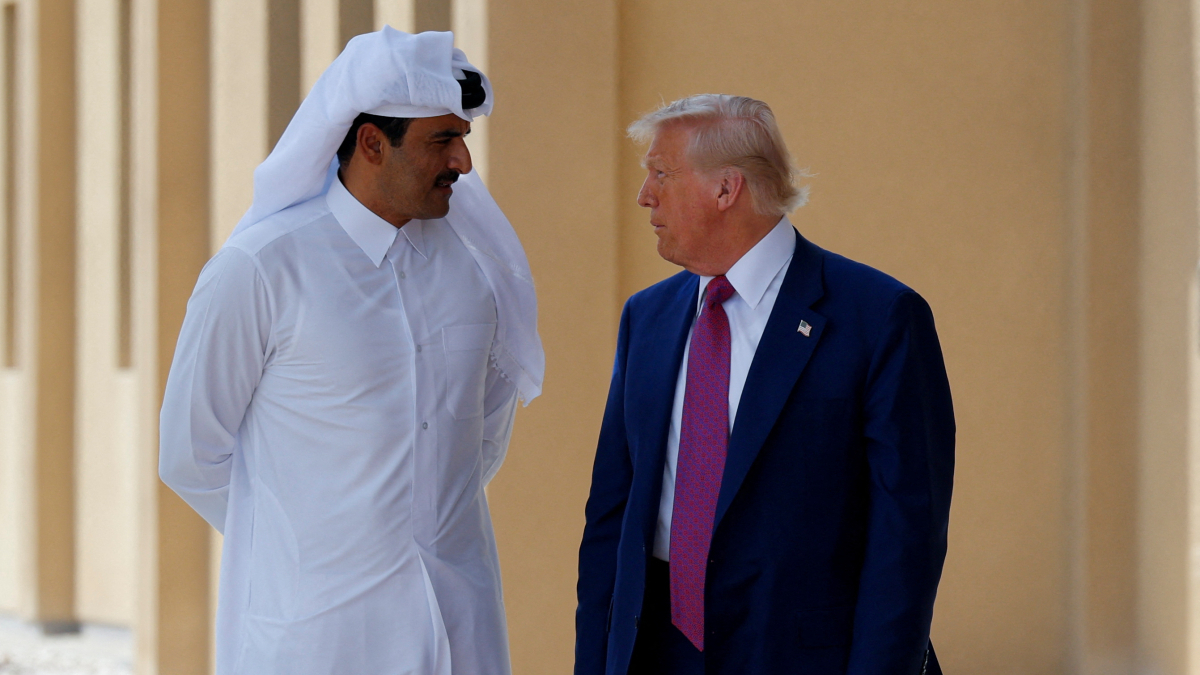
U.S. President Donald Trump is set to host Qatar’s prime minister at the White House on Monday as efforts to end the conflict with Iran stall, with Washington and Tehran still far apart on the terms of a possible agreement.
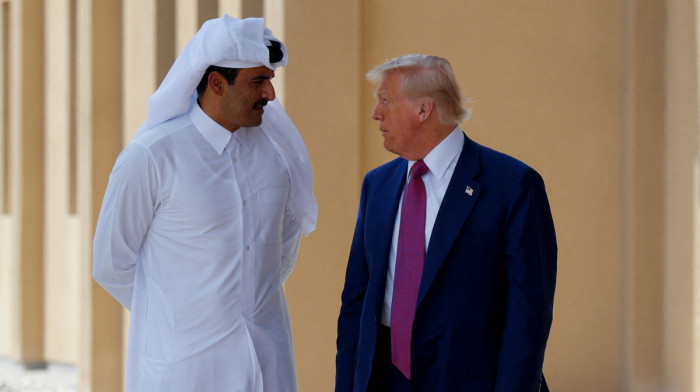
Trump will hold closed-door talks with Sheikh Mohammed bin Abdulrahman Al-Thani, who is also Qatar’s foreign minister, according to the White House schedule. A U.S. official said Vice President JD Vance was also expected to meet the Qatari leader.
Doha’s role as go-between
U.S. Secretary of State Marco Rubio said on Sunday that talks with Iran had made little progress, dismissing the likelihood of an imminent deal. He made the remarks before leaving Florida for a meeting of G7 foreign ministers in Paris.
Rubio said Trump favoured diplomacy but sharply criticised Tehran’s demands.
Rubio: “Not on the verge of a breakthrough”
“I wouldn’t say we’re on the verge of a breakthrough,” he said. “Right now, it’s not been very productive because Iranian demands are simply not just unacceptable but in some cases outrageous, ridiculous and really not realistic.”
He added that leaders sometimes had to pursue unpopular policies if they believed it was the right course of action. The Iran conflict was among the issues that had turned voters against Trump.
Trump warns of new targets
Trump said on Sunday that he was unlikely to order further strikes against Iran if negotiations yielded meaningful progress and a strong agreement.
However, he warned that the U.S. had identified additional infrastructure targets, including bridges, should military operations resume.
Allies gather in Paris
As Qatar’s prime minister meets Trump in Washington, G7 foreign ministers are gathering in Paris amid uncertainty over the direction of U.S. foreign policy.
Four G7 diplomats said they wanted to assess whether Trump’s defeat in the midterm elections would prompt a shift in Washington’s approach to Ukraine, the Middle East and relations with its closest allies.
The diplomats suggested that Democratic gains could constrain the White House, but cautioned against expecting a return to traditional U.S. multilateralism, with foreign policy still firmly under Trump’s control.
The meeting was relocated from Marseille to Paris at short notice over security concerns following weeks of protests across France. It will be Rubio’s first appearance among allied counterparts since the elections. He is regarded as a potential presidential contender in 2028.
Iran is expected to feature prominently in discussions, with Washington’s G7 partners having repeatedly voiced scepticism about the war and concerns that further U.S. military action could deepen the crisis rather than bring it to an end.
Ukraine ahead of Abu Dhabi talks
The G7 comprises Britain, Canada, France, Germany, Italy, Japan and the U.S., with the European Union also participating. Ministers from Ukraine, Saudi Arabia, Egypt, South Korea and Brazil are attending the meeting.
Ukraine is set to be another major focus, with the gathering taking place just a day before scheduled trilateral talks involving Ukraine, Russia and the U.S. in Abu Dhabi on Tuesday.
French Foreign Minister Jean-Noël Barrot said on Sunday that representatives from France, Britain, Germany, NATO and the European Commission would also be present in the Emirati capital.
Differences over Europe's diplomatic approach could also emerge. On 5 November, Italian Prime Minister Giorgia Meloni warned that Europe risked being sidelined in efforts to end the war if member states continued pursuing separate diplomatic initiatives rather than agreeing on a unified strategy and representative.
Energy war and air defence gaps
Diplomats painted a bleak picture of the war in Ukraine, saying the front line had largely stabilised, reducing the likelihood of major territorial breakthroughs.
However, they warned that Russia had shifted towards systematically targeting Ukraine’s energy infrastructure in an attempt to cause a nationwide blackout during winter.
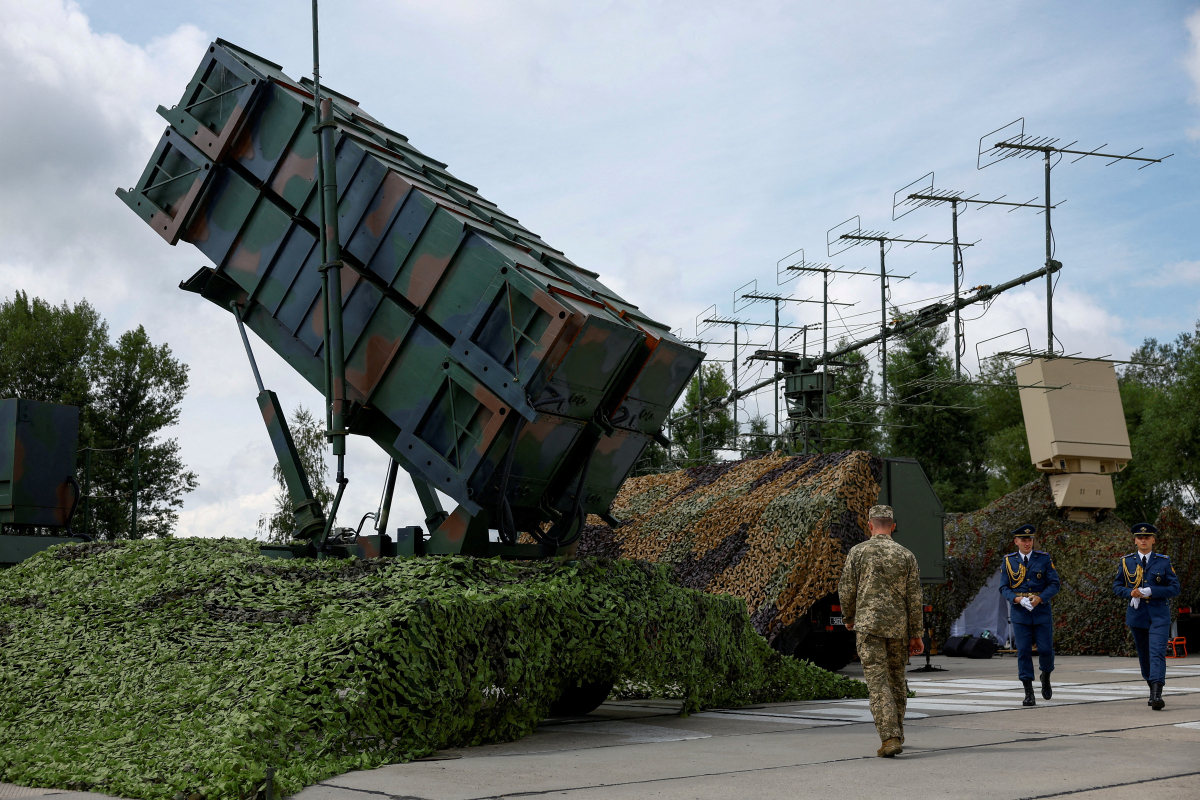
Shortages of Patriot interceptor missiles and other air defence systems remain Kyiv’s most pressing military vulnerability, according to the diplomats.
A key objective of the G7 meeting is to maintain pressure on Moscow while securing additional military, financial and energy assistance for Ukraine, they said.
Hybrid threats on the agenda
Italian Foreign Minister Antonio Tajani said the talks would also cover growing hybrid threats, after his personal data was recently published on the dark web by hackers he described as pro-Russian.
Europe has faced a string of similar incidents, ranging from hoax threats targeting flights to cyberattacks on supermarkets.
Read more:










What is your opinion on this topic?
Leave the first comment