A Ukrainian drone attack sparked a fire at Russia's second-largest oil refinery overnight, while Moscow reported strikes on Ukrainian power facilities and a Black Sea cargo vessel. The attacks came ahead of U.S.-mediated peace talks in Abu Dhabi.
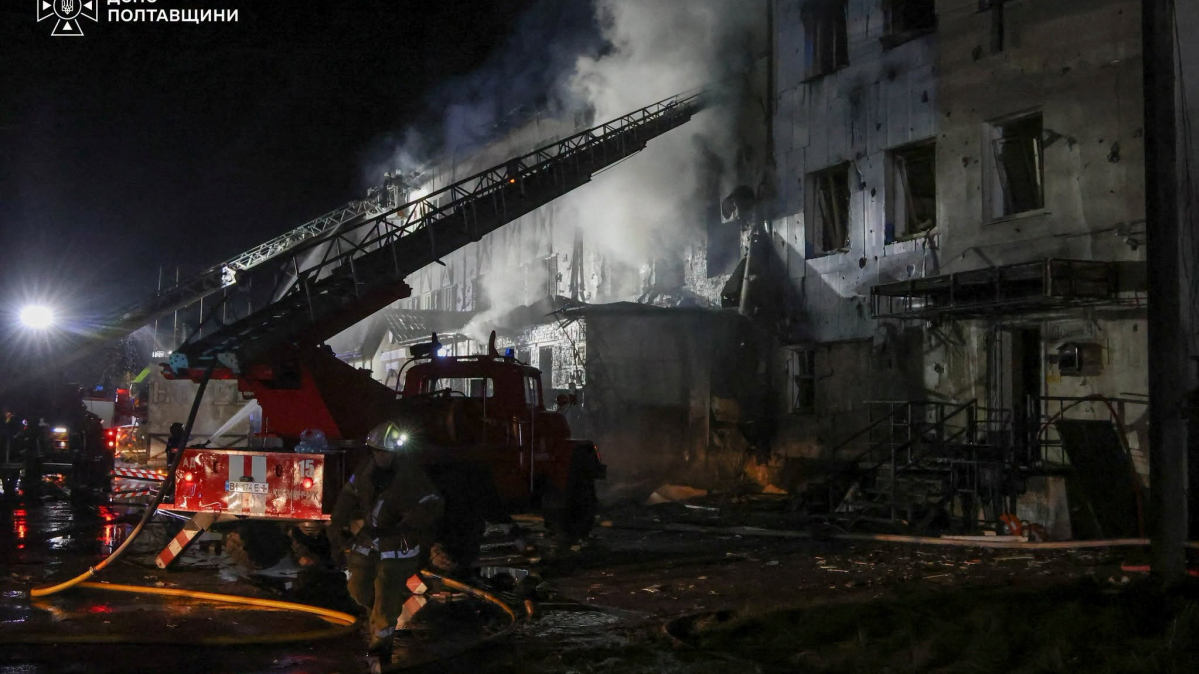
Alexander Drozdenko, governor of Russia's northwestern Leningrad region, said on Monday that the fire at the Kirishi refinery had been contained. He also reported that a woman had been killed after falling drone debris struck a residential building in Vsevolozhsk.
Separately, Russian state news agencies reported that Russian forces had struck three Ukrainian power substations and a Black Sea cargo vessel that Moscow claimed was carrying weapons.
Ukrainian drone strike hits major Russian refinery
The Kirishi refinery, formally known as Kirishinefteorgsintez, was struck overnight, according to a statement posted by Drozdenko on Telegram on Monday.
The governor said Russian air defences had intercepted 113 Ukrainian drones and that firefighters had brought the blaze under control.
He also reported damage to an apartment in Kirishi, while debris from a drone struck the roof of a residential building in Vsevolozhsk, killing a woman.
Unverified footage circulating on social media appeared to show a large blaze at the refinery, although the scale of the damage and any disruption to operations remained unclear.
The facility, about 800 kilometres from the Ukrainian border, can process around 20 million metric tonnes of oil a year, equivalent to roughly 400,000 barrels per day.
The Leningrad region is also a key hub for Russian oil and grain exports via the Baltic Sea.
Russia claim strikes on Ukrainian power facilities
Russian state news agencies also reported that Moscow's forces had struck three power substations across Ukraine overnight on Monday.
They said Russian forces had also attacked a cargo vessel in the Black Sea, which Moscow claimed was transporting weapons to Ukraine.
The reported strikes come as both countries continue to target infrastructure far beyond the front lines.
It was not immediately clear how badly the substations or vessel had been damaged, or whether electricity supplies had been disrupted.
Energy infrastructure under pressure
The latest attacks follow a renewed Ukrainian campaign against Russian oil refineries that began in late October, intensifying after an energy ceasefire announced by U.S. President Donald Trump failed to gain traction.
The Kirishi facility has been targeted several times before as part of Ukraine's wider campaign against Russian oil-processing infrastructure.
Russia, meanwhile, has continued striking Ukraine's energy network, raising fears of widespread power cuts as winter approaches.
Ahead of Monday's G7 foreign ministers' meeting in Paris, diplomats warned that further Russian attacks on electricity infrastructure could leave millions of Ukrainians without power during the colder months.
The threat has increased pressure on negotiators to address the protection of critical energy facilities.
Black Sea security remains a concern
The reported Russian strike on a cargo vessel has also heightened concerns over maritime security in the Black Sea.
Protecting shipping routes and restoring access to the sea are expected to feature in broader discussions aimed at reducing hostilities.
Speaking at a news conference in Berlin on 3 November, Ukrainian President Volodymyr Zelenskyy identified restoring Black Sea access and safeguarding energy infrastructure as key priorities for the forthcoming talks.
He also expressed support for discussions on reciprocal restrictions against attacks on critical infrastructure.
Abu Dhabi negotiations scheduled for 10–11 November
The latest escalation comes just a day before Russia and Ukraine are due to begin U.S.-mediated negotiations in Abu Dhabi on Tuesday, 10 November, with talks scheduled to continue on Wednesday.
U.S. envoy Steve Witkoff announced the negotiations on 2 November, saying they would focus on postwar security arrangements, de-escalation, humanitarian measures and efforts to bring the conflict to an end.
The Kremlin confirmed its participation on 3 November, naming presidential aide Vladimir Medinsky as Russia's chief negotiator.
Zelenskyy also confirmed the planned dates during his news conference in Berlin that day, expressing hope that working-level discussions could pave the way for direct talks between the two countries' leaders.
On Sunday, 8 November, French Foreign Minister Jean-Noël Barrot told RTL radio that France would take part in the Abu Dhabi discussions but did not identify its representative.
Meanwhile, G7 foreign ministers gathering in Paris on Monday are expected to consider additional military, financial and energy assistance for Ukraine.
The talks will unfold amid continued strikes on energy and transport infrastructure, with Moscow and Kyiv still deeply divided over the terms of a possible peace agreement.


















What is your opinion on this topic?
Leave the first comment