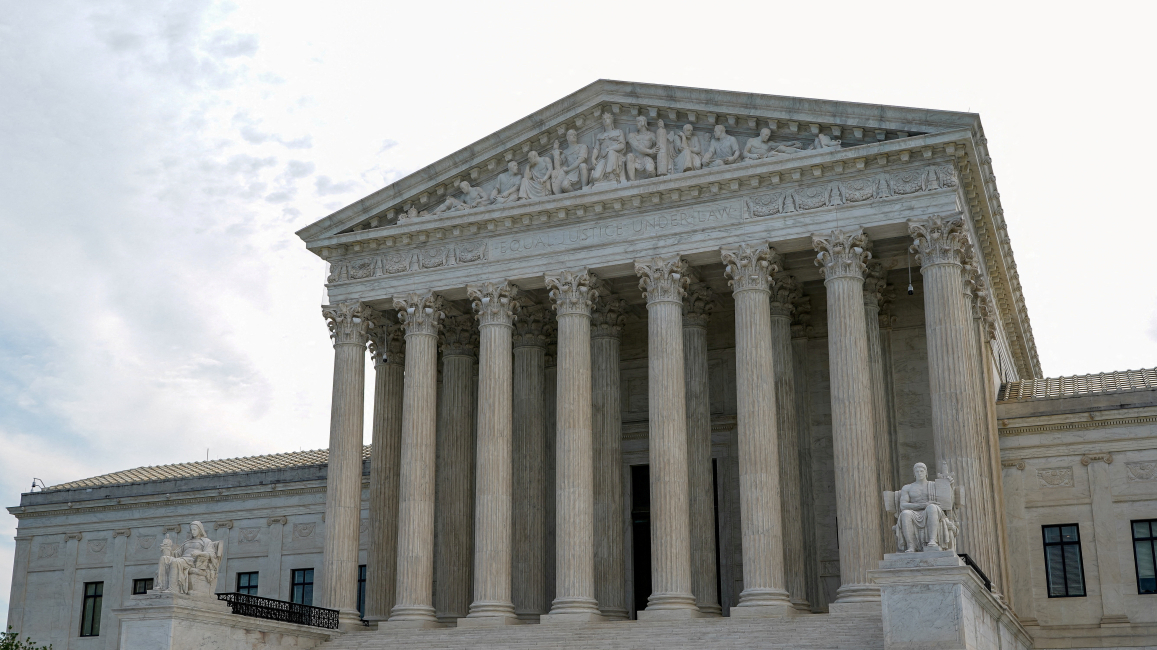
The U.S. Supreme Court has declined to block California from counting mail-in ballots cast by more than 20,000 registered voters challenged by the Trump administration over their citizenship status.
The justices rejected the Justice Department's emergency request on Monday, hours after it was filed. The court issued a brief, one-sentence order without explaining its decision. No justice publicly dissented.
The administration had asked California to separate the disputed ballots from others and withhold them until the voters' citizenship could be verified.
The decision followed a similar rejection by a federal appeals court on Friday and came on the eve of Tuesday's midterm elections, in which Republicans are seeking to retain control of Congress.
Dispute over voter eligibility
The Justice Department filed a lawsuit on 15 October, arguing that California was obstructing enforcement of a 1996 federal law making it a criminal offence for non-U.S. citizens to vote in federal elections.
The list of more than 20,000 registered voters was compiled by the Department of Homeland Security and shared with California and Los Angeles County officials.
The administration argued that counting the ballots before verifying the voters' citizenship would make it impossible to separate potentially ineligible votes from lawful ones.
California disputed the reliability of the federal government's screening process, saying it could wrongly identify eligible voters as noncitizens. State officials also argued that existing safeguards were sufficient to prevent noncitizens from voting.
California Attorney General Rob Bonta described the administration's latest legal action as an attempt to undermine elections and said the state would defend the right to vote.
Courts reject federal intervention
A federal district judge in Los Angeles rejected the administration's request on 28 October. Judge David Carter questioned the reliability of the federal data and warned that unproven allegations should not be used to discount votes.
The San Francisco-based 9th U.S. Circuit Court of Appeals also refused to block the ballots on Friday, citing California's authority over election procedures and its existing system for cancelling registrations when voters are found to be ineligible.
The U.S. Constitution gives states primary responsibility for administering elections, although the federal government retains certain oversight powers.
The Trump administration has increasingly sought to influence how states manage voter registration and election procedures. The Justice Department has warned election officials across all 50 states that they could face criminal prosecution if they knowingly allow noncitizens to remain on voter rolls or cast ballots.
It has also faced a series of legal defeats in attempts to obtain state voter registration records, including sensitive personal information.
Multiple studies and state audits have found that voting by ineligible individuals, including noncitizens, is rare.
California is the most populous U.S. state and holds 52 seats in the House of Representatives. Democrats need a net gain of four seats to secure a majority in the chamber.
Read more:

















What is your opinion on this topic?
Leave the first comment