More than 150 people have been killed in a drone strike on a crowded market in the disputed Abyei region, South Sudanese officials said, marking one of the deadliest attacks linked to Sudan's civil war since it began in April 2023.
Officials in Abyei said the attack struck the market north of Abyei town around midday on Monday, sparking fires that hampered rescue efforts.
Yohana Akol Ngor, Abyei's caretaker information minister, told Reuters that the confirmed death toll had risen to 153 from an earlier estimate of 73. He warned that the figure could rise further as emergency teams continued searching the site.
“The fire is still burning,” Ngor said. “The recovery process of the dead is still continuing. The situation is terrible.”
South Sudan's government blamed Sudan's military for the strike but provided no public evidence to support the accusation. Sudan's armed forces had not responded to requests for comment at the time of reporting.
Market and fuel depot hit
Diplomatic sources, an aid worker and a conflict analyst told Reuters the drone strike appeared to have hit a fuel depot inside the market.
They said the facility had previously been used to supply fighters from the paramilitary Rapid Support Forces (RSF).
The RSF did not immediately comment on the allegations.
The conflicting accounts underline the difficulty of establishing responsibility for attacks as Sudan's war spreads into border areas. Reuters could not independently verify the circumstances surrounding the strike or whether military targets were present.
Abyei caught between two states
Oil-rich Abyei has long been a flashpoint between Sudan and South Sudan, with both countries claiming the territory since South Sudan gained independence in 2011.
Although jointly administered, Abyei lies along Sudan's volatile Kordofan frontier, which has emerged as a major battleground between the Sudanese Armed Forces and the RSF.
Sudanese government officials have previously claimed that RSF fighters operate in parts of Abyei. Ngor rejected the allegations, saying the paramilitary group had no presence in the territory.
The United Nations Interim Security Force for Abyei (UNISFA) warned in May that growing RSF activity was worsening insecurity. It also cautioned that delays in resolving the territory's political status were putting civilians and peacekeepers at greater risk.
Thousands displaced
The strike has forced thousands of residents to flee, deepening an already severe humanitarian crisis.
Ngor said around 8,000 people had been displaced, placing further pressure on a region struggling with inadequate infrastructure and limited access to essential services.
South Sudan's foreign ministry condemned the attack, summoning Sudan's ambassador in Juba in protest.
The ministry confirmed in a statement that drones had hit a market north of Abyei town but gave no casualty figures.
Escalating drone warfare
The deadly strike comes as both sides in Sudan's civil war increasingly turn to drones, raising fears of further civilian casualties.
Recent attacks have reportedly targeted RSF-held Nyala and army-controlled sites, including Khartoum airport.
Sudanese rights group Emergency Lawyers said dozens of people had been killed in separate strikes in West Kordofan earlier this month, blaming Sudan's military.
The violence has also crossed into neighbouring countries. Chadian authorities have accused Sudan's military of launching drone strikes inside Chad, fuelling fears that the conflict could spread further across the region.
Sudan's foreign ministry has previously defended military operations near its borders, saying the armed forces were acting to protect national security.
The Abyei bombing follows a separate aerial attack on 10 October near Sudan's border with Egypt, which reportedly killed more than 70 artisanal miners, according to a local rights organisation.
Hospitals overwhelmed
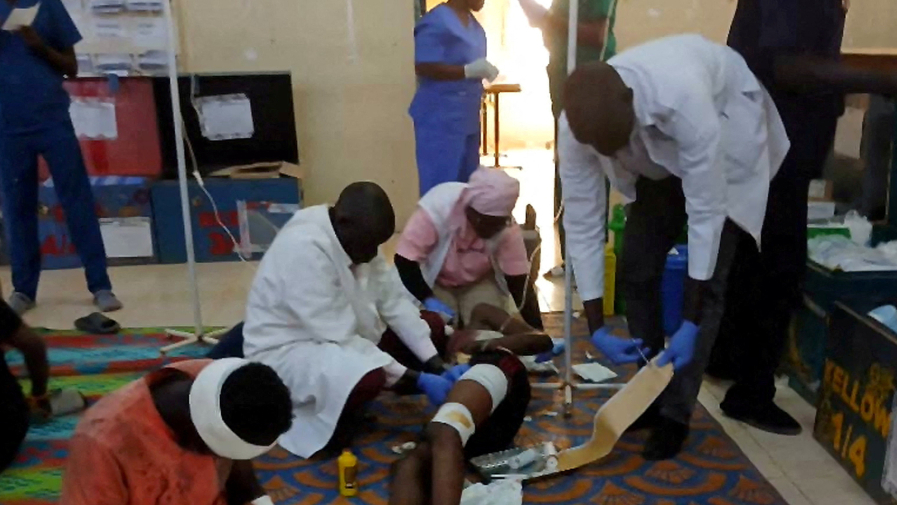
Hospitals in Abyei are struggling to treat the wounded, many of whom have suffered severe burns and blast injuries.
Médecins Sans Frontières (MSF) said more than 20 patients were receiving treatment at Ameth Bek Hospital.
“We are providing surgical services and wound dressing, along with other emergency care,” Christian Lindauer, MSF's medical activities manager at the hospital, said in a statement.
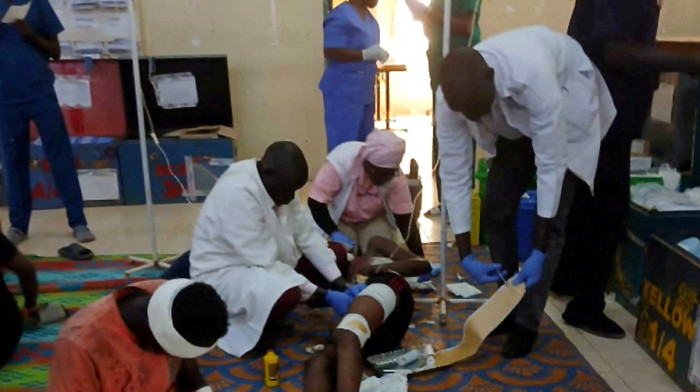
Images released by MSF showed injured patients receiving treatment on hospital floors and in makeshift treatment areas as medical teams struggled to cope with the influx.
Fears of wider regional instability
Sudan's civil war has killed tens of thousands of people, displaced millions and fuelled instability across neighbouring regions.
The Abyei strike highlights the growing danger to civilians far beyond Sudan's main battlefields, particularly in contested border areas where political tensions and armed conflict overlap.
As recovery efforts continue and the death toll threatens to rise, the attack is likely to intensify calls for an investigation into who was responsible and whether civilians were deliberately targeted.
Read more:












What is your opinion on this topic?
Leave the first comment