The 2026 Paris Motor Show has opened with a clear message: competition is intensifying as carmakers race to embrace electric vehicles, cutting-edge technology and new designs.
More than 200 automotive brands are showcasing their latest models at the event, where the growing rivalry between Europe's established manufacturers and fast-expanding Chinese competitors is taking centre stage.
According to France 24, Chinese carmakers including BYD, XPeng and Zeekr are attracting significant attention as they expand their global reach and strengthen their position in the electric vehicle market.
European carmakers showcase bold new designs
French manufacturers are making the most of their home advantage, unveiling models that combine automotive heritage with futuristic technology.
Renault, Citroën, Peugeot, Alpine and DS have presented everything from production-ready vehicles to ambitious concept cars, as they compete to win over buyers in an increasingly crowded market.
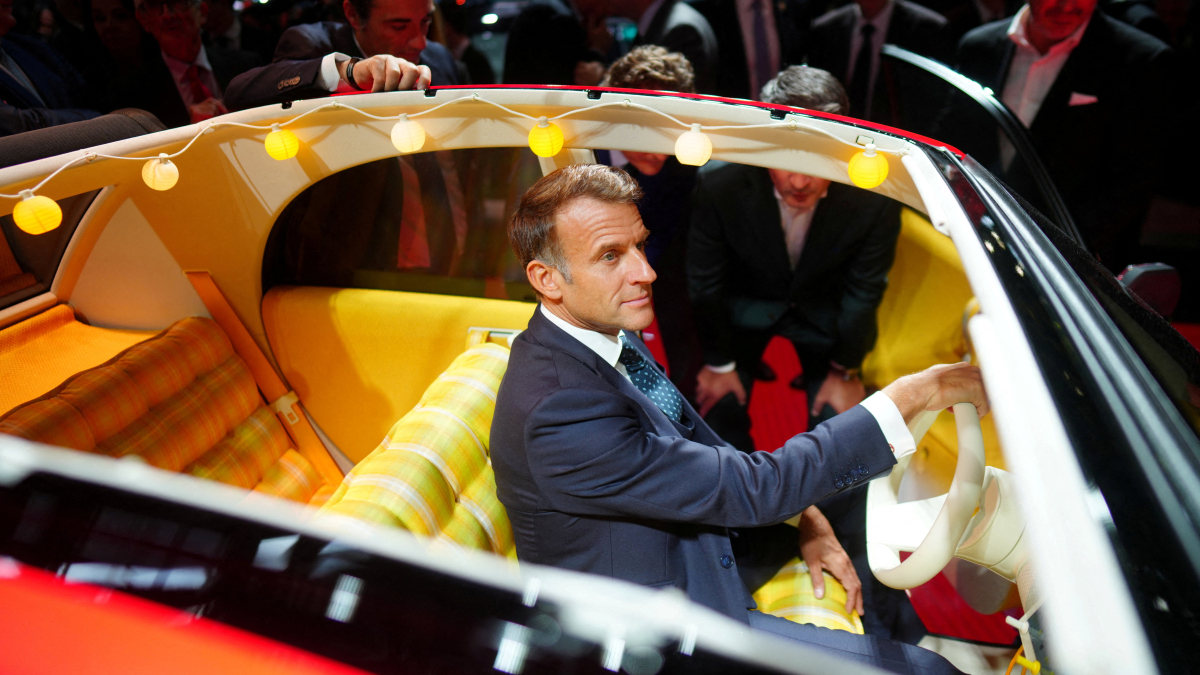
Among the most eye-catching debuts is the revival of the iconic Citroën 2CV, reimagined as a modern electric car. Auto Express described it as the return of a post-war motoring legend, with a focus on affordability and mass-market appeal.
Other highlights include Renault's futuristic E-Space concept, Peugeot's rally-inspired E-T16 electric hyper-hatch andAlpine's striking A310 Vision performance concept.
Electric Vehicles dominate the conversation
Electrification is dominating the exhibition, with major manufacturers racing to develop more competitive and affordable models.
Volkswagen has unveiled the ID. Tiguan, a redesigned electric SUV aimed at strengthening its position in the fiercely contested family car market.
Smart has also attracted attention with the compact Smart #2, signalling a return to its city-car roots. The fully electric model draws inspiration from the original ForTwo.
Analysts say the show highlights a wider transformation across Europe's automotive industry, as manufacturers accelerate the development of electric vehicles while seeking to bring down costs for consumers.
Chinese brands step up pressure on Europe
Chinese carmakers are emerging as some of the strongest challengers to Europe's established automotive giants, using the Paris show to push deeper into the European market.
BYD, Geely, Aion, Omoda, Leapmotor and Li Auto are among the brands showcasing new vehicles and seeking to expand their presence across the continent.
One of the standout launches is the BYD Atto 8, a seven-seat electric SUV targeting families seeking larger vehicles. Aion, meanwhile, has made its Paris debut with a range of new crossovers and SUVs.
Their growing influence is raising the stakes for European and North American manufacturers, which face mounting pressure to compete on price, technology and innovation.
John Bozzella, president and chief executive of the Alliance for Automotive Innovation, highlighted the challenge posed by China's rapidly expanding automotive industry in comments to France 24, pointing to the increasing pressure on traditional carmakers.
Innovation beyond performance
Beyond electric power, the exhibition is offering a glimpse of how technology could transform the way people drive.
Manufacturers are presenting advances in battery performance, faster charging, autonomous driving, artificial intelligence and increasingly sophisticated vehicle software.
Tesla's autonomous Cybercab, Fiat's modular vehicle concepts and next-generation digital cockpits are among the innovations illustrating the industry's shift towards software-driven mobility.
The focus is no longer simply on how cars perform, but also on how they connect, adapt and operate in an increasingly digital world.
A glimpse of the industry's future
Long regarded as a showcase for the industry's future, the Paris Motor Show is highlighting a rapidly changing global automotive landscape.
European manufacturers are drawing on decades of heritage, distinctive design and electric innovation to defend their market positions. Chinese rivals, meanwhile, are challenging the established order with ambitious expansion plans and increasingly advanced vehicles.
As the show continues throughout the week, the spotlight will remain on which manufacturers can gain the upper hand in an industry being transformed by electrification, digital technology and fierce international competition.
Read more:











What is your opinion on this topic?
Leave the first comment