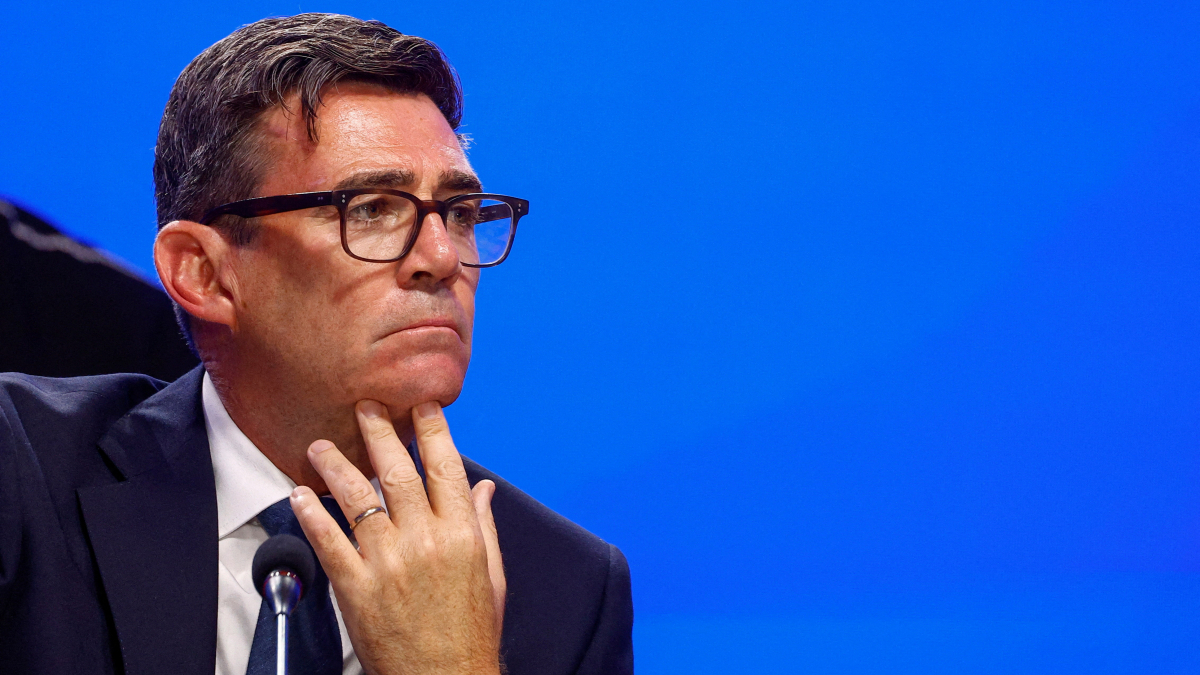
British Prime Minister Andy Burnham has ruled out holding a referendum on Irish unification, saying such a vote is "off the table" as he seeks to focus on economic and public service challenges facing Northern Ireland.
Speaking during his first official visit to Northern Ireland since taking office, Burnham said his government would prioritise practical issues affecting people's daily lives rather than reopening constitutional debates over the region's future.
The prime minister argued that divisive political contests can leave long-lasting scars, pointing to the fallout from both the Brexit referendum and Scotland's independence vote. He said the UK should concentrate on addressing immediate concerns, including public services and the cost-of-living pressures facing households.
Burnham's comments signal a clear reluctance to engage with one of the most sensitive questions in Northern Irish politics: whether the region should remain part of the United Kingdom or join the Republic of Ireland.
Immediate political backlash
The remarks quickly drew criticism from Northern Ireland's First Minister, Michelle O'Neill, who accused the prime minister of attempting to dismiss a democratic right protected under the Good Friday Agreement.
O'Neill said decisions about Ireland's constitutional future should be made by people on the island of Ireland, not by the British government. Following a meeting with Burnham, she said she had challenged what she described as his "anti-democratic" position on a future unity referendum.
The Sinn Féin leader argued that the right to hold a vote on Irish unity is explicitly recognised under the Good Friday Agreement and cannot simply be removed from consideration.
She insisted that any discussion about the island's future must respect the commitments made under the landmark peace accord and maintained that the agreement's provisions should be fully honoured.
A sensitive constitutional question
The issue of Irish unification remains one of the most consequential and emotionally charged topics in Northern Ireland.
Under the terms of the Good Friday Agreement, signed in 1998, the British government has the authority to call a referendum on Irish unity if it appears likely that a majority of voters would support constitutional change. The agreement helped bring an end to decades of conflict known as the Troubles, during which more than 3,500 people were killed.
While support for a united Ireland has grown in some political circles in recent years, particularly after Brexit, there is no consensus on when or whether such a referendum should take place.
Unionist parties strongly support Northern Ireland's place within the United Kingdom, while Irish nationalist parties continue to advocate eventual reunification.
Focus on governance
Burnham's visit was intended to highlight his government's commitment to working with Northern Ireland's devolved institutions and addressing economic challenges facing the region.
Rather than becoming drawn into constitutional debates, the prime minister stressed the need to improve public services and tackle the pressures many families continue to face from higher living costs.
His comments suggest that, at least for now, his administration intends to focus its political capital on governance and economic issues rather than questions surrounding Northern Ireland's long-term constitutional status.
However, the strong reaction from O'Neill underscores how sensitive the issue remains and signals that debates over Irish unity are unlikely to disappear from Northern Ireland's political agenda any time soon.
















What is your opinion on this topic?
Leave the first comment