The U.S. Supreme Court has allowed President Donald Trump's administration to move forward with parts of an executive order aimed at tightening rules around mail-in voting, marking a significant legal victory for the White House ahead of November's midterm elections.
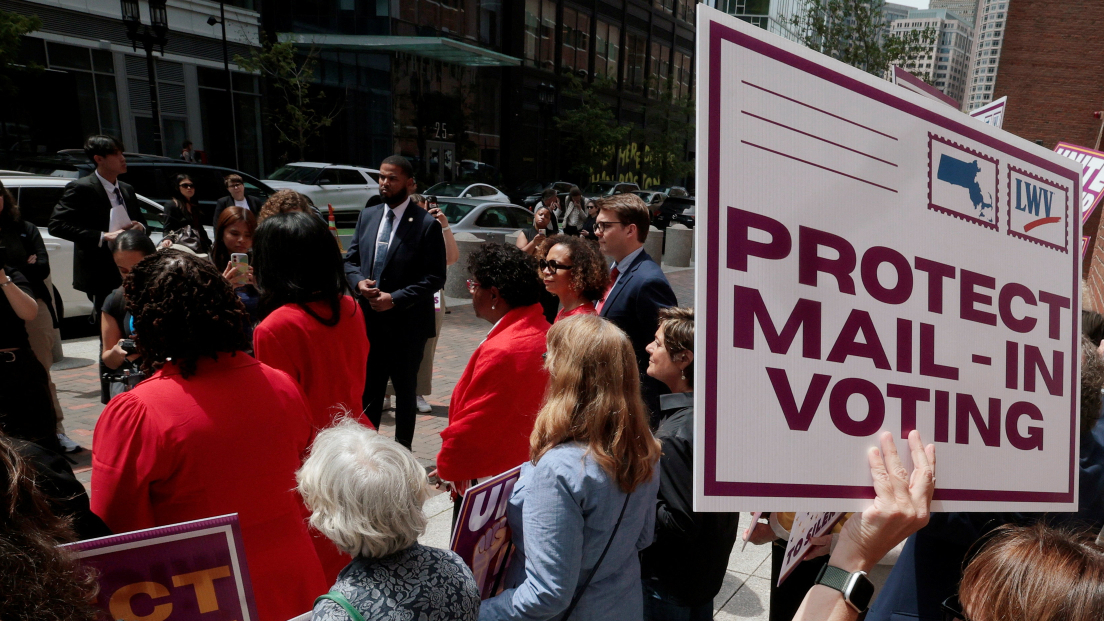
In a decision issued on Monday, the court paused a lower court ruling that had blocked the order in a lawsuit brought by 23 states and Washington, D.C. The states, most of them led by Democrats, argue that the measure could disenfranchise voters and interfere with elections traditionally administered by individual states.
The ruling was split along ideological lines, with the court's three liberal justices dissenting. However, the decision does not end the legal battle, and opponents of the order are expected to continue challenging it as the election approaches.
A move to strengthen oversight
Trump's executive order, signed in March, seeks to strengthen federal oversight of mail-in voting. It directs the Department of Homeland Security to provide states with lists of citizens eligible to vote and instructs the Justice Department to prioritise investigations involving election officials who distribute ballots to individuals deemed ineligible to vote in federal elections.
The order also requires the U.S. Postal Service to deliver mail-in ballots only to voters appearing on state-approved absentee voter lists. Postal authorities have already begun moving toward implementation of the directive.
The administration argues the lawsuit was filed prematurely because federal agencies had not yet taken actions directly affecting the states. But the states maintain that the changes could disrupt election administration, increase compliance costs and create uncertainty for voters ahead of a closely watched congressional election.
Earlier this year, U.S. District Judge Indira Talwani blocked the order, ruling that the president lacked authority to alter how states manage federal elections. She noted that the U.S. Constitution gives states responsibility for determining voter eligibility and questioned whether federal agencies could accurately compile voter lists for every state.
Changing election rules
The dispute comes amid Trump's broader effort to reshape U.S. election rules. The president has repeatedly criticised mail-in voting and pledged to curb its use nationwide, despite studies showing voter fraud remains rare. Democrats have argued that restrictions on mail voting could disproportionately affect their supporters, who have historically used absentee ballots at higher rates than Republican voters.
With control of Congress at stake in November, the Supreme Court's intervention adds a new dimension to an already contentious debate over voting rights and election administration in the United States.




















What is your opinion on this topic?
Leave the first comment