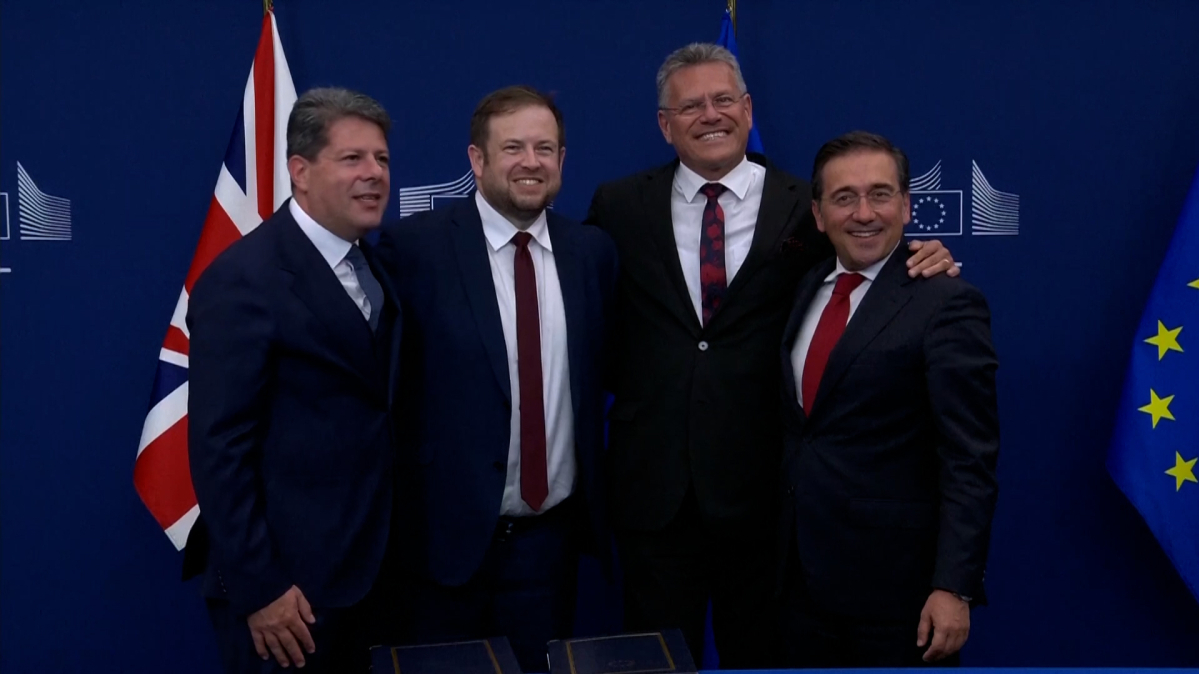
The United Kingdom, the European Union, Spain and Gibraltar have formally signed a treaty establishing new arrangements for movement and border procedures between Gibraltar and Spain.
The agreement, signed in Brussels by representatives of all four parties, follows negotiations aimed at creating a long-term framework for travel across the Gibraltar–Spain border.
The UK Government said the treaty provides long-term economic and trade certainty for Gibraltar while safeguarding British sovereignty and protecting the autonomous operation of UK military facilities on the Rock. It also has the full backing of Gibraltar Chief Minister Fabian Picardo, his government and the Gibraltar Parliament, which unanimously supported the agreement.
The treaty is designed to avoid the introduction of a hard border following Brexit, which left Gibraltar outside the UK–EU Trade and Cooperation Agreement. Around 15,000 people - more than half of Gibraltar's workforce - cross the Gibraltar–Spain land border each day for work.
New border procedures
Under the treaty, Gibraltar residents will be able to enter Spain using residence cards without having their passports stamped. Spanish citizens will also be able to travel to Gibraltar using government-issued identity cards.
New procedures will also apply to passengers arriving at Gibraltar Airport. Travellers will present their passports to both Gibraltarian and Spanish border officers. The UK Government said the system will operate in a similar way to the joint border checks carried out by French officials for passengers travelling through London's St Pancras station.
Ministers said the agreement will reduce delays and checks at the border, improve the movement of people and goods, support jobs on both sides of the frontier, and create new opportunities for flights, trade and economic growth.
Sovereignty unchanged
The agreement focuses on practical border arrangements while maintaining Gibraltar's current constitutional status. The UK Government said the treaty does not change Gibraltar's position as a British Overseas Territory and that British sovereignty remains fully protected.
Gibraltar has been under British control since 1713, when Britain gained sovereignty over the territory under the Treaty of Utrecht, which ended the War of the Spanish Succession.
Located at the southern tip of the Iberian Peninsula, Gibraltar has long been a point of dispute between Britain and Spain.
The UK and the European Union will begin provisionally applying the treaty from 15 July, allowing the new border and travel arrangements to take effect immediately while the agreement progresses through the formal ratification process.
The treaty aims to provide clearer travel procedures for residents, workers and visitors who regularly cross between Gibraltar and Spain while preserving the territory's existing political arrangements.

















What is your opinion on this topic?
Leave the first comment