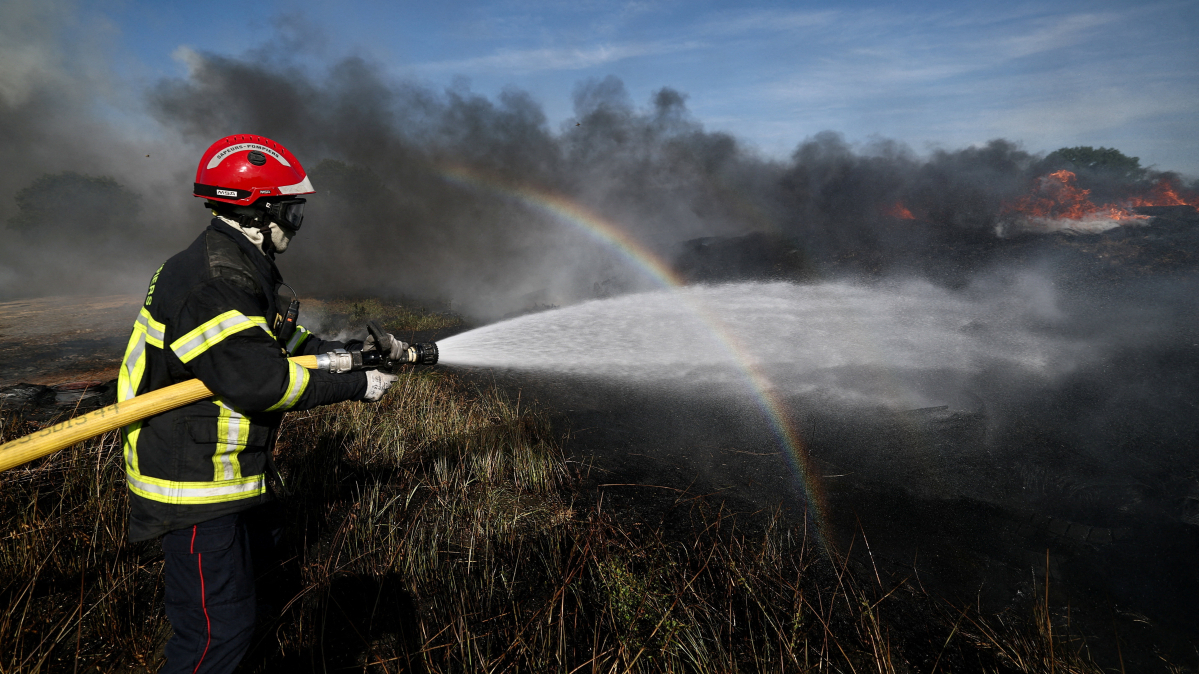
More than 400 firefighters worked through the night to contain a major wildfire in the historic Fontainebleau forest south of Paris, as France and much of Western Europe continued to grapple with extreme summer heat.
The fire broke out near a highway close to Fontainebleau, home to one of France's most famous royal palaces. Fanned by hot winds and dry conditions, the blaze had scorched more than 800 hectares of land by midnight.
Authorities deployed two Canadair waterbombing aircraft on Monday to support ground crews battling the flames.
“The fight continues today,” the French fire service said on social media as emergency teams sought to prevent the fire from spreading further.
The wildfire caused significant transport disruptions in the region.
Authorities temporarily shut down the A6 motorway, one of France's main transport routes linking Paris with Lyon and the southern parts of the country. Smaller fires in the surrounding area also affected high-speed rail services.
Residents were warned that firefighting aircraft would be collecting water from the River Seine as part of efforts to contain the blaze.
The fire erupted just 70 kilometres south of Paris, raising concerns about the potential impact on nearby communities and infrastructure.
The Fontainebleau blaze is the latest in a series of major wildfires affecting southern and western Europe during another prolonged period of extreme temperatures.
Scientists and climate researchers have repeatedly warned that hotter and drier conditions linked to climate change are increasing the frequency and intensity of wildfires across the continent.
Large areas of France, Spain, Portugal and Greece have experienced severe drought conditions, creating ideal circumstances for fast-moving fires.
Thousands of hectares of land have already been destroyed by wildfires across Europe this summer.
Heat related deaths exceeds 10,000 across Europe
In Spain, the death toll from a wildfire in the southeastern province of Almeria rose to 13 after a 93-year-old British woman died from burns sustained in the blaze.
Western Europe is currently experiencing its third major heatwave of the summer, with temperatures reaching unusually high levels across several countries.
An earlier heatwave in late June is believed to have contributed to thousands of deaths across the region. Authorities reported more than 10,000 excess deaths, while the extreme temperatures disrupted electricity supplies, forced school closures and shattered temperature records in countries including France, Spain and Britain.
Public health experts say the scale of the mortality linked to the heat is unusual for this time of year.
“To have this kind of excess at this time of year is unusual. It's really high,” said Lasse Vestergaard, chief physician at Denmark's Statens Serum Institut, which hosts the EuroMOMO mortality monitoring system.
“It is difficult to explain this high excess mortality by anything but the extreme heat,” he said.
As firefighters continue efforts to bring the Fontainebleau blaze under control, authorities across Europe remain on high alert, with forecasters warning that scorching temperatures and elevated wildfire risks are likely to persist in the coming days.
















What is your opinion on this topic?
Leave the first comment