Boeing-linked fund to pay $87 million to families of Kenyan crash victims
The families of 32 Kenyans who died in the 2019 Ethiopian Airlines Flight 302 disaster are set to receive a com...
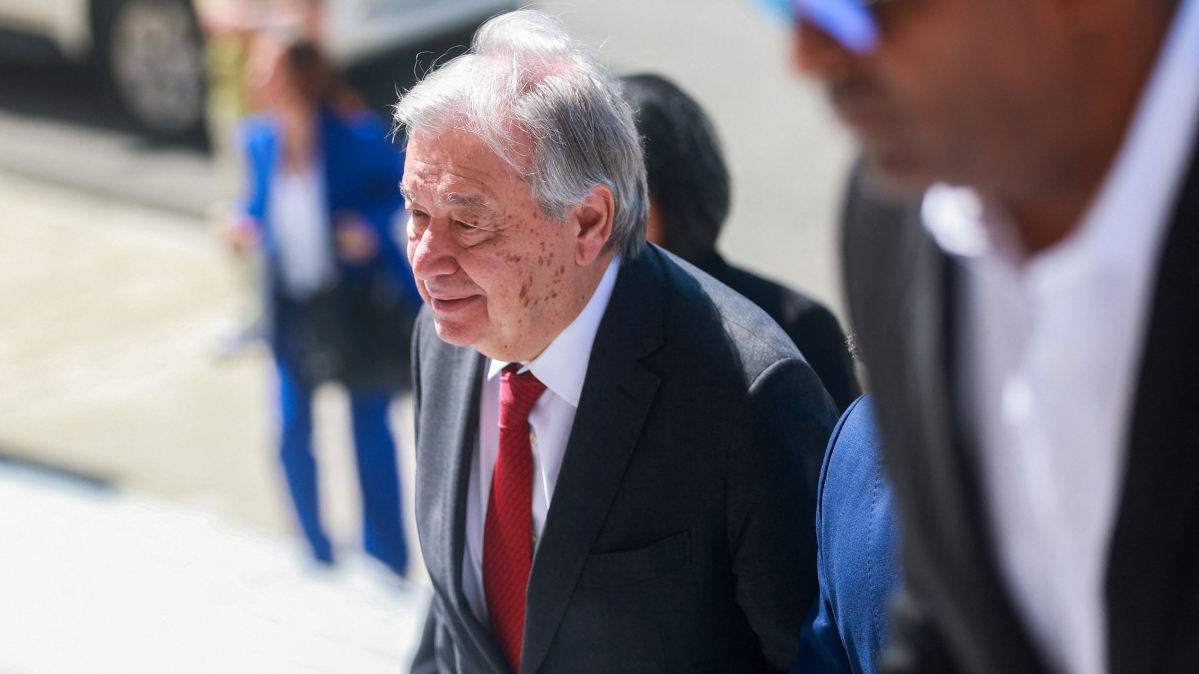
United Nations Secretary-General António Guterres on Monday called for renewed global action to prevent terrorism by tackling its root causes, warning that rising global instability is creating conditions in which extremist groups can thrive.
Speaking at the Fourth High-Level Conference of Heads of Counter-Terrorism Agencies at UN headquarters in New York, Guterres said the world was facing a convergence of armed conflict, climate pressures, economic hardship and displacement that was increasing vulnerabilities.
"We meet at a moment of acute instability," Guterres told delegates.
"These conditions, of want, fragility and mistrust, are ideal circumstances for terror to thrive."
Guterres said affiliates of Al-Qaeda and Islamic State remain active across Africa, South Asia and the Middle East, while xenophobic, racist and other extremist ideologies continue to pose domestic threats in many countries.
He warned that terrorist groups are increasingly using artificial intelligence, digital platforms, criminal financial networks and drones to recruit followers, raise funds and carry out attacks.
At the same time, he said emerging technologies could strengthen counter-terrorism efforts by improving early threat detection and disrupting illicit financial flows.
Marking the 20th anniversary of the UN Global Counter-Terrorism Strategy, Guterres said prevention must remain the top priority, urging governments to address poverty, discrimination, exclusion and human rights abuses.
"These wrongs do not justify terrorism. Nothing can," he said.
"But they can create vulnerabilities that terrorist groups are quick to exploit."
He also stressed that no country could tackle terrorism alone and called for deeper international cooperation, alongside greater involvement from civil society, youth groups, victims and the private sector.
Guterres warned that heavy-handed counter-terrorism measures could backfire by deepening divisions and fuelling further radicalisation.
"Our response must be rooted in the very principles terror seeks to destroy: justice, human dignity and solidarity," he said.
Azerbaijani President Ilham Aliyev and Armenian Prime Minister Nikol Pashinyan have concluded talks in Bishkek, the capital of Kyrgyzstan, as leaders gather for the Shanghai Cooperation Organisation (SCO) summit.
Iran has reached an understanding with Oman on transit arrangements through the Strait of Hormuz, but the waterway will remain closed until the U.S. fulfils its commitments, a senior Iranian diplomat said on Saturday.
U.S. forces struck two Iranian rocket launchers on Larak Island on Sunday, with Tehran responding by launching ballistic missiles at two U.S. bases in Jordan in the first direct U.S.-Iran military escalation in weeks.
Russia views NATO’s growing military activity in the Arctic as a direct threat to its national security, Foreign Minister Sergei Lavrov said.
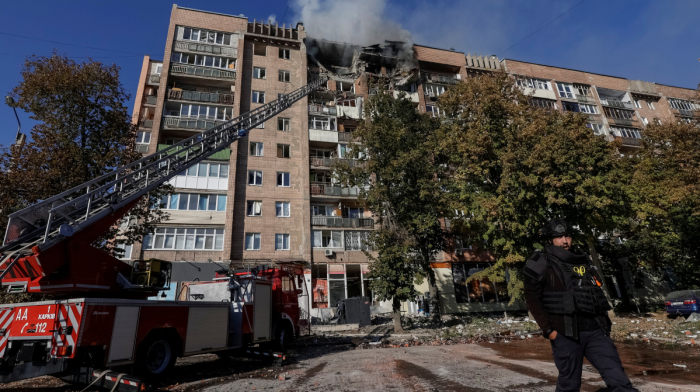
At least 37 people were killed after a Russian drone strike hit an ammunition depot in the Kyiv region, triggering powerful secondary explosions President Volodymyr Zelenskyy said on Saturday, vowing to punish suspected negligence in the second such incident in two months.
Spanish Prime Minister Pedro Sanchez said on Monday there were signs that Russian and Israeli networks helped spread disinformation about Spain’s migration policy, contributing to last month’s unprecedented surge of migrants into Ceuta.
A gathering of G20 finance ministers and central bank governors in Asheville, North Carolina, was dominated by sharp disagreements over Russia's presence, as the world's leading economies face mounting geopolitical and economic pressures.
U.S. Vice President JD Vance has blamed the administration of former President Joe Biden for ammunition shortages within the U.S. military, arguing that years of insufficient defence spending left the armed forces under-resourced.
The death toll from last week's catastrophic floods in Nepal and Tibet rose to 939 on Monday, with 3,044 people still missing, as fresh rainfall pushed up river levels and forced rescuers to move to higher ground.
Recovery teams are continuing operations in Grand Canyon National Park after flash floods swept through parts of the canyon over the weekend, leaving one person dead and leading to the discovery of a second body that has yet to be recovered.
You can download the AnewZ application from Play Store and the App Store.
What is your opinion on this topic?
Leave the first comment