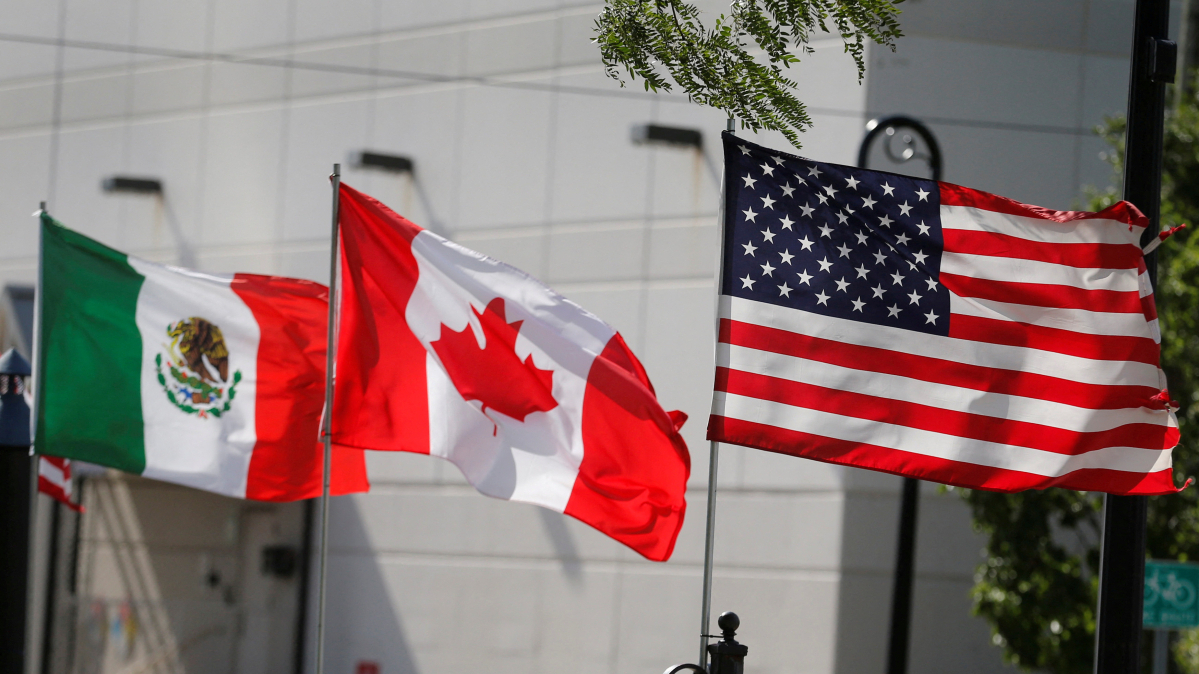
The United States is expected on Wednesday to formally signal that it will not extend the U.S.-Mexico-Canada Agreement (USMCA), triggering a lengthy review process that could ultimately reshape the North American free trade framework.
Prolonged uncertainty over North American trade
The move would initiate a six-year review process under the "sunset clause" introduced during Donald Trump's first administration, although it would not immediately change the agreement or its current rules.
Instead, it would begin a prolonged period of negotiations between Washington, Mexico City and Ottawa over potential revisions to the pact, including disputes over automotive content rules and trade protections.
If no agreement is reached to extend USMCA for another 16 years, the agreement would enter a rolling review process for the following decade, with annual reassessments. The pact would then expire in 2036 if no consensus is reached.
Trade officials from the three countries are expected to meet virtually on Wednesday to indicate whether they support extending the deal, although U.S. Trade Representative Jamieson Greer has already scheduled further talks with Mexico later in July.
"We expect July 1st to come and go, and for the United States to not confirm its wish to extend," said Greta Peisch, a former USTR general counsel.
U.S. pushes for tougher trade terms
Washington is expected to continue pressing for significant changes to the agreement, particularly in the automotive sector.
Among the U.S. proposals is a requirement that North American vehicles contain up to 50% U.S.-specific content, which could raise the overall regional content requirement to as high as 82% for tariff-free access, according to sources familiar with the talks.
The U.S. has also sought stricter rules to prevent Chinese-made components from indirectly benefiting from USMCA trade preferences.
Officials have indicated that vehicles assembled in Mexico and Canada could still face tariffs, depending on the final rules of origin.
Bilateral talks and trade friction
Negotiations have so far focused primarily on the United States and Mexico, with Canada largely excluded from formal rounds of talks.
Canadian trade issues include restrictions on agricultural markets such as dairy, as well as disputes over provincial-level boycotts of U.S. alcohol products.
Despite this, U.S. officials remain in informal contact with Canadian counterparts, including Trade Minister Dominic LeBlanc.
Shared concerns, different approaches
A Mexican official said both Washington and Mexico City agree on the underlying challenges facing USMCA, including declining U.S. manufacturing employment, shifting automotive supply chains and the increased use of Asian components.
"Mexico and the U.S. are in agreement about the goals. What we are discussing is how to reach them," the official said.
However, major differences remain over the methods and scope of reform, leaving the future of North American trade cooperation uncertain as formal review discussions begin.


















What is your opinion on this topic?
Leave the first comment