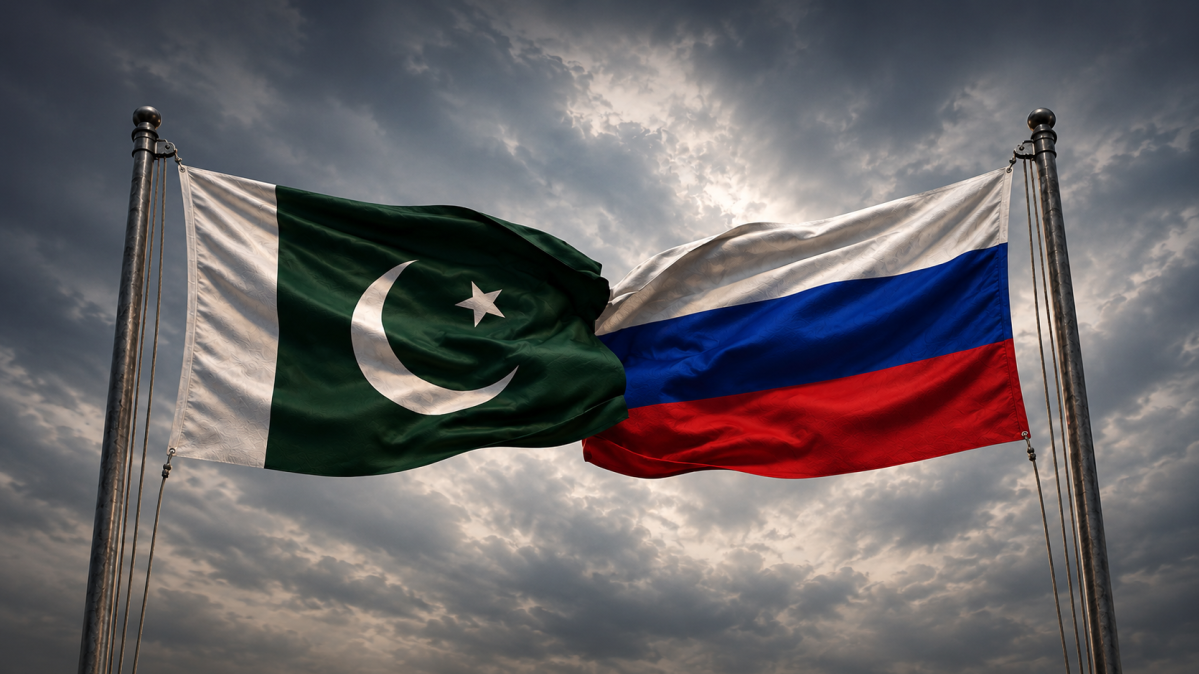
Pakistan and Russia have agreed to deepen counterterrorism cooperation amid continuing concerns over militant threats emanating from Afghanistan, underlining growing alignment between the two countries on regional security.
The agreement emerged during the 12th round of the Pakistan-Russia Joint Working Group on Countering International Terrorism, held in Islamabad on 23 June.
The talks were led by Pakistan's Additional Foreign Secretary, Ambassador Khalid Jamali, and Russia's Deputy Foreign Minister, Dmitry Lyubinsky. According to Pakistan's Foreign Ministry, discussions focused on terrorist threats originating from Afghanistan and their implications for regional stability.
Pakistan called for what it described as immediate and verifiable action by the Afghan authorities against militant groups operating from Afghan territory. Islamabad reiterated its position that Afghan soil should not be used to plan or launch attacks against any country.
The message reflects Pakistan's longstanding concerns over the Tehreek-e-Taliban Pakistan (TTP), which has intensified attacks since the Taliban returned to power in Kabul in August 2021.
A convergence of security interests
The meeting is notable because it comes as Russia continues to expand its engagement with the Taliban government.
Moscow became the first country to formally recognise the Taliban administration in 2025. In May this year, Russia and Afghanistan signed a military-technical cooperation agreement aimed at supporting the repair and maintenance of Russian-made military equipment.
Yet Russia continues to publicly warn about security threats linked to Afghanistan. Russian officials have repeatedly expressed concern about the activities of Islamic State Khorasan Province (ISKP), which they say is recruiting across Central Asia and among migrant communities within Russia.
This has created an unusual dynamic. While Pakistan and Russia approach the Taliban differently, both increasingly share concerns about the potential spillover of instability from Afghanistan.
Beyond Afghanistan
The two sides also reviewed emerging trends in terrorism, including new methods of recruitment and financing used by militant organisations. Officials discussed the need for closer coordination to address evolving threats and exchanged views on strengthening cooperation through regional and international forums.
Particular emphasis was placed on cooperation through the United Nations and the Shanghai Cooperation Organisation (SCO), where both countries see opportunities for broader coordination on counterterrorism and regional security.
The discussions reflect a wider shift in Pakistan-Russia relations. Once defined largely by geopolitical rivalry, the relationship has gradually expanded over the past decade to include defence, energy and security cooperation.
The next round of the Joint Working Group will be held in Moscow next year.
For both Islamabad and Moscow, the challenge remains the same: how to engage Afghanistan's rulers while preventing militant groups from exploiting Afghan territory to threaten regional security.











What is your opinion on this topic?
Leave the first comment