The European Central Bank (ECB) welcomed news of a preliminary ceasefire agreement between the U.S. and Iran on Monday, as hopes of a reopening of the Strait of Hormuz pushed oil prices lower and reduced expectations of further interest rate rises in the eurozone.
U.S. and Iranian officials said they had reached a deal to end their conflict and reopen the vital shipping route, a key gateway for global energy supplies.
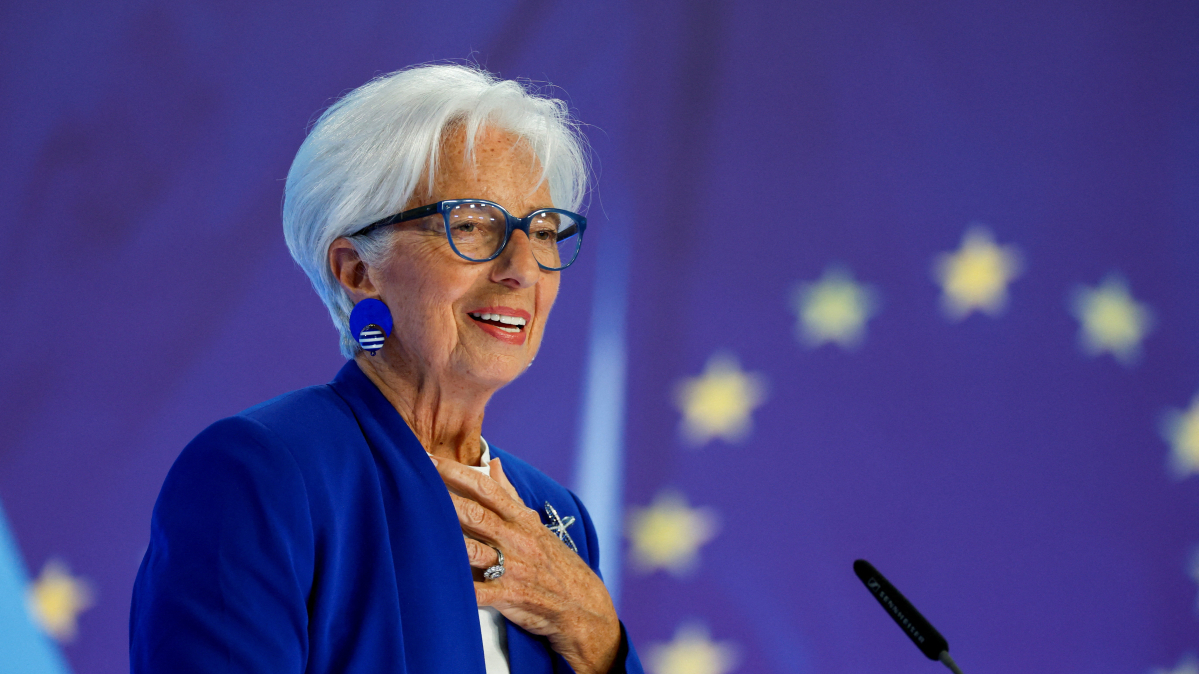
ECB President Christine Lagarde said the development was encouraging, although she stressed that major issues surrounding Iran’s nuclear programme remain unresolved.
"If this news is confirmed by developments in the coming days and the signing of a memorandum of understanding ... it is good news. We can only welcome it," Lagarde told France Culture radio.
She added that "the whole question of uranium enrichment remains to be debated, agreed and concluded in the form of an agreement."
Markets scale back rate hike expectations
The prospect of an end to the conflict immediately eased concerns about energy supply disruptions and inflationary pressures.
Financial markets, which had been pricing in two additional ECB rate increases over the next year, sharply reduced those expectations on Monday. Investors now expect just one further rate rise, with only a small possibility of another.
The ECB raised interest rates for the first time in nearly three years last week, aiming to curb inflation before rising energy costs linked to the Iran conflict spread further through the eurozone economy.
ECB officials warn inflation relief may take time
Despite the market optimism, several ECB policymakers cautioned that lower oil prices would not translate into an immediate reduction in inflation.
Joachim Nagel, a member of the ECB's Governing Council, said restoring energy supplies would take months even if the Strait of Hormuz reopened quickly.
"No relief is in sight for the foreseeable future," Nagel said in Frankfurt. "On the contrary: even if the Strait of Hormuz were to become navigable again soon, it will take months for the oil supply to return to normal."
Nagel also warned that eurozone inflation would rise once temporary government measures that lowered May's inflation reading expire. He maintained that all options remain open for the ECB's next policy meeting on 22–23 July, including keeping rates unchanged or raising them further.
More policy tightening still possible
Peter Kazimír echoed Nagel's concerns, arguing that the damage to oil supply chains could not be reversed overnight.
"We have taken a first step towards containing medium-term price pressures," Kazimír wrote in an opinion piece. "But the mission is not complete. With today's information, it is increasingly evident that monetary policy has more work to do."
Meanwhile, Martins Kazāks said rebuilding energy reserves would likely take time and stressed that every upcoming ECB meeting remains "live" for a potential interest rate increase.
Uncertainty remains despite ceasefire optimism
While the U.S.-Iran ceasefire has eased fears of a prolonged energy shock and boosted hopes of stabilising oil markets, ECB officials remain cautious about declaring victory over inflation.
The central bank now faces the challenge of balancing improving geopolitical conditions with persistent price pressures, leaving the door open to further monetary tightening in the months ahead.
Read more:















What is your opinion on this topic?
Leave the first comment