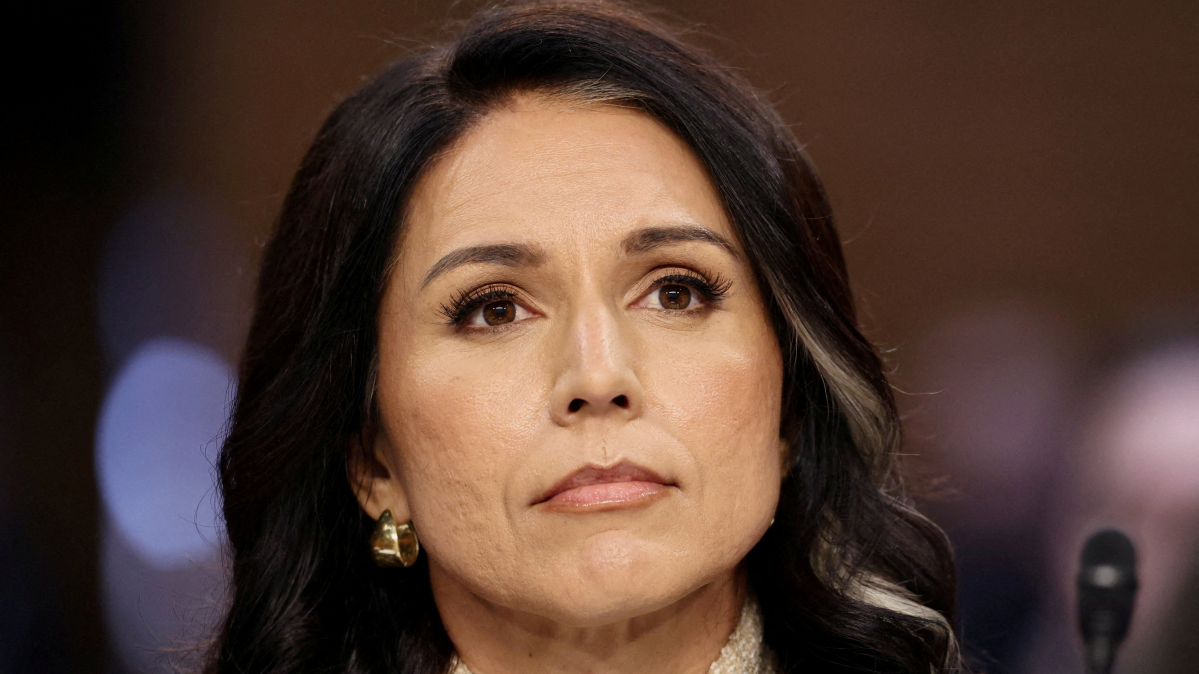
Tulsi Gabbard has announced she is stepping down as Director of National Intelligence under President Donald Trump, citing her husband’s recent diagnosis with a rare form of bone cancer and her decision to support him through treatment.
In a resignation letter posted on X, Gabbard said she could not remain in such a demanding role while her husband, Abraham Williams, faced a serious health battle.
“I cannot in good conscience ask him to face this fight alone while I continue in this demanding and time-consuming post,” she wrote, adding that she was “deeply grateful for the trust you placed in me and for the opportunity to lead the Office of the Director of National Intelligence for the last year and a half.”
The resignation is set to take effect on 30 June.
White House signals support as speculation over tensions persists
A White House spokesperson, Davis Ingle, said on X that Gabbard was stepping aside due to her husband’s illness, describing her as “an America First patriot who has served this country faithfully and extremely well over the last 16 months”.
President Trump also paid tribute, saying Gabbard had done “a great job” and acknowledging her decision to step back to support her husband. He confirmed that Principal Deputy Director of National Intelligence Aaron Lukas would serve as acting director once her departure takes effect.
However, a source familiar with the matter told Reuters that Gabbard had been pushed out by the White House, adding: “The White House has been unhappy with her for quite some time.”
Reports of internal friction
While the official line has focused on personal circumstances, multiple reports have pointed to tensions between Gabbard and senior figures in the administration.
President Trump had previously suggested differences in approach, including in March when he said she was “softer” on Iran compared with his stance on limiting Tehran’s nuclear ambitions.
Sources also told Reuters in April that Gabbard was at risk of losing her position amid a wider cabinet reshuffle. A senior White House official said at the time that the president had expressed dissatisfaction with her performance in recent months, and had consulted allies about possible replacements.
'Pushed out' claims and policy disagreements
Some officials described a deeper breakdown in relations. One source told Reuters that Gabbard had been “pushed out by the White House”, adding that “the White House has been unhappy with her for quite some time”.
Among reported areas of friction were the activities of her Director’s Initiatives Group, which worked on issues including declassifying material related to the death of former President John F. Kennedy, reviewing election machine security, and examining the origins of COVID-19.
Another point of contention, according to sources, was her decision last August to revoke the security clearances of 37 current and former US officials — a move that reportedly led to the exposure of an undercover intelligence officer’s identity.
Debate over politicisation of intelligence role
Democratic Senator Mark Warner, speaking after an event in Virginia, said the role had become increasingly politicised.
“This position now more than ever needs to be an independent, experienced intelligence professional,” he said, adding that the Director of National Intelligence should focus on foreign intelligence rather than domestic political matters.
Transition underway as successor steps in
President Trump confirmed that Aaron Lukas will serve as acting Director of National Intelligence following Gabbard’s departure.
In his statement, Trump said she had been managing a “tough battle” at home and wished her family well as they navigate her husband’s illness.
Gabbard’s resignation marks the end of a turbulent period in one of the U.S. government’s most sensitive security roles, with her tenure shaped by both policy initiatives and political controversy.
















What is your opinion on this topic?
Leave the first comment