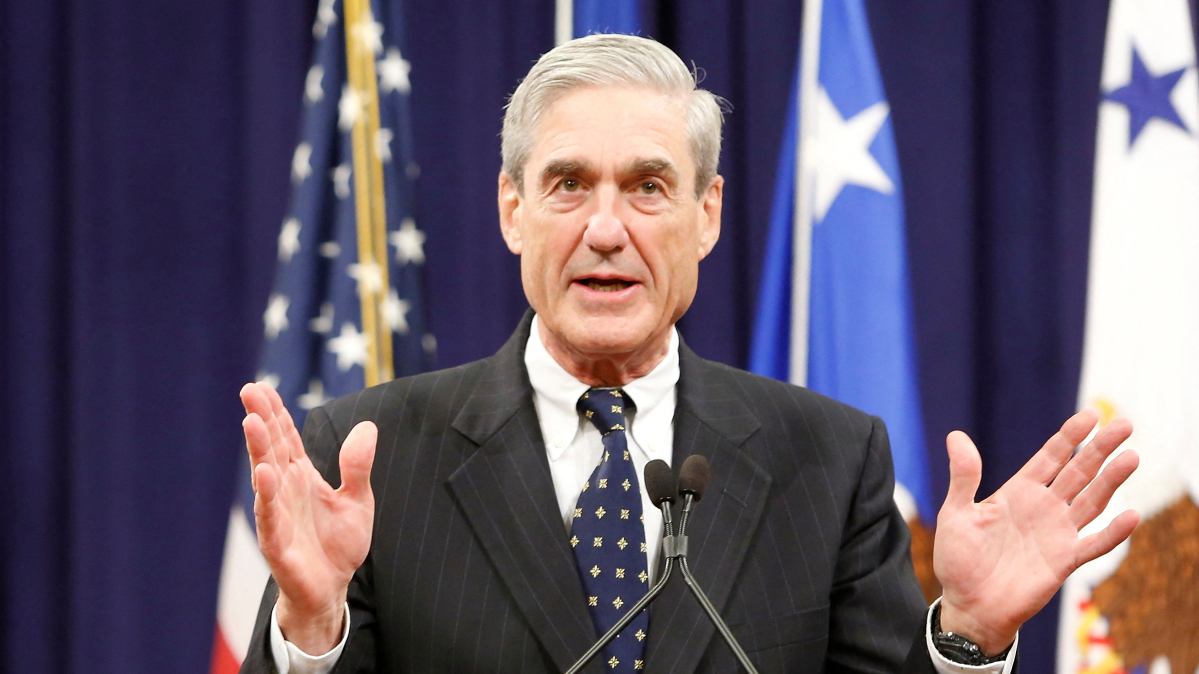
Robert Mueller, the former special counsel whose investigation into Russian interference in the 2016 U.S. election shaped much of Donald Trump’s presidency, has died at the age of 81.
His death was confirmed on Saturday by his former law firm, WilmerHale. No cause of death has been publicly disclosed, though reports last year indicated he had been living with Parkinson's disease.
"With deep sadness, we are sharing the news that Bob passed away" on Saturday (21 March), the family told the Associated Press (AP) in a statement. "His family asks that their privacy be respected."
Veteran lawman who reshaped the FBI
Mueller, a decorated Vietnam War veteran and long-serving public official, was widely respected for his disciplined and understated approach to law enforcement. In a statement, his firm described him as “an extraordinary leader and public servant and a person of the greatest integrity”.
He led the Federal Bureau of Investigation from 2001 to 2013, taking office just days before the September 11 attacks. He went on to reshape the agency into a modern counterterrorism force, strengthening intelligence-sharing and prioritising national security.
Special counsel probe defined Trump presidency
In 2017, Mueller was appointed special counsel by Deputy Attorney General Rod Rosenstein after Trump dismissed FBI director James Comey. He was tasked with overseeing an investigation into Russian interference in the 2016 election and possible links to Trump’s campaign.
Over 22 months, Mueller’s inquiry produced charges against 34 individuals and organisations, including Trump associates and Russian intelligence officers. Several figures, such as Paul Manafort, Roger Stone and Michael Flynn, were convicted or pleaded guilty to offences ranging from financial crimes to lying to investigators. All three were later pardoned by Trump.
Findings stopped short of charging a sitting president
Mueller’s final 448-page report, published in 2019, concluded that Russia had interfered in the election in a “sweeping and systematic fashion”. However, it did not establish that members of Trump’s campaign had engaged in a criminal conspiracy with the Russian government.
On the question of obstruction of justice, Mueller examined a series of actions by the president, including efforts to curtail the investigation. He declined to reach a prosecutorial judgement, citing Justice Department policy against indicting a sitting president, but stated that Trump had not been exonerated.
Political firestorm and sharp partisan reactions
Mueller’s findings disappointed many Democrats who had hoped for criminal charges, while Trump and his allies repeatedly attacked the investigation, describing it as a “witch hunt”. On Saturday, Trump reacted to Mueller’s death with a sharply critical message posted on his Truth Social platform.
The president on Saturday wrote on Truth Social: "I'm glad he's dead. He can no longer hurt innocent people!"
Despite political controversy surrounding the inquiry, Mueller maintained a reputation for independence and restraint. Known to some colleagues as “Bobby Three Sticks”, a reference to his full name, Robert Mueller III, he was regarded as methodical and reserved - qualities that contrasted sharply with Trump’s more combative style.
Decorated soldier and lifelong public servant
Born in 1944, Mueller studied at Princeton University before serving as a Marine officer in Vietnam, where he received honours including the Bronze Star and Purple Heart. He later earned a law degree from the University of Virginia and built a career as a federal prosecutor, handling major cases including organised crime prosecutions and the investigation into the Pan Am Flight 103 bombing.
He is survived by his wife, Ann, their two daughters and three grandchildren.
Tributes from across the political spectrum described Mueller as a dedicated public servant. Former presidents George W. Bush and Barack Obama both praised his leadership and commitment to the rule of law, while Comey called him “a great American” whose example shaped generations of law enforcement officials.














What is your opinion on this topic?
Leave the first comment