Argentina and Uruguay on Thursday became the first founding members of the Mercosur bloc to ratify a long-awaited free trade agreement with the European Union, paving the way for one of the world’s largest free trade zones.
The agreement, negotiated over 25 years, covers countries that together are home to more than 700 million people and account for roughly a quarter of global gross domestic product.
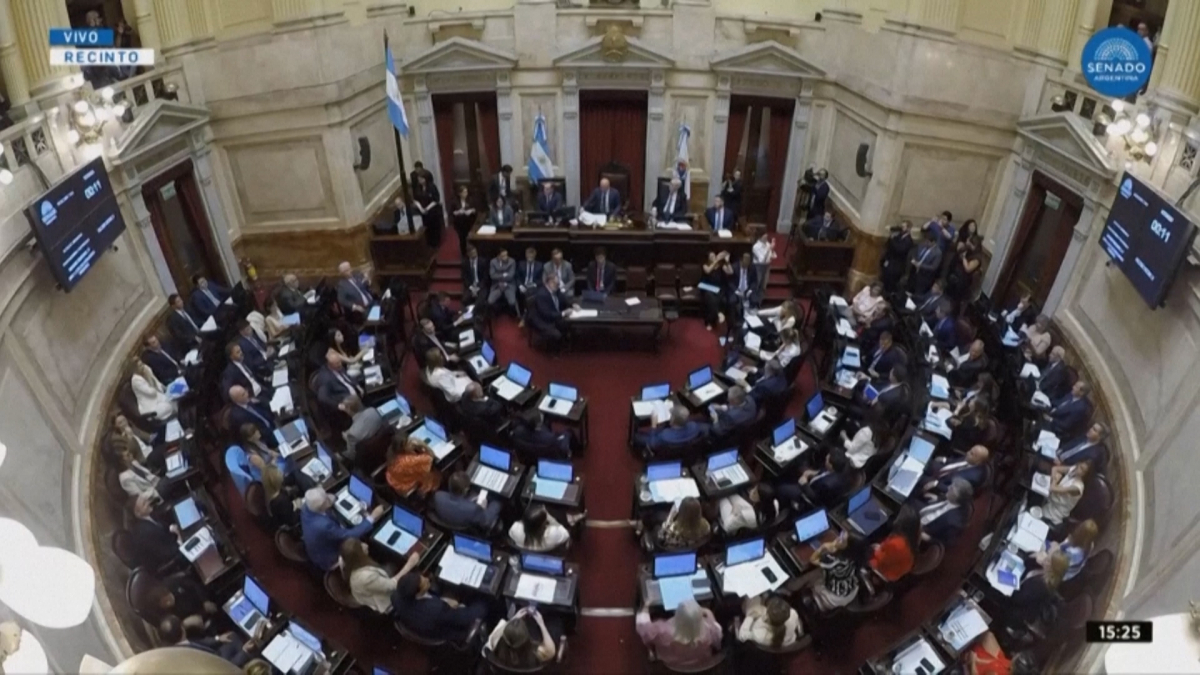
In Argentina, the Senate approved the deal by 69 votes to three, with no abstentions, following earlier backing from the Chamber of Deputies on 12 February. Though the ruling party pushed for a swift session to secure Argentina’s position as the first country to ratify the pact, debate lasted four hours.
“We will be able to enter a market of 450 million inhabitants with zero tariffs,” ruling party Senator Francisco Paoltroni said during the session, highlighting expected benefits for beef, citrus, fresh and dried fruit, and other agricultural exports.
Opposition Senator Jorge Capitanich described the agreement as strategically important amid global economic tensions between the United States and China, while also warning about the impact of indiscriminate import liberalisation on domestic industries.
In Uruguay, the lower house passed the agreement by an overwhelming 91–2 vote, mirroring unanimous Senate support the previous day.
Parliamentary Secretary Virginia Ortiz formally announced the approval of the interim trade agreement signed in Asunción on 17 January 2026 between Mercosur, comprising Argentina, Brazil, Paraguay and Uruguay, and the European Union.
Lawmakers across party lines framed the pact as a long-term state policy. National Party deputy Juan Martín Rodríguez said Uruguay was sending a “strong message” after 25 years of negotiations, while Independent Party deputy Gerardo Sotelo warned that isolation posed a greater risk than competition.
Broad Front deputy Víctor Martín Aldaya described the deal as “the most important trade agreement in history that Uruguay has signed”, noting that the two blocs represent more than 750 million people and over 20% of global GDP. Bilateral trade between them currently totals around 130 billion dollars.
Brazil and Paraguay, Mercosur’s other founding members, are expected to ratify the agreement in the coming weeks.
The trans-Atlantic trade deal was signed on 17 January, breaking a 25-year deadlock driven largely by European agricultural concerns over competition. However, shortly afterwards European lawmakers challenged the agreement in the EU’s top court over questions regarding its legality.
While a court ruling could take months, European Commission President Ursula von der Leyen has said the EU would move forward once at least one Mercosur country had ratified the agreement.
If fully implemented, the pact would create one of the largest free trade areas in the world — a development von der Leyen has described as a strong endorsement of multilateral cooperation in what she called “an increasingly hostile and transactional world.”










What is your opinion on this topic?
Leave the first comment