Türkiye on Sunday denied reports that a Turkish Airlines passenger flight diverted from Libya due to fears of retaliation following a Libyan military delegation plane crash near Ankara.
“The TK641 İstanbul–Benghazi flight dated 24 December 2025, was diverted to Bodrum Milas Airport due to wind conditions at the destination airport exceeding operational limits. There was no route change for any other reason,” the Centre for Combating Disinformation (DMM) said on the Turkish social media platform NSosyal.
The statement added that flights to Libya continued as scheduled in the following days without disruption. “The public is kindly urged not to give credence to such unfounded claims containing disinformation aimed at undermining our relations with friendly and brotherly Libya through a tragic accident,” it said.
The statement follows the crash of a private jet carrying a Libyan military delegation, including Libya’s army chief Mohammed Ali Ahmed al-Haddad, near Ankara on 23 December. All eight people on board, including three crew members, were killed. The crash occurred amid ongoing political and security tensions in Libya, where military factions are vying for control over strategic regions, adding international attention to high-level visits.
Turkish and Libyan authorities are conducting a joint investigation into the crash, coordinated by the Ankara Chief Public Prosecutor’s Office. Officials said the probe examines flight recordings, crew activity, maintenance records, air traffic control data, and airport CCTV footage. The French civil aviation investigations agency, BEA, is participating in the inquiry.
General al-Haddad had been in Ankara for talks with his Turkish counterpart, Selcuk Bayraktaroglu, and Defence Minister Yasar Guler, focusing on military cooperation and border security matters. The French-made Dassault Falcon 50 departed Ankara Esenboga Airport at 14:17 local time, reporting an electrical malfunction 16 minutes later and requesting an emergency return. Radar contact was lost at 14:41 as the aircraft descended towards the runway. Officials said there was only a two-minute window between the emergency alarm and the crash.
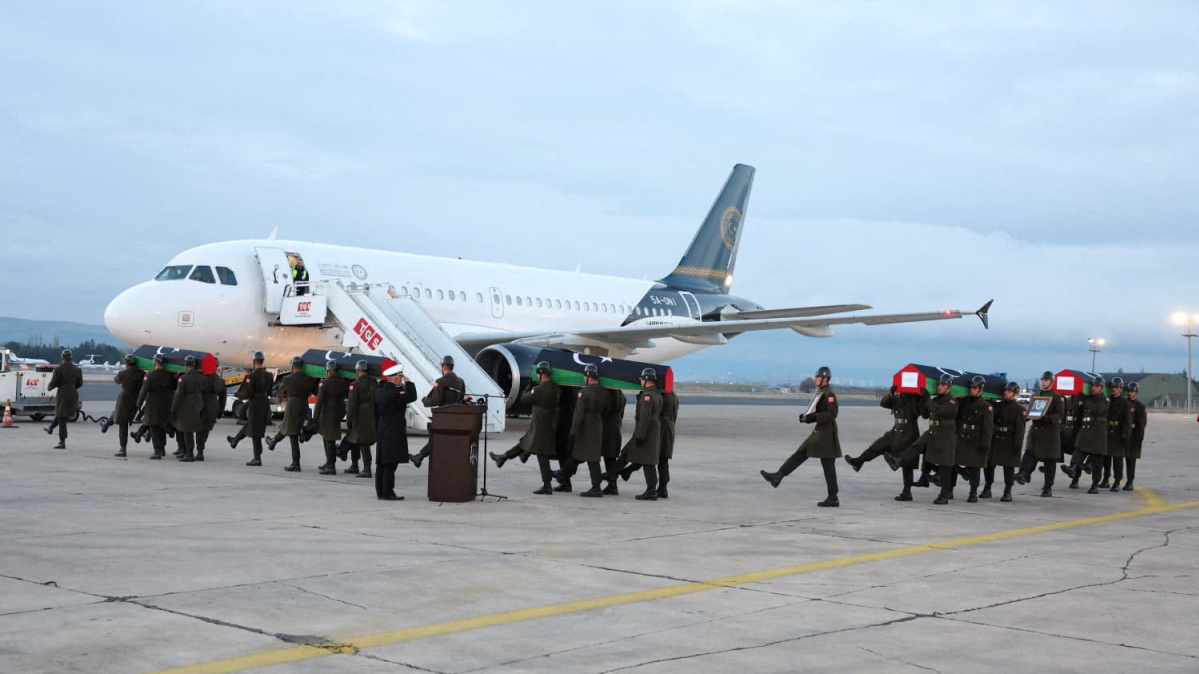
The forensic examination of the victims was completed on 27 December, and the bodies were repatriated to Libya following a ceremony at an airbase outside Ankara. The crash site near Kesikkavak village in Haymana district, roughly 70 km south of Ankara, remains sealed, with all wreckage, including the cockpit voice recorder and flight data recorder, transported for analysis.
Specialists are reviewing the crew’s rest periods, medical history, meals and medication records, along with the aircraft’s recent maintenance logs and fuel samples. Local weather data from the time of the crash has also been requested. Authorities said that if structural failure or design flaws are detected, the investigation could expand to include manufacturers and maintenance contractors.
Gursel Tokmakoglu, former head of Türkiye’s air force intelligence, described the crash as an international case, noting the aircraft was foreign-made, the pilots were from other countries, and the passengers were Libyan. He said the black boxes could be examined domestically or sent abroad to ensure transparency.
Tokmakoglu confirmed that the aircraft transmitted the 7700 emergency “squawk” code and reported an electrical malfunction, but cautioned that it is too early to conclude the malfunction caused the crash. Aviation industry analyst Guntay Simsek told Al Jazeera that there is currently no evidence of an external factor, such as an explosion, contributing to the accident, and the technical investigation is ongoing.
Under International Civil Aviation Organization (ICAO) regulations, preliminary accident reports are required within 30 days and final reports within 12 months, Simsek noted. The crash has drawn international attention due to the high rank of the passengers and the strategic significance of Turkish-Libyan military relations.











What is your opinion on this topic?
Leave the first comment