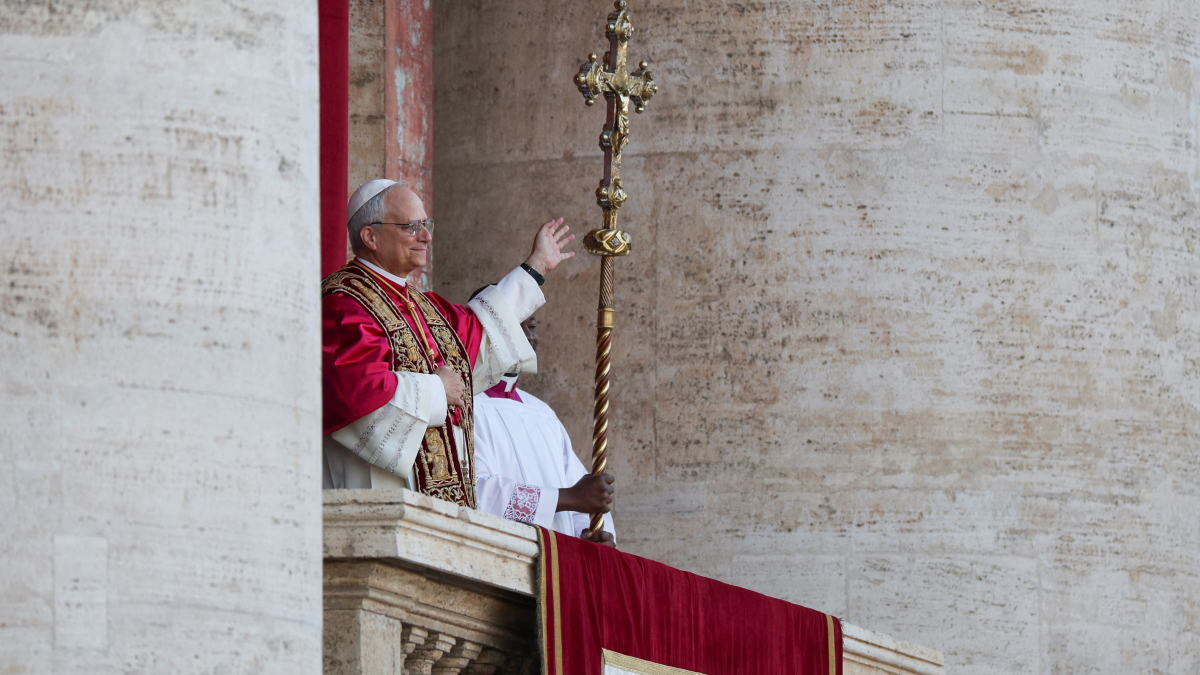
Türkiye is finalising security, ceremonial and archaeological preparations for Pope Leo XIV’s first foreign trip, a six-day visit beginning on Thursday that will mark the 1,700th anniversary of the Council of Nicaea and deepen Catholic–Orthodox dialogue.
Pope Leo, the first American to lead the Catholic Church, will arrive in Ankara on Thursday for the start of a visit that spans the capital, Istanbul and the north-western city of Iznik before continuing to Lebanon on Sunday. It will be the fifth papal visit to Türkiye, following trips by Paul VI, John Paul II, Benedict XVI and Francis.
In Ankara, the pontiff will lay a wreath at the Atatürk Mausoleum before talks with President Recep Tayyip Erdoğan at the Presidential Palace. He will address officials, diplomats and civil-society representatives prior to flying to Istanbul.
His Istanbul programme includes meetings with Catholic clergy at the Holy Spirit Cathedral, a visit to the Little Sisters of the Poor, and a stop at the Blue Mosque — echoing Pope Francis’s 2014 silent prayer there. Pope Leo will then meet Ecumenical Patriarch Bartholomew I at the Patriarchal Church of Saint George, where the two leaders are expected to sign a joint declaration reaffirming their commitment to Christian unity. He will join the Divine Liturgy for the Feast of Saint Andrew on Saturday.
A public Mass at the Volkswagen Arena, prepared to host up to 100,000 attendees, is set to be the largest gathering of the visit, with media from about 50 countries covering the event, organisers said.
The most symbolically charged moments are expected in Iznik, ancient Nicaea, where an underwater basilica — thought by some scholars to be linked to the First Council of 325 AD — has been readied by a 60-member archaeological team. The submerged Basilica of Saint Neophytos, granted museum status, has undergone conservation work including the restoration of 37 graves. Pope Leo will join an ecumenical prayer service there on Friday alongside an estimated 2,000 clergy from multiple Christian traditions.
Archaeologist Prof Mustafa Şahin said “even a single stone here holds great meaning for Christians,” highlighting the site’s resonance for visitors.
Authorities have introduced extensive security measures across all three cities. The Turkish National Police and Vatican security have coordinated screening and emergency plans, particularly for the Istanbul Mass. Transport and accommodation arrangements have been expanded for visiting delegations.
Türkiye’s roughly 36,000-strong Catholic community has welcomed the visit. The Apostolic Vicar of Istanbul said the Pope’s arrival would be met with “profound joy,” noting the country’s preparations mirrored those made for Pope Francis in 2014. Catholics in Türkiye make up less than 1 % of a population of nearly 85 million.
The Turkey–Lebanon itinerary, running until 2 December, signals the pontiff’s early prioritisation of ecumenical reconciliation and Middle Eastern engagement. The Vatican says the trip will foreground challenges facing Christian communities and the need for strengthened religious freedom across the region.











What is your opinion on this topic?
Leave the first comment