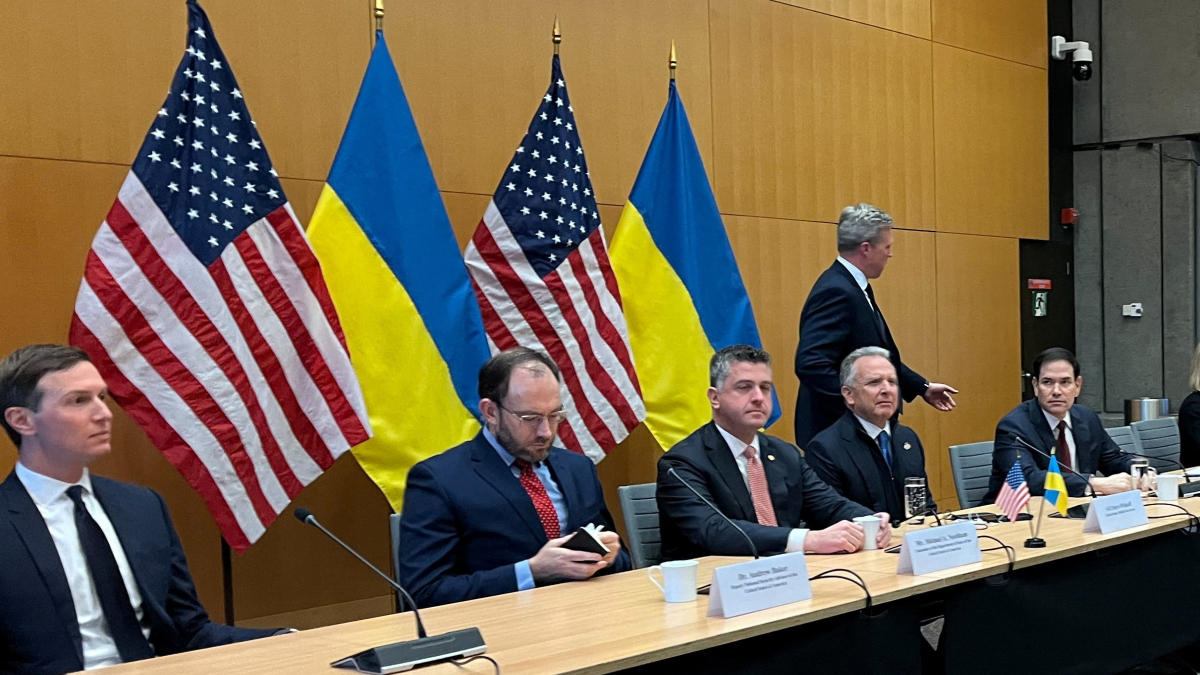
Britain, France and Germany known as E3, have drafted a counter-proposal to Washington’s 28-point Ukraine peace plan, keeping the U.S. outline as a starting point but reshaping it with their own security and reconstruction terms, according to a text seen on Sunday.
The document stays close to Washington’s structure while adjusting language across security, territory and long-term recovery. The text reaffirms Ukraine’s sovereignty and begins with a call for a full non-aggression agreement involving Russia, Ukraine and NATO, an attempt to put an end to the arguments that have shaped the region’s security disputes for decades.
A clause from the American plan dealing with NATO expansion and Russia’s behaviour towards its neighbours is removed in the European version. In its place, the E3 suggest launching a dedicated Russia–NATO dialogue once a peace deal is signed, hoping that a formal channel might stabilise the region and create space for economic opportunity later.
The Europeans argue that Ukraine should receive firm security guarantees, while its peacetime military would be capped at 800,000 troops. They underline that NATO membership still depends on consensus inside the alliance, something they say is not currently there. The draft also states that NATO would not permanently station troops in Ukraine in peacetime, with allied fighter jets instead based in Poland.
Washington’s role features heavily. The plan envisages a U.S. security guarantee modelled on NATO’s collective defence clause. Ukraine would lose that protection if it were to initiate hostilities inside Russia, but any renewed Russian attack would trigger a coordinated military response, a return of global sanctions and the automatic withdrawal of recognition or benefits granted under the agreement.
The proposal affirms Ukraine’s path to European Union membership, paired with temporary access to European Union markets while accession is under review. Alongside this, the E3 call for a major redevelopment package built around a Ukraine Development Fund focused on technology, data centres and artificial intelligence. The United States would work with Ukraine to rebuild and modernise its gas transit network and storage systems. Rehousing, infrastructure upgrades and resource development form the rest of the economic pillar, backed by a dedicated World Bank financing mechanism.
Russia’s future is also addressed. The document sketches out a path towards reintegration into the global economy, with phased sanction relief and a long-term U.S.–Russia economic agreement covering fields from energy and rare earths to Arctic projects and data infrastructure. The E3 even raise the possibility of Russia’s return to the G8.
At the same time, the text stresses that Ukraine must be fully compensated for the damage caused by the conflict, using frozen Russian sovereign assets until Moscow meets its obligations. A joint security taskforce involving the U.S., Ukraine, Russia and European partners would be created to enforce the deal, and Russia would be required to adopt a formal non-aggression commitment towards both Ukraine and Europe.
The nuclear chapter calls for Washington and Moscow to extend existing non-proliferation and arms control arrangements, while Ukraine remains a non-nuclear state under the Nuclear Non-Proliferation Treaty (NPT). The Zaporizhzhia nuclear plant would be restarted under International Atomic Energy Agency (IAEA) supervision, with its electricity output split evenly between Ukraine and Russia.
The E3 also introduce domestic commitments. Ukraine would adopt EU rules on religious tolerance and linguistic minority protections, and hold national elections once the peace agreement takes effect.
Territory remains one of the most sensitive issues. Under the draft, Ukraine would pledge not to reclaim its occupied territories through military means. Talks on possible territorial swaps would begin from the current Line of Contact. Once any future borders are agreed, neither side would be permitted to alter them by force, and any breach would void the security guarantees.
The document tries to secure access routes vital for Ukraine’s economy. Russia would not block commercial use of the Dnieper River, and a separate arrangement would keep grain exports moving through the Black Sea.
Humanitarian matters are placed under a new committee tasked with resolving open issues from the conflict. This includes a full exchange of remaining prisoners and bodies, the release of civilian detainees and hostages, including children, and support for family reunification. A separate provision calls for measures recognising the suffering of victims.
The agreement would be legally binding and overseen by a newly established Board of Peace chaired by U.S. President Donald Trump, with consequences for any violations. Once all sides sign off, a ceasefire would take effect immediately, followed by withdrawals to agreed positions. The practical arrangements, including monitoring, would be worked out by Ukraine and Russia under U.S. supervision.











What is your opinion on this topic?
Leave the first comment