European, Ukrainian and U.S. officials met in Geneva on Sunday to examine Washington’s draft plan to end the war in Ukraine. The proposal has raised concern in Kyiv and among its allies, who say it includes major concessions to Russia.
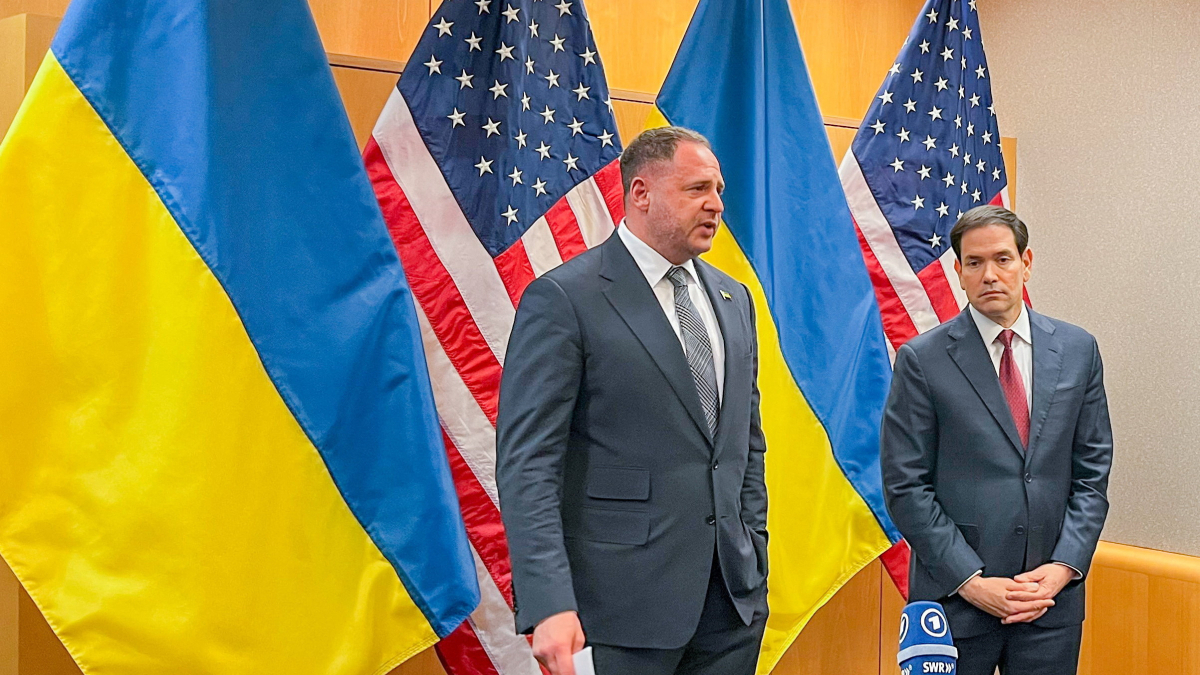
U.S. Secretary of State Marco Rubio said on Sunday he had made good progress in talks about Washington’s draft plan as he met with a Ukrainian delegation in Geneva. He described the opening session as “very, very meaningful”, calling it “probably the best meeting and day we’ve had so far in this entire process”. Talks in Geneva are continuing.
Andriy Yermak, President Volodymyr Zelenskyy’s chief of staff, said the session was “a very productive first meeting with the distinguished American delegation”. Writing in English on X, he said a second meeting would take place later in the day to continue work on joint proposals with the engagement of European partners. Yermak thanked the United States and President Donald Trump “for their commitment to bring peace”, echoing Zelenskyy’s earlier expression of gratitude after Trump said Ukraine had shown “zero gratitude” for U.S. assistance.
Tense opening to Geneva talks
A complicated round of diplomacy opened in Geneva as Ukrainian, U.S. and European officials gathered to assess Washington’s 28-point draft plan for ending the conflict, just days after Kyiv and its partners warned that the proposal appeared to grant Russia sweeping advantages. The meeting unfolded as U.S. President Donald Trump continued to defend the plan and pressed Ukraine to accept a series of conditions, including ceding territory, limiting its armed forces and renouncing ambitions to join NATO.
Confusion over the plan and growing divisions
Trump said Ukraine had shown “zero gratitude” for ongoing American support, noting that U.S. weapons continued to flow to Kyiv while Europe still bought Russian oil. His remarks landed only hours before the negotiations began at the U.S. mission in Geneva, where the mood was described as stiff. On Friday, Trump gave President Volodymyr Zelenskyy a deadline of Thursday to approve the plan, though he later said it was not his final offer.
The talks have also raised questions about how the draft was assembled. European governments said they had not been consulted, prompting pointed exchanges. Before travelling to Geneva, Rubio insisted the plan was authored by Washington, after U.S. senators suggested he had described it differently. Senator Angus King said Rubio had told lawmakers the plan reflected “the wish-list of the Russians”, a claim U.S. officials rejected.
German Chancellor Friedrich Merz said the goal was to shape a proposal acceptable to Ukraine that could serve in eventual negotiations with Russia, but added he was “not yet convinced” a result could be reached soon. A European version of the plan, seen by Reuters, pushes back on territorial concessions and limits on Ukraine’s armed forces.
Kyiv under pressure at home and on the front line
The timing is difficult for Kyiv. Russia has been making slow but costly advances, including partial control of the transport hub of Pokrovsk. Ukrainian commanders say they lack enough soldiers to repel constant incursions. Drone and missile strikes have damaged power and gas facilities, leaving millions without water, heating and electricity for hours daily. Domestically, Zelenskyy faces pressure after a corruption scandal involving some ministers and figures close to him, while warning Ukrainians of the danger of losing dignity, freedom or even Washington’s backing over the U.S. plan.
Despite the tensions, Zelenskyy sought to counter claims that Kyiv had shown insufficient appreciation for U.S. support. In a Telegram post on Sunday, he said Ukraine was grateful “to the United States, to every American heart and particularly to President Trump” for assistance that had saved lives “starting with Javelin missiles”. He thanked Europe as well as the G7 and G20 countries, stressing that sustaining their backing was essential. Zelenskyy said Kyiv was working “carefully on every point, every step towards peace”, insisting any agreement must be structured to end the conflict and prevent it from returning.
European Commission President Ursula von der Leyen said Ukraine’s borders cannot be changed by force and its army cannot be left vulnerable. She stressed the EU must hold a central place in any peace arrangement. Yet the U.S. draft offers only broad assurances of “robust security guarantees”, deepening concerns in Kyiv that leverage is shifting towards Moscow.
Diplomacy intensifies as gaps remain
Ukraine has taken encouragement from stricter U.S. sanctions on Russia’s oil sector and its own long-range drone strikes on Russian infrastructure. But the draft appears to restore diplomatic momentum to Moscow at a moment when Ukraine remains dependent on U.S. intelligence and weaponry.
Ukraine’s team, headed by Yermak, met advisers from Britain, France and Germany before further talks with the U.S. side. Western leaders have said the American draft can serve as a basis for negotiations but must undergo significant work.
International manoeuvring continues
Beyond Europe, Turkish President Tayyip Erdogan said he would speak with Russian President Vladimir Putin on Monday about Ukraine and share the outcome with European and U.S. partners. Putin has called the American proposal a basis for a potential resolution, though Moscow is expected to reject clauses requiring its forces to withdraw from some captured areas.
As talks continue in Geneva, diplomats say a substantial gap remains between the U.S. proposal and Ukraine’s demands, while European governments emphasise the need for changes that would prevent new security risks for Kyiv.
What the 28-point plan includes
• Territorial arrangements
Ukraine would accept the loss of territory currently held by Russian forces, freezing the front line as the basis for a ceasefire.
• Limits on Ukraine’s military
The plan would cap the size of Ukraine’s armed forces, restrict long-range weapons and halt strikes deep inside Russia.
• End to NATO ambitions
Ukraine would renounce its bid to join NATO and adopt a neutral or non-aligned status.
• International monitoring
Verification teams would oversee disengagement areas, troop withdrawals and the establishment of demilitarised zones.
• Governance of contested areas
Transitional administrative bodies would manage disputed regions with phased reintegration tied to security conditions.
• Reconstruction and economic oversight
A Western-funded package would rebuild infrastructure under strict monitoring to prevent misuse of funds.
• Humanitarian measures
The plan includes prisoner exchanges, humanitarian corridors and mechanisms to locate missing persons.
• Diplomatic architecture
Future summits between Trump, Zelenskyy and Putin, plus new commissions on borders, trade and long-term political arrangements.

















What is your opinion on this topic?
Leave the first comment