Donald Trump told reporters on Friday that he plans to take the BBC to court, accusing the broadcaster of altering his remarks in a way he says caused serious reputational harm.
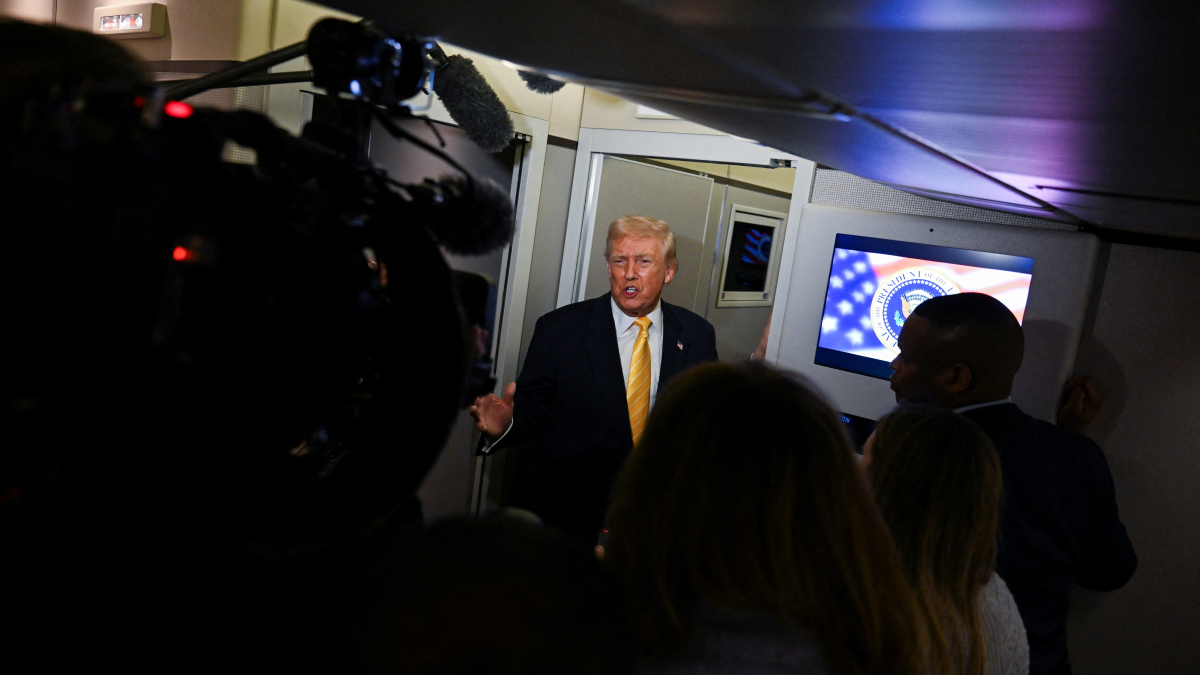
Speaking aboard Air Force One, he said the BBC had “changed the words” coming out of his mouth and called the edit an act of cheating. He added that people in the United Kingdom were angry about the incident.
Two senior BBC leaders resigned this week following accusations of bias, including over the documentary that used altered segments of Trump’s January 2021 speech. The BBC sent a personal apology to Trump, calling the edit an error of judgment, but rejected the defamation claim. Trump said he planned to call British Prime Minister Keir Starmer over the weekend, adding that Starmer had already tried to reach him and was “embarrassed” by the issue.
Soybean purchases and China talks
During the same exchange with journalists, Trump said China had agreed to resume buying American soybeans and other farm goods. He claimed that talks had taken place earlier that day and that purchases were already beginning, ahead of the spring season. The U.S. Department of Agriculture recently lowered its forecast for corn and soybean output, while noting that China had largely shunned American shipments in recent months amid strained economic relations.
Venezuela and possible U.S. military action
Trump also suggested that a decision on potential military action against Venezuela could come soon. He said he had “sort of” made up his mind but did not reveal what steps he was considering. Senior U.S. officials held several meetings at the White House this week to discuss possible options as American military presence expanded across the Caribbean. The United States has deployed F-35 aircraft, warships, and a nuclear submarine following a series of strikes on boats off the Venezuelan coast.
Venezuelan President Nicolas Maduro has accused Washington of trying to remove him from power, a claim Trump rejected.
F-35 deal discussions with Saudi Arabia
Trump confirmed he was considering a request from Saudi Arabia to purchase F-35 fighter jets. He said Riyadh wanted “a lot of jets” and described his upcoming meeting with Crown Prince Mohammed bin Salman as “more than a meeting”. He added that the Abraham Accords would be part of the discussions and that he hoped Saudi Arabia would join the framework soon.
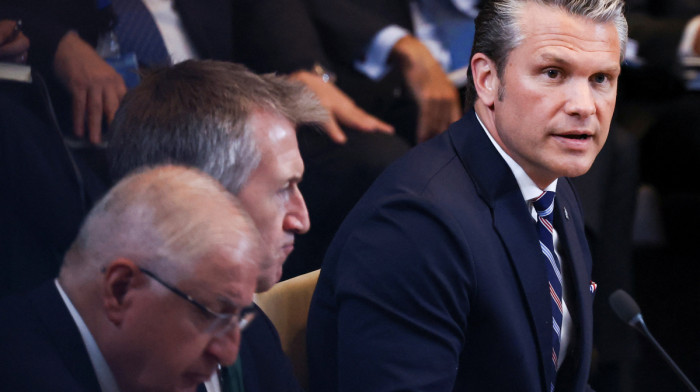
A Pentagon intelligence review has raised concerns that China could gain access to the jet’s technology if the sale goes ahead, according to U.S. media reports.
Plans for renewed nuclear testing
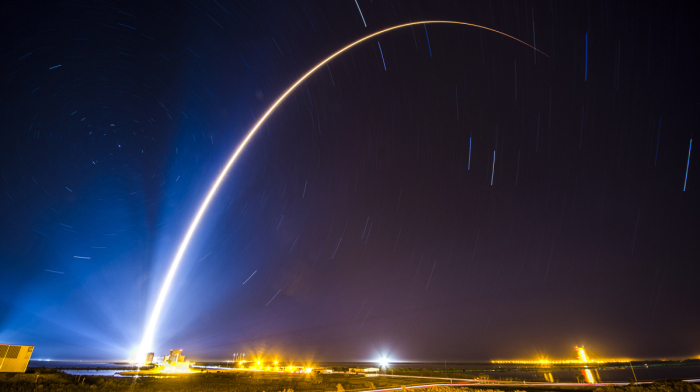
Trump said the United States would resume nuclear testing because other countries had continued to test their weapons. He said the United States held the world’s largest nuclear arsenal, with Russia second and China “a distant third”, but warned that China could reach U.S. levels within several years. He said he wanted a meeting among the three powers to reduce global nuclear stockpiles. When asked how soon testing could begin, he said it would be “pretty soon”.
Clarification on MRI and physical health
Trump confirmed he underwent an MRI as part of his recent physical examination, describing the procedure as standard. He said he did not know which part of his body the scan focused on but added that the results were “the best” his doctor had seen. Medical experts note that MRIs are not usually part of routine annual physicals, but the White House has not provided further details about the images taken.










What is your opinion on this topic?
Leave the first comment