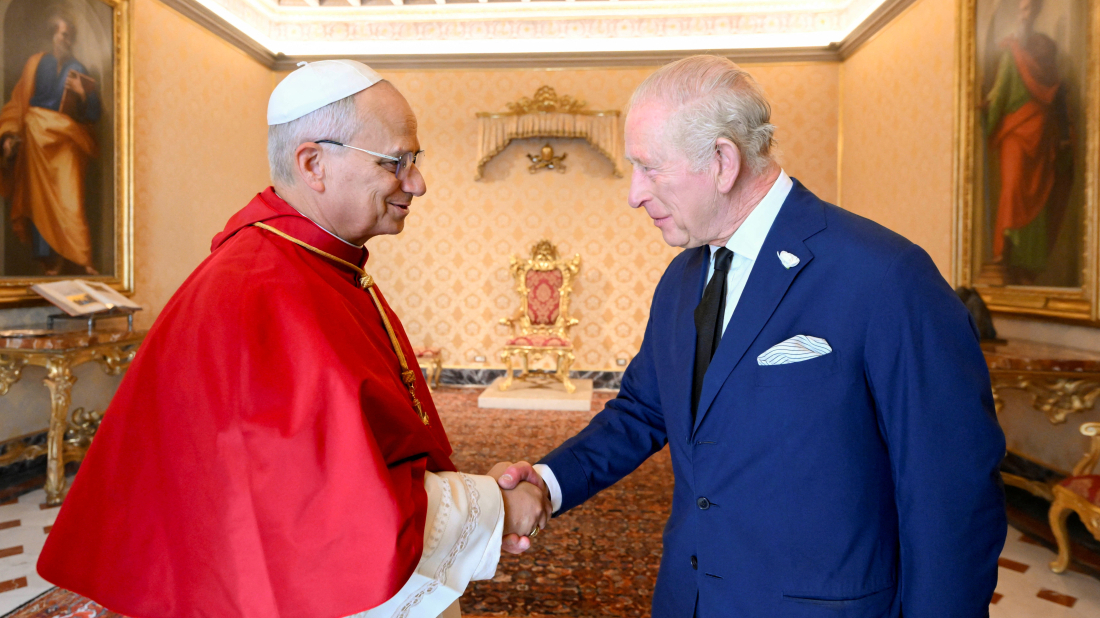
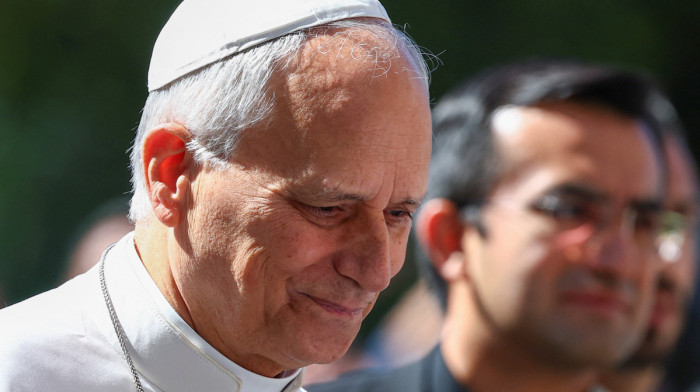
Britain’s King Charles and Pope Leo held a historic joint prayer in the Vatican’s Sistine Chapel on Thursday, the first such act of worship between an English monarch and a Catholic pontiff since King Henry VIII’s break from Rome in 1534.
Latin chants and English prayers filled the chapel, beneath Michelangelo’s fresco of the Last Judgment, where Pope Leo, the first U.S. pope was elected six months ago. Charles, as the supreme governor of the Church of England, sat to the pope’s left near the altar while Leo and Anglican Archbishop Stephen Cottrell led the service, joined by the Sistine Chapel Choir and two royal choirs.
Though previous meetings between British monarchs and popes have taken place, including visits by Popes John Paul II and Benedict XVI to Britain, this was the first time joint prayers were offered.
A symbolic healing of history
The royal visit to the Vatican, part of a wider state trip by King Charles and Queen Camilla, has been described as a milestone in reconciliation between the Catholic Church and the Anglican Communion, five centuries after their split.
“In this extraordinary setting, the moment feels like a healing of history,” said Reverend James Hawkey, canon theologian of Westminster Abbey, speaking to Reuters. “Just a generation ago this would have been unthinkable. It shows how far our Churches have come after six decades of dialogue.”
Archbishop Cottrell represented the Anglican Communion in place of Sarah Mullally, who was recently named the first woman to become Archbishop of Canterbury but will take office next year.
The 1534 schism began when Pope Clement VII refused to annul Henry VIII’s marriage to Catherine of Aragon, prompting the king to establish the Church of England and seize church assets. The move ushered in decades of religious turmoil, with persecution and executions under Henry’s daughters Mary I and Elizabeth I as England veered between Catholicism and Protestantism.
Royal honour at ancient basilica
Following the service, King Charles and Queen Camilla met privately with Pope Leo before travelling to Rome’s Basilica of St. Paul Outside the Walls, one of Catholicism’s four most sacred sites. There, the pope conferred upon the King the title of Royal Confrater or brother at the adjoining abbey.
Charles will also receive a dedicated seat in the basilica’s apse, adorned with his royal coat of arms and the ecumenical Latin phrase “Ut unum sint” (“That they may be one”). The seat will remain reserved for British monarchs in the future.
Bishop Anthony Ball, the Anglican representative to the Vatican, said the honours “demonstrate both Churches’ shared commitment to unity and cooperation.”
In turn, Buckingham Palace announced that Charles had granted Pope Leo two British distinctions, naming him Papal Confrater of St. George’s Chapel at Windsor Castle and bestowing upon him the title of Knight Grand Cross of the Order of the Bath.
Strengthening ties since the 1960s
The Anglican Communion made up of 46 autonomous churches in 165 countries and the Catholic Church, with around 1.4 billion members, have steadily improved relations since the 1960s.
While their doctrines coincide on many core beliefs, differences remain, notably the Catholic Church’s prohibition on ordaining women and its rule that priests remain celibate.
The service in the Sistine Chapel, however, marked a new chapter of rapprochement between two faiths once divided by centuries of mistrust, now bound by shared prayer and renewed dialogue.

















What is your opinion on this topic?
Leave the first comment