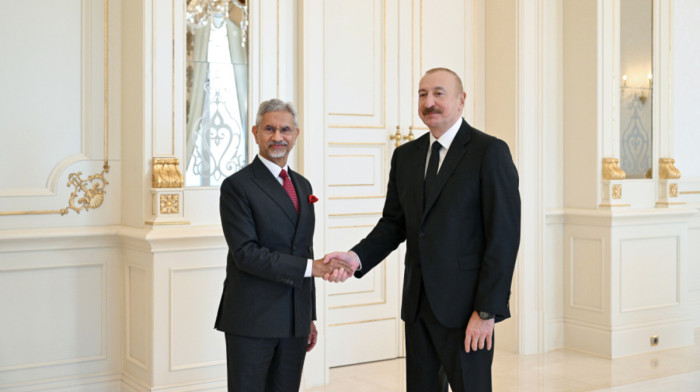
Caspian crude gains traction as Japan looks to diversify oil supplies
Japan’s growing interest in Caspian crude reflects a pragmatic response to uncertainty in global energy markets and its continued reliance on...
Top U.S. officials on Wednesday criticised China’s expansion of rare earth export controls, warning it threatens global supply chains, though they said Beijing could still reverse course to avoid U.S. retaliation.
U.S. Trade Representative Jamieson Greer called China’s proposed restrictions a “global supply-chain power grab,” while Treasury Secretary Scott Bessent stressed that Washington does not want to escalate the conflict, which has roiled markets and strained U.S.-China relations.
As of Tuesday, President Donald Trump still expected to meet Chinese President Xi Jinping in South Korea later this month. Greer noted that China has not yet implemented the new regulatory system, and the U.S. has not enacted a retaliatory 100% tariff increase on Chinese imports.
The two sides have maintained a delicate six-month truce on tariffs, repeatedly extended in 90-day increments. Bessent suggested a longer extension could be possible ahead of the leaders’ meeting.
The tensions come after both countries imposed port fees on each other’s ships, adding a new dimension to the trade fight. While the International Monetary Fund upgraded its global growth forecast, officials said China’s actions violate previous U.S.-China agreements and highlight the risks of supply dependence.
Bessent warned that if China proves to be an unreliable supplier, Washington could implement additional export controls or tariffs, including on Chinese purchases of Russian oil, in coordination with European partners. He also noted evidence that Chinese components were used in Russian drones in Ukraine.
Officials said they remain optimistic that discussions with China could de-escalate the situation, while underscoring the potential economic consequences of continued Chinese restrictions on rare earth exports, critical for technology and defence sectors worldwide.

Cuba and the United States have been at odds for more than six decades, with tensions rooted in the 1959 revolution that transformed the island’s political and economic system. Renewed focus on relations comes as Donald Trump’s rhetoric intensifies and conditions on the island worsen.
NASA is aiming to launch its Artemis 2 mission on Wednesday (1 April), sending astronauts on a 10-day journey around the Moon, officials confirmed. According to the Space Administration, the launch window is due to open at 23:24 GMT, with additional opportunities to 6 April if delays occur.
The four astronauts selected for NASA’s Artemis II mission have arrived in Florida, entering the final phase of preparations for the first crewed journey towards the Moon in more than five decades
U.S. President Donald Trump has said that the U.S is in talks with the new Iranian regime. He said this in a post on his Truth Social account but warned that the U.S. will "Obliterate" Iran's electric and oil facilities if no deal is reached, especially regarding the Strait of Hormuz closure.
Iranian Military Spokesman Lieutenant Colonel Ibrahim Zulfiqari has warned that American soldiers will become 'food for sharks' if U.S. President Donald Trump launches ground attacks against Iran. The threat comes after the U.S. military said it was deploying thousands of Marines to the region.
Two sailboats carrying humanitarian aid from Mexico arrived safely in Havana on Saturday, the Mexican Navy said, concluding a journey in which the vessels were delayed by bad weather and briefly reported missing.
China imposed sanctions on Japanese lawmaker Keiji Furuya on Monday, who is a close aide of Japanese Prime Minister Sanae Takaichi, due to his "collusion with Taiwan independence" forces, in its latest move in a diplomatic row over Taiwan.
Ukrainian President Volodymyr Zelenskyy said he talked about a possible security partnership on Sunday with Jordan's King Abdullah over defending against drone attacks amid rising tensions over the Iran conflict.
U.S. President Donald Trump said he had "no problem" with any country sending crude to Cuba as a Russian tanker neared a Cuban port with a badly needed shipment, signalling he was reversing course on blocking oil shipments to the country on Sunday.
Cuba and the United States have been at odds for more than six decades, with tensions rooted in the 1959 revolution that transformed the island’s political and economic system. Renewed focus on relations comes as Donald Trump’s rhetoric intensifies and conditions on the island worsen.
You can download the AnewZ application from Play Store and the App Store.
What is your opinion on this topic?
Leave the first comment