Briton among 19 killed in Nepal bus crash; New Zealander, Chinese national injured
A British national was among at least 19 people killed when a passenger bus plunged off a mountain highway into the Trishuli river in Nepal before daw...
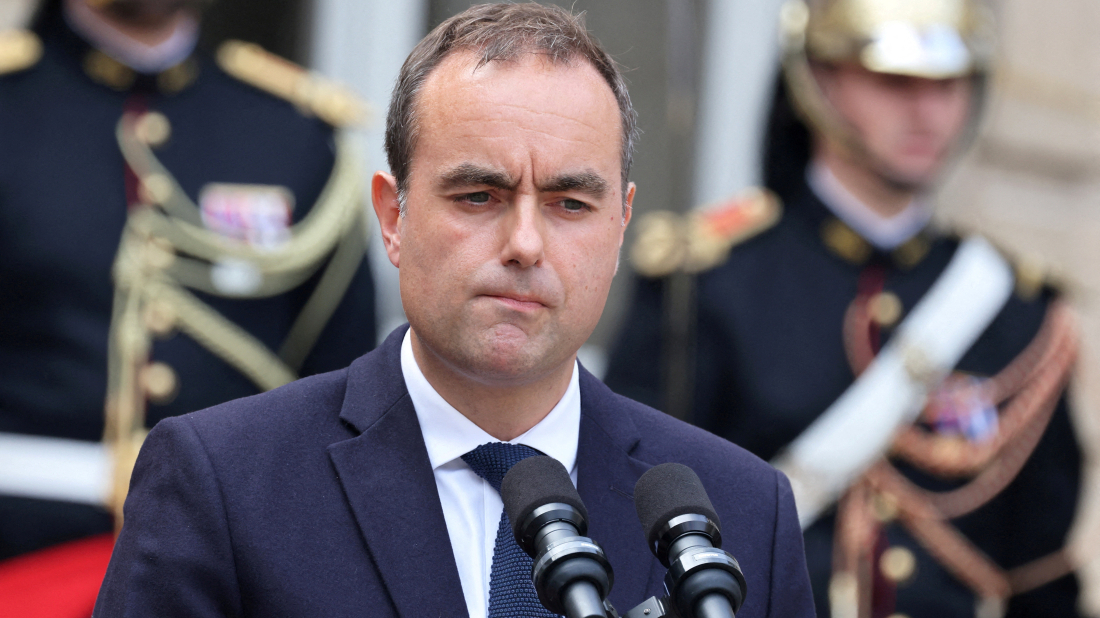
France's new Prime Minister Sebastien Lecornu resigned on Monday, barely 14 hours after appointing his new cabinet, after allies and foes alike threatened to topple his government, driving French stocks and the euro sharply lower.
His swift resignation was unexpected and unprecedented and marked another major deepening of France's political crisis.
The far-right National Rally immediately urged President Emmanuel Macron to call a snap parliamentary election.
After weeks of consultations with political parties across the board, Lecornu, a close ally of Macron, had appointed his ministers on Sunday and they had been set to hold their first meeting on Monday afternoon.
But the new cabinet line-up had angered opponents and allies alike, who either found it too right-wing or not sufficiently so, raising questions on how long it could last, at a time when France is already mired deep in political crisis, with no group holding a majority in a fragmented parliament.
Lecornu handed his resignation to Macron on Monday morning.
"Mr. Sebastien Lecornu has submitted the resignation of his Government to the President of the Republic, who has accepted it," the Elysee's press office said.
French politics has become increasingly unstable since Macron's re-election in 2022 for want of any party or grouping holding a parliamentary majority.
Macron's decision to call a snap parliamentary election last year deepened the crisis by producing an even more fragmented parliament. Lecornu, who was only appointed last month, was Macron's fifth prime minister in two years.
"There can be no return to stability without a return to the polls and the dissolution of the National Assembly," National Rally leader Jordan Bardella said after Lecornu resigned.
Paris' CAC 40 dropped 1.5% as Lecornu resigned, making it the worst-performing index in Europe, as banking shares came under heavy fire, leaving BNP Paribas, Societe Generale and Credit Agricole down 4% to 5%.
The euro EUR=EBS slid 0.7% on the day to $1.1665.

A seven-month-old Japanese macaque has drawn international attention after forming an unusual bond with a stuffed orangutan toy after being rejected by its mother.
Divers have recovered the bodies of seven Chinese tourists and a Russian driver after their minibus broke through the ice of on Lake Baikal in Russia, authorities said.
President Donald Trump said on Saturday (21 February) that he will raise temporary tariffs on nearly all U.S. imports from 10% to 15%, the maximum allowed under the law, after the Supreme Court struck down his previous tariff program.
Pakistan said it carried out cross-border strikes on militant targets inside Afghanistan after blaming a series of recent suicide bombings, including attacks during the holy month of Ramadan, on fighters it said were operating from Afghan territory.
Iran announced on Saturday (21 February) that it has designated the naval and air forces of European Union member states as “terrorist entities” in a reciprocal move after the EU blacklisted the Islamic Revolutionary Guard Corps (IRGC).
A British national was among at least 19 people killed when a passenger bus plunged off a mountain highway into the Trishuli river in Nepal before dawn on Monday (23 February), authorities said. A New Zealander and a Chinese national were among those injured.
European Union Foreign Policy Chief Kaja Kallas has said the bloc is unlikely to reach agreement on a new package of sanctions against Russia at Monday’s meeting of EU foreign ministers, as continued Hungarian opposition keeps consensus out of reach.
Further Iran-U.S. nuclear talks are scheduled in Geneva on Thursday (26 February) as diplomacy resumes over Tehran’s nuclear programme following earlier mediation efforts. But will the talks move Iran-U.S. negotiations closer to a deal, and what should be expected from the meeting?
China says it's making a "full assessment" of the U.S. Supreme Court's tariff ruling and urged Washington to lift "relevant unilateral tariff measures" on its trading partners, the Chinese commerce ministry said in a statement on Monday (23 February).
Start your day informed with AnewZ Morning Brief. Here are the top news stories for the 23rd of February, covering the latest developments you need to know.
You can download the AnewZ application from Play Store and the App Store.
What is your opinion on this topic?
Leave the first comment