Meloni warns Hormuz shipping curbs threaten global trade
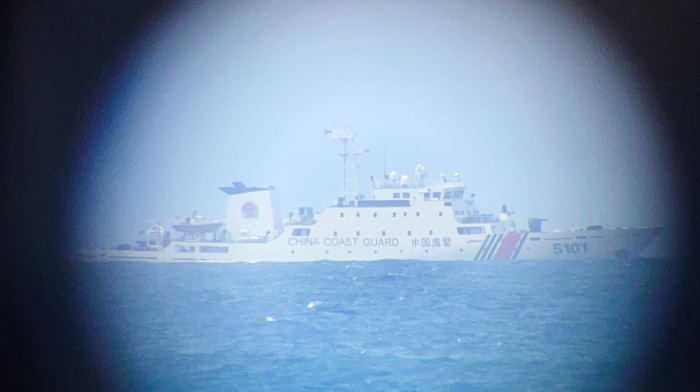
Italian Prime Minister Giorgia Meloni said on Thursday (9 April) that restoring freedom of navigation in the Strait of Hormuz is a vital interest f...
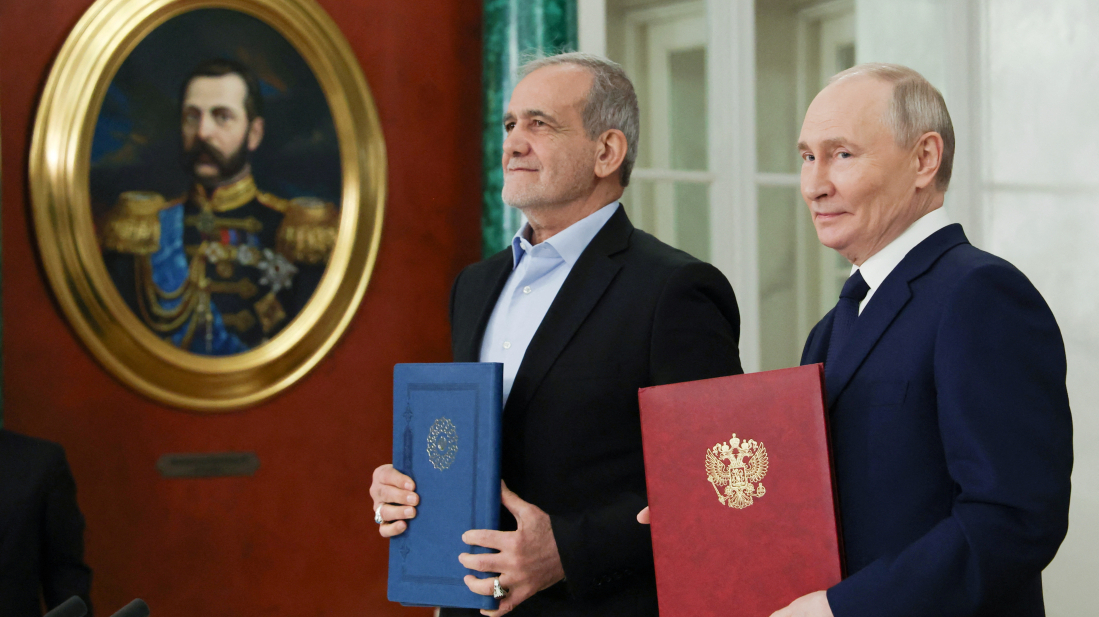
The Comprehensive Strategic Partnership Treaty between Iran and Russia came into effect on Thursday and will remain valid for 20 years, marking a success for Tehran just days after the return of pre-2015 UN nuclear sanctions.
Iran’s Foreign Ministry said the two countries will spare no effort to safeguard multilateralism and respect for international law, “by strengthening cooperation within the framework of multilateral organisations and arrangements such as BRICS and the Shanghai Cooperation Organisation.”
The Strategic Partnership Pact, concluded on 17 January 2025 in Moscow by President Masoud Pezeshkian and President Vladimir Putin, outlines enhanced cooperation between Tehran and Moscow across bilateral, regional, and international fields.
The treaty comprises 47 articles covering collaboration in technology, information and cybersecurity, peaceful nuclear energy, counterterrorism, regional cooperation, environmental protection, and combating money laundering and organised crime.
The announcement follows the reinstatement of UN nuclear sanctions on Iran last week, despite a joint Russia-China draft resolution at the Security Council proposing a six-month delay in their return.
Tehran has also signed a comprehensive 25-year cooperation agreement with Beijing. Foreign Minister Abbas Araghchi, in a message marking China’s National Day, described China as Iran’s “comprehensive strategic partner.” He added: “Regardless of any possible changes in the international situation, Iran will continue to deepen its relations with China.”
In response to the sanctions, Iran strongly condemned the Group of Seven (G7) for supporting the reinstatement. Foreign Ministry Spokesman Esmaeil Baghaei described the G7’s backing of the EU/US action as “hypocritical and a distortion of reality,” favouring a measure that “violated international law.”
G7 foreign ministers, meanwhile, welcomed the snapback mechanism invoked by France, Germany, and the UK (E3) to restore UN nuclear sanctions.
China and Russia vetoed a United Nations Security Council resolution on Tuesday aimed at coordinating defensive efforts to protect commercial shipping in the Strait of Hormuz, leaving no agreed international framework for securing the vital route.
Lebanon’s Hezbollah said it had stopped firing on northern Israel and Israeli forces on Wednesday as part of a two-week ceasefire in the Middle East brokered between the United States and Iran. However, a Hezbollah lawmaker warned that the pause could collapse if Tel Aviv does not adhere to it.
Pakistan’s Prime Minister Shehbaz Sharif said Iran and the United States, along with their allies, have agreed to an immediate two-week ceasefire covering all areas, but Israel says the deal excludes Lebanon. Tel Aviv says the U.S. is committed to achieving shared goals in upcoming negotiations.
Construction has begun on a major new solar power project in Xizang, as China continues to expand its renewable energy capacity and push towards a greener future.
U.S. Vice-President J.D. Vance began a visit to Budapest on Tuesday by praising Prime Minister Viktor Orbán, who faces a closely contested parliamentary election on Sunday.
At least four people died after a small dinghy carrying migrants to Britain sank in the English Channel, French authorities announced on Thursday.
A federal appeals court in Washington, D.C., on Wednesday declined to block the Pentagon’s national security blacklisting of Anthropic for now, handing a win to the Trump administration after a separate appeals court reached the opposite conclusion.
North Korea has tested a new cluster-bomb warhead mounted on a tactical ballistic missile, alongside advanced electromagnetic and infrastructure-targeting weapons, in a significant escalation of its military capabilities.
A barrage of Russian drones targeted and damaged a critical power substation in Ukraine's southern Odesa region on Wednesday, Ukrainian officials confirmed.
Start your day informed with the AnewZ Morning Brief. Here are the top stories for 9 April, covering the latest developments you need to know.
You can download the AnewZ application from Play Store and the App Store.
What is your opinion on this topic?
Leave the first comment