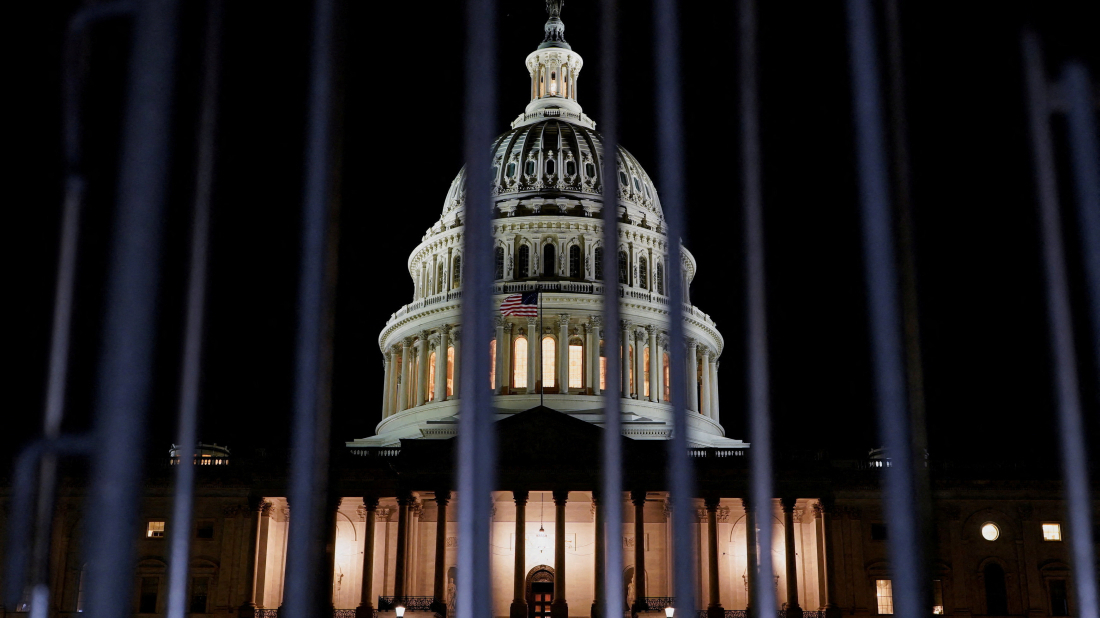
The U.S. government has shutdown on Wednesday after congressional Democrats and Republicans hit an impasse over how to continue to fund the federal government.
A shutdown could affect financial markets by limiting the operations of financial regulators and delaying the publication of key economic data.
How might markets react?
Historically, markets have tended to shrug off shutdowns. However, this time could be different.
A prolonged shutdown risks delaying or cancelling key economic data releases investors use to assess macroeconomic trends, such as the monthly employment and inflation reports. That could cause investors to rely more on alternative data or take on more defensive positions as they anticipate volatility in asset prices, Reuters reported on Monday.
Without key economic data, the Federal Reserve would be “flying blind,” making it more likely to stick with its own economic projections of two 25-basis-point rate cuts for the rest of 2025, analysts said.
With investors unable to assess the extent of a U.S. economic slowdown, the Treasury yield curve could steepen further as rate cuts get priced in with more conviction, leading to a wider gap between short- and long-dated Treasury yields, TD Securities said in a note.
A lengthy government shutdown could also affect some market participants' ability to conduct complex trades for which they may require regulatory guidance.
What happens to financial regulators?
A shutdown would reduce the U.S. Securities and Exchange Commission (SEC) to a skeletal staff of around 9%of current levels, according to its August 2025 plan for a lapse in government funding.
This would severely limit the agency’s ability to review corporate filings, investigate misconduct, and oversee markets.
Likewise, the Commodity Futures Trading Commission would furlough almost all of its employees and cease most market oversight activity, according to its contingency plan.
Previous government shutdowns have caused delays in the CFTC publishing reports on traders' positions in futures and options markets.
The banking regulators and consumer watchdog, which are not funded by congressional appropriations, will remain functional.
In 2019, a protracted government shutdown slowed down some of Trump's deregulatory efforts in part because of staff furloughs at the Office of the Federal Register, which must formally publish all steps in the rule-writing process, Reuters reported at the time.
Will IPOs and listed companies be affected?
Yes. A shutdown would likely freeze the IPO pipeline. Companies planning to go public would be unable to proceed without the SEC's approval, potentially dampening momentum in the equity capital markets, which have enjoyed an IPO boom in recent months.
According to the SEC's contingency plan, routine company filings to the SEC's "EDGAR" system would continue as long as funding for the contractors that run the system is available. It was not immediately clear how long that funding would last.





















What is your opinion on this topic?
Leave the first comment