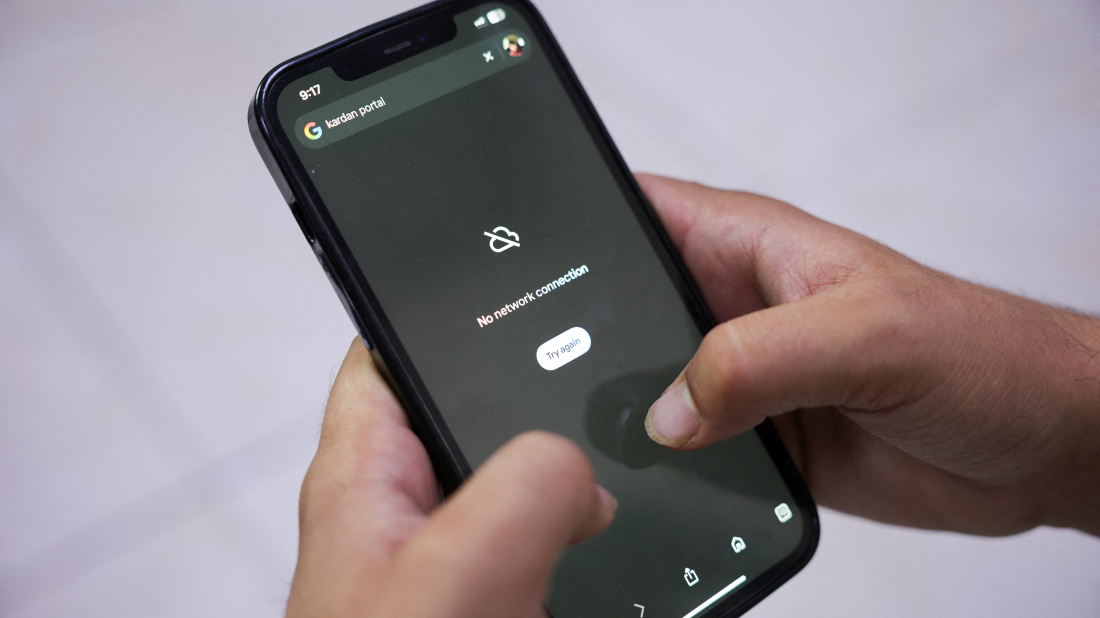
Internet and phone networks across Afghanistan have been shut down since Monday evening, leaving millions of people disconnected from each other and from the rest of the world
Reports reaching Anewz say that From 5pm local time on Monday, all mobile networks and internet services, including fibre optics and mobile data were cut across the country.
Local media outlet Tolo News reported that the ban was imposed on the order of Taliban supreme leader Hebatullah Akhundzada. According to the report, not only fibre optic internet was blocked, but mobile operators were instructed to shut down 3G and 4G services nationwide, leaving only 2G available.
However, since Monday evening, even 2G networks have gone silent.
Cybersecurity watchdog NetBlocks confirmed the shutdown. In a post on X, it wrote, “Afghanistan is now in the midst of a total internet blackout as Taliban authorities move to implement morality measures, with multiple networks disconnected through the morning in a stepwise manner. Telephone services are currently also impacted.”
For ordinary Afghans, the blackout has upended daily life. With communication lines severed, businesses cannot operate normally, and families abroad cannot contact loved ones in Afghanistan.
Local reports also suggest that flights from Kabul airport have been affected, along with banking and customs services.
Rights groups warn that the shutdown is isolating Afghanistan even further. Very few options remain for people to get online.
Starlink is one alternative, but access is limited, and the Taliban has banned the devices from being brought into the country.
Officials in Kabul have not commented publicly on the shutdown. Anewz tried to reach officials for a comment, but their phones were silent, and WhatsApp messages went undelivered.
Concerns are growing both inside and outside Afghanistan, with observers describing the blackout as one of the most restrictive the country has ever faced.
The Taliban administration offered no immediate explanation for the outage and could not be reached for comment. The UN called on authorities to fully restore connections.
In the past, the Taliban have voiced concern about online pornography, and authorities cut fibre-optic links to some provinces in recent weeks, with officials citing morality concerns.
"The cut in access has left Afghanistan almost completely cut off from the outside world, and risks inflicting significant harm on the Afghan people," the UN said in a statement.
Afghanistan is grappling with the aftermath of an earthquake that hit the east of the country, the return of millions of refugees expelled from neighbouring countries, and a drought in the north.
















What is your opinion on this topic?
Leave the first comment