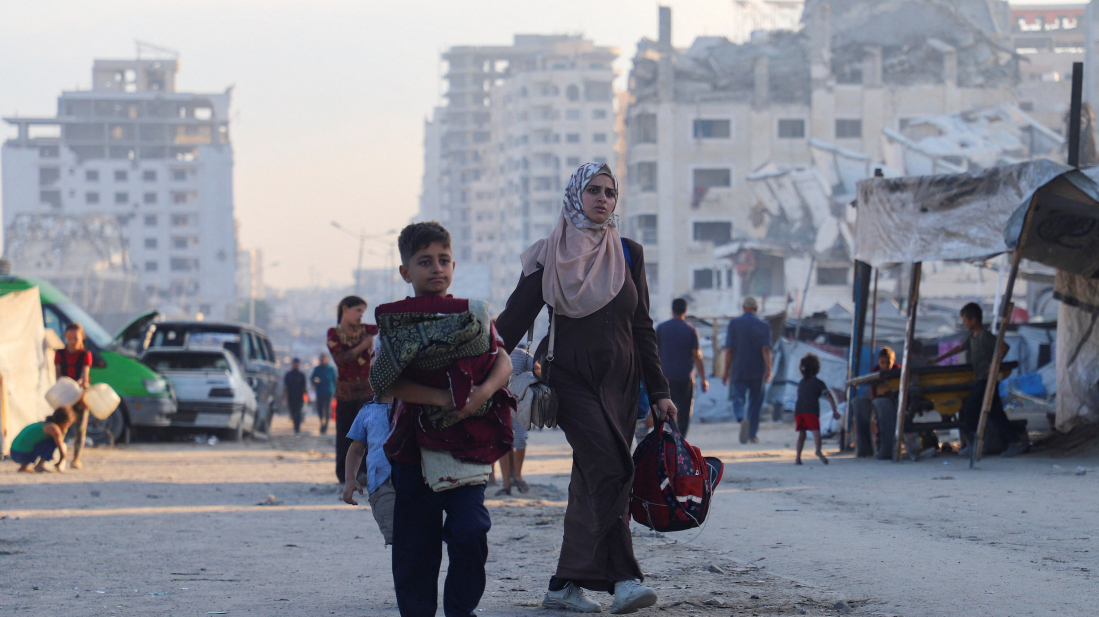
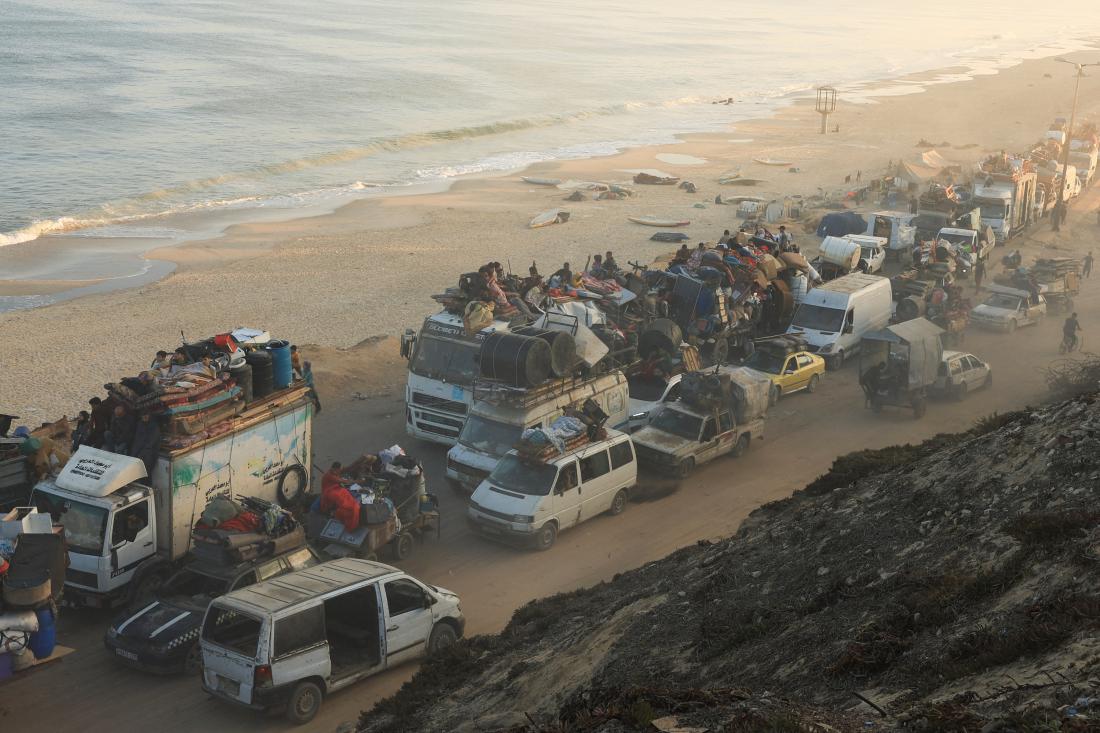
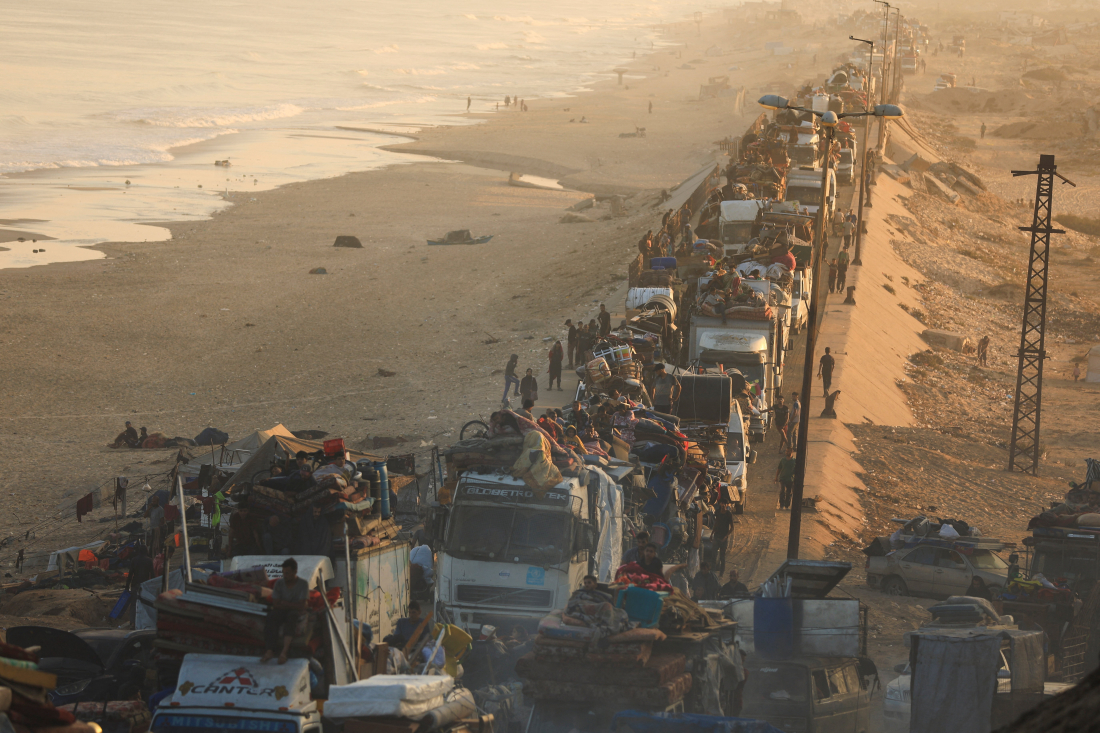
Displaced Palestinians fled Gaza City overnight on Thursday (18 September), moving southwards after Israeli forces ordered residents of the city to evacuate to the south.
Many people were driving cars, trucks and carts loaded with belongings, as some walked along the coastal road in central Gaza.
"We are heading to go sleep on the streets towards the beach, like this barefoot, we don't know where to go," said displaced Palestinian fleeing Gaza City, Yasser Saleh.
"We left at around four in the afternoon and here we are, we arrived at six in the morning. There is a lot of traffic. You can't access a bathroom, it is humiliating. We have children with us, they are ill. We have a young child, he is about to die (he is suffering), he is 45 days old. And the situation is difficult, it is devastating. The situation is difficult," he said.
The Israeli military said on Wednesday it was opening an additional route for 48 hours that Palestinians could use to leave Gaza City as it stepped up efforts to empty the city of civilians and confront thousands of Hamas combatants.
Israel says the offensive to take control of Gaza City is part of a plan to defeat Hamas for good and that it has warned civilians to head south to a designated humanitarian zone.
An official said Israel expected around 100,000 civilians to remain in the city, which would take months to capture, and said the operation could be suspended if a ceasefire was reached.
Concerns for aid
Meanwhile, the United Nations voiced grave concerns on Wednesday about food and other supplies running out in northern Gaza, where hundreds of thousands of people were already experiencing famine, after Israel closed the only crossing there last week.
Many people sheltering in the city are reluctant to follow Israel's orders to move south because of the dangers along the way, dire conditions, a lack of food in the southern area, and fear of permanent displacement.
"Even if we want to leave Gaza City, is there any guarantee we would be able to come back? Will the war ever end? That's why I prefer to die here, in Sabra, my neighbourhood," Ahmed, a schoolteacher, said by phone.
The Zikim Crossing was shut on 12 September and no aid groups have been able to import supplies since, it said.
"There are grave concerns over fuel and food stock depletion in a matter of days as there are now no direct aid entry points into northern Gaza and resupply from south to north is increasingly challenging due to mounting road congestion and insecurity," the U.N. humanitarian office (OCHA) said in a statement.
Israel's military did not immediately respond to a request for comment. Late on Tuesday it said that humanitarian aid would be allowed to enter northern Gaza, without giving details.
At least 63 people were killed by Israeli strikes and gunfire across the Gaza Strip on Wednesday, with most of the casualties in Gaza City, local health authorities said.













What is your opinion on this topic?
Leave the first comment