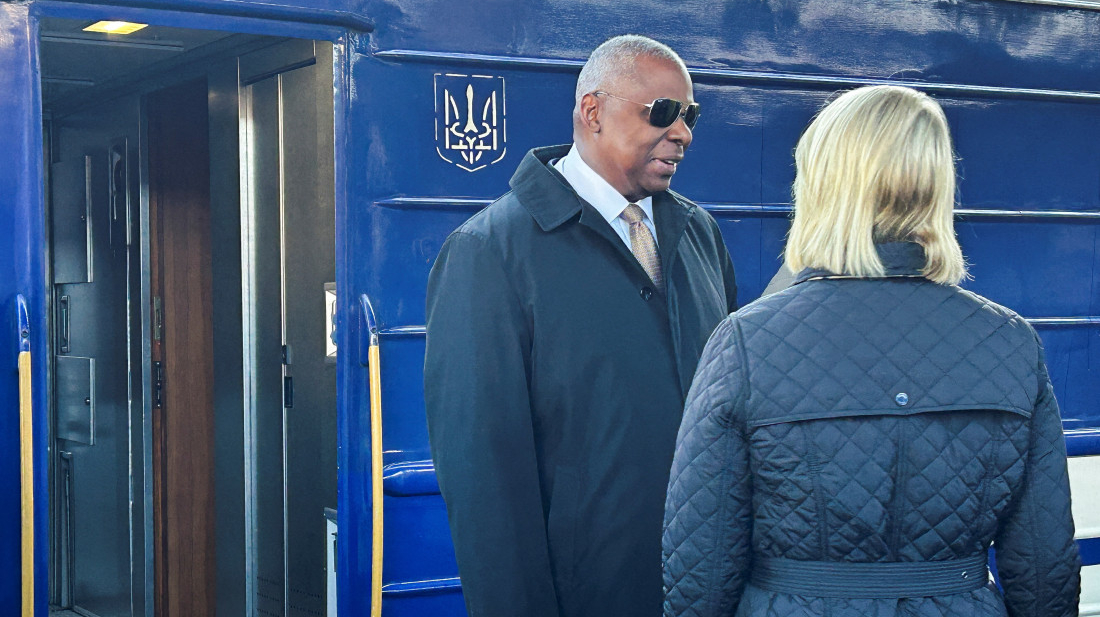
U.S. Defense Secretary Lloyd Austin visited Ukraine, reaffirming U.S. support just ahead of the presidential election. With Russian forces advancing in the east, Austin emphasized ongoing aid, while concerns grow over future support depending on the election outcome.
U.S. Defense Secretary Lloyd Austin made a visit to Ukraine on Monday, signaling Washington's ongoing commitment to Kyiv, just two weeks before a U.S. presidential election that may impact Western support.
This trip will focus on U.S. efforts to bolster Ukraine’s defenses as Russian forces press forward in the eastern region.
Despite this, no new U.S. commitments are expected to address some of Ukrainian President Volodymyr Zelenskiy's key requests, such as lifting restrictions on using U.S.-supplied weapons to strike targets beyond Ukraine’s borders. As the Biden administration nears its conclusion, Austin underscored the continuity of U.S. assistance, stating, "We are going to continue to support Ukraine in its efforts to defend its sovereign territory."
Austin expressed that the U.S. has adapted its support to Ukraine's evolving needs throughout the conflict, ensuring Ukraine remained effective on the battlefield. His visit comes before the upcoming U.S. presidential election on Nov. 5, where former President Donald Trump, the Republican candidate, is in a tight race against Democratic candidate Vice President Kamala Harris.
Trump hinted at being less willing to continue aid to Ukraine, potentially impacting Kyiv's main military and financial supporter. However, Austin downplayed these concerns, pointing to bipartisan support for Ukraine in Congress, saying, "I have seen bipartisan support for Ukraine over the last 2-1/2 years, and I fully expect that we will continue to see the bipartisan support from Congress."
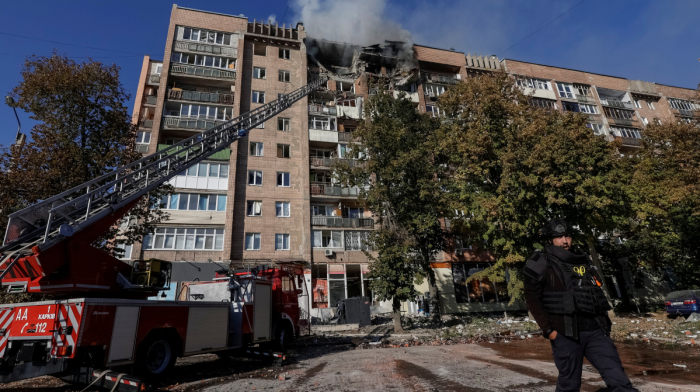
Russian President Vladimir Putin appears determined to commit more troops to the eastern Donbas region, aiming for full control. In recent weeks, Russian forces have encircled and slowly tightened their grip on towns in Donetsk, forcing Ukrainian troops to retreat. Austin acknowledged the difficulty of the situation, describing it as, "a very tough fight and it's a tough slog."













What is your opinion on this topic?
Leave the first comment