live Iran closes Strait of Hormuz again over U.S. blockade, state media says- Saturday 18 April
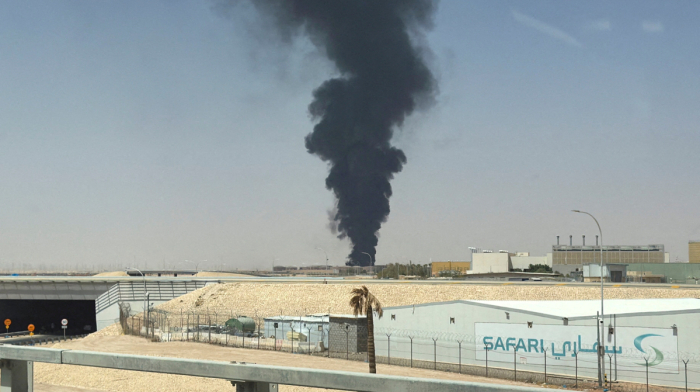
Iran's Islamic Revolutionary Guards Corps (IRGC) said in a Saturday statement that the Strait of Hormuz has...
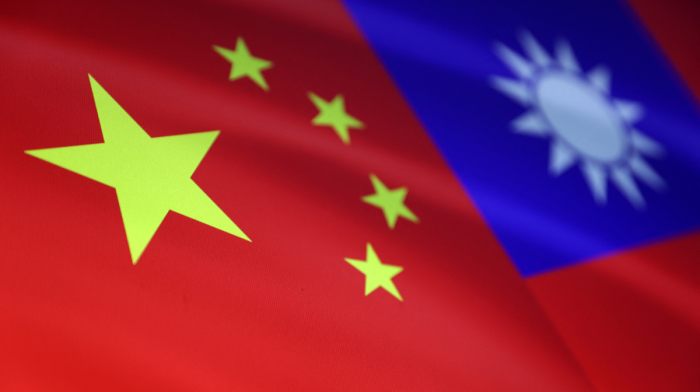
he U.S. Defence Department has asked Japan and Australia to spell out how they would respond if fighting broke out over Taiwan, the Financial Times reported on Saturday, citing people familiar with recent talks.
Elbridge Colby, the U.S. under-secretary of defence for policy, raised the issue in separate meetings with senior officials in Tokyo and Canberra, the newspaper said. American planners want explicit assurances on what military, logistical or intelligence support the two treaty allies could provide should a conflict with China erupt.
Neither the Japanese nor the Australian governments have publicly commented on the discussions. Under the 1960 U.S.-Japan Security Treaty and the 1951 ANZUS pact, Washington and its allies pledge mutual defence in the face of an “armed attack,” but the precise application of those accords to a Taiwan scenario has never been formally defined.
Tensions around the strait have risen sharply: China staged at least ten large-scale air-and-sea exercises around Taiwan in the past year, while U.S. Navy transits remain near-monthly. Taiwan accounts for more than 60 % of global semiconductor output, heightening international concern that any blockade or invasion could disrupt critical supply chains.
President Joe Biden has said U.S. forces would defend the self-ruled island in the event of a Chinese attack, though Washington’s official stance remains “strategic ambiguity.” Analysts say clearer allied commitments could strengthen deterrence but risk provoking Beijing, which regards Taiwan as a breakaway province.
The FT report comes ahead of a meeting of defence chiefs from the U.S., Japan and Australia in Honolulu next month, where regional contingency planning is expected to top the agenda.

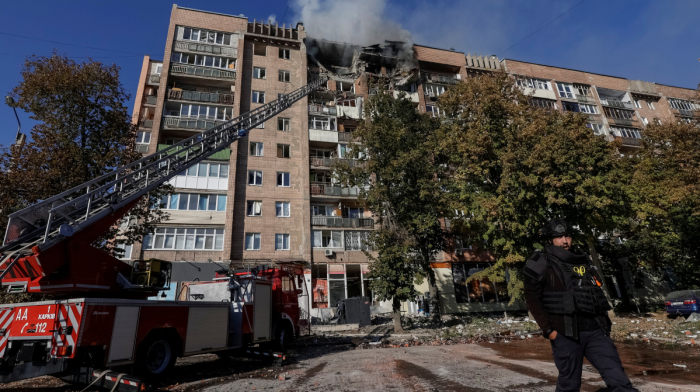
The past 24 hours of the Russia-Ukraine war have seen a drastic escalation in both aerial bombardment and frontline losses.
Iran reopened the Strait of Hormuz to commercial shipping on Friday (17 April) for the first time since the U.S. and Israel killed Iran's ex-Supreme Leader in air strikes, triggering the Middle East conflict, at the end of February. A U.S. blockade on Iranian ports, however, remains in force.
Russia published addresses of manufacturers allegedly producing drones or components for Ukraine on Wednesday (15 April), warning European countries against plans to step up UAV supplies to Kyiv.
Iran's Islamic Revolutionary Guards Corps (IRGC) said in a Saturday statement that the Strait of Hormuz has returned to its "previous state" under the control of its "armed forces," citing the ongoing U.S. blockade on Iranian ports.
Netflix shares fell sharply on Friday after the streaming group issued a weaker-than-expected outlook and said chairman and co-founder Reed Hastings will step down from the board.
The Trump administration extended a sanctions exemption on some Russian oil as prices continue to skyrocket in the wake of the U.S.- Israeli war against Iran on Friday (17 April).
Australia and Japan signed contracts on Saturday (18 April) launching their landmark A$10 billion ($7 billion) deal to supply Australia with warships, Tokyo's most consequential military sale since ending a military export ban in 2014.
Leaders from across Europe and beyond gathered in Paris on Friday for a summit aimed at managing the global impact of the Middle East conflict.
European leaders have set out plans for a coordinated defensive mission to restore freedom of navigation in the Strait of Hormuz, once security conditions allow, following talks involving more than 40 countries.
NeaNearly 900 Rohingya refugees were reported missing or dead in the Andaman Sea off Myanmar in 2025, making it the deadliest year on record, the United Nations Refugee Agency said on Friday.
You can download the AnewZ application from Play Store and the App Store.
What is your opinion on this topic?
Leave the first comment