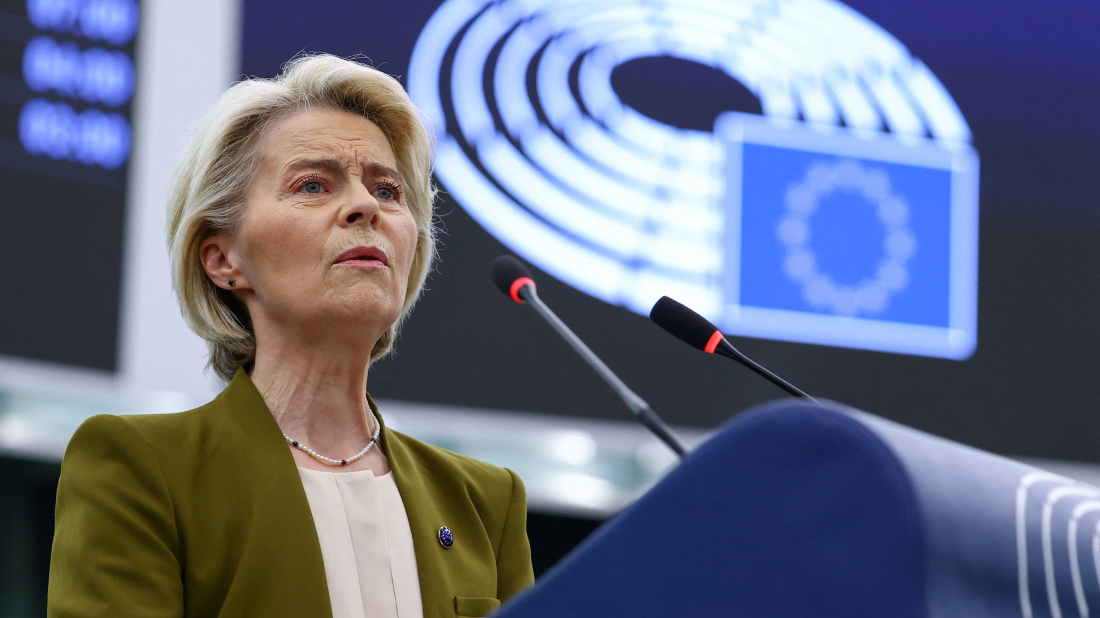
The European Union’s chief executive, Ursula von der Leyen, sets out her priorities for the year ahead on Wednesday after a bruising summer dominated by a much-criticised trade deal with U.S. President Donald Trump.
Von der Leyen, the president of the European Commission, will address the European Parliament in Strasbourg with her State of the Union speech – an annual opportunity to set the political agenda of the 27-nation bloc. It is scheduled for 9 a.m. CEST (0700 GMT).
The German former defence minister secured a second five-year term last year and pledged to focus on building up Europe’s defences in the face of growing fears about Russia and on boosting the continent’s economic competitiveness.
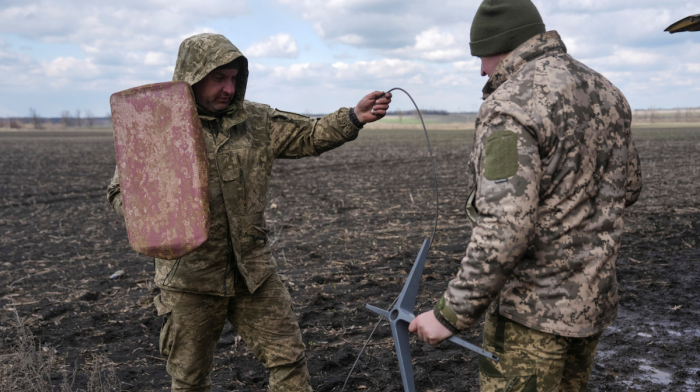
She has also championed strong support for Ukraine through continued financial aid and more EU sanctions on Moscow.
But she faced considerable criticism over the trade deal she agreed with Trump at his Turnberry Scottish golf resort in July.
Under that deal, the EU agreed to remove tariffs on U.S. industrial goods, ease access for U.S. farm products, and accept a 15% U.S. tariff on most of its exports, compared to mostly low single-digit or no duties before Trump began his second term.
Many European politicians and commentators blasted the deal as unbalanced in favour of the U.S., and France’s then-Prime Minister Francois Bayrou branded it an act of submission.
EU officials said it was the best deal they could get, avoided a trade war, and provided vital certainty for European businesses. It also reflected an unwillingness among leaders of EU countries to escalate tensions with Trump, particularly given Washington’s key role in Europe’s security.
Alberto Alemanno, a professor of EU law at the HEC Paris business school, said other EU leaders were "scapegoating" von der Leyen for their own shortcomings.
"True: von der Leyen embodies EU weaknesses, yet those aren’t of her making. Alone she can’t retaliate against the U.S., act decisively on Gaza, or broker Ukraine talks,” he said on X.
Bureaucracy Battle
Von der Leyen’s Commission has proposed a raft of policies this year to cut bureaucracy for struggling industries and help European firms compete with rivals in China and the U.S.
Some industries have welcomed those moves, but others say the Commission has done too little to implement a competitiveness blueprint drawn up by former European Central Bank President Mario Draghi to improve productivity and investment in Europe.
"I don't think we have yet seen the step change in this space that Draghi called for, and I'm not sure that is only the fault of the Commission," said Simone Tagliapietra, senior fellow at think tank Bruegel, adding that national governments also bear responsibility.
But her efforts to simplify EU bureaucracy have been criticised by left-wing EU lawmakers and campaigners as weakening environmental laws and corporate accountability.
A group of 470 non-governmental organisations issued a statement ahead of her speech denouncing her Commission’s "deregulation campaign."

















What is your opinion on this topic?
Leave the first comment