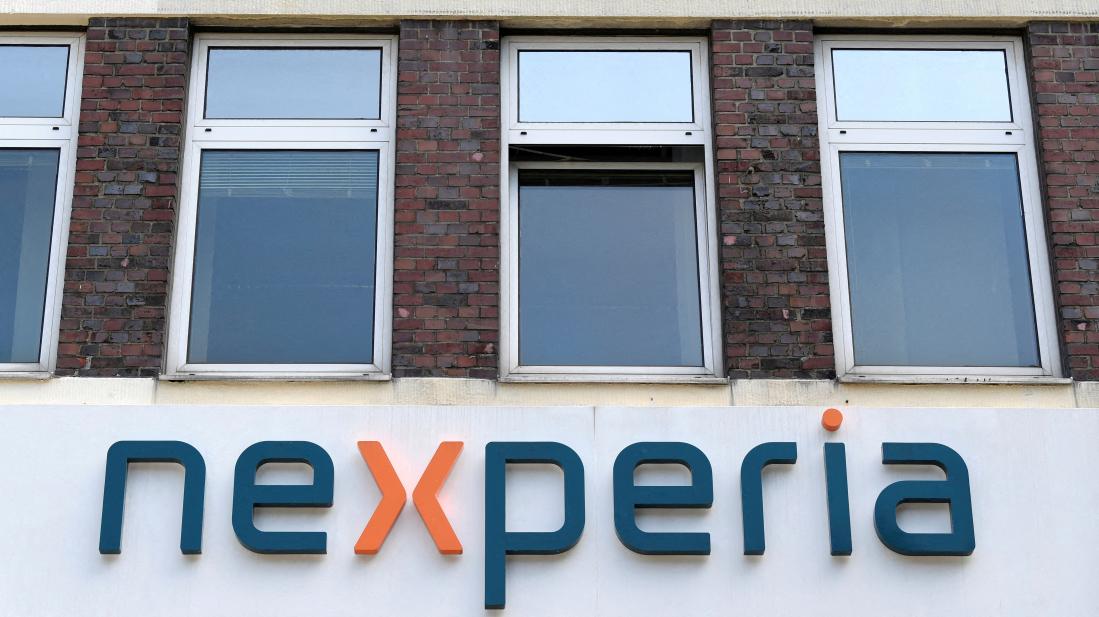
Nexperia’s China unit has told its employees to follow directives from local management and disregard instructions from the company’s Dutch head office, marking a rare public split between a multinational firm and its overseas subsidiary.
The announcement came in a letter to employees over the weekend, reflecting growing tensions surrounding the control of foreign companies operating in China amid geopolitical and regulatory pressures.
The letter, circulated internally and on Chinese social media, stated that Nexperia China operates as an “independent Chinese legal entity” and that staff should “continue to follow the instructions of Nexperia China.”
It further stressed that any orders or requests coming from outside the Chinese legal entity, specifically from the Dutch headquarters, do not have to be obeyed unless approved by local management.
The company assured employees that refusing such instructions would not be considered a breach of discipline.
The move highlights the complex position of foreign-invested enterprises in China as Beijing tightens local compliance requirements while Western governments scrutinize Chinese involvement in strategic industries.
Nexperia, owned by China’s Wingtech Technology, has been under heightened international attention since its 2021 acquisition of the UK’s Newport Wafer Fab, which was later forced to divest following a British government review citing national security concerns.
By asserting operational independence, Nexperia China appears to be pre-emptively shielding itself from external directives that could conflict with Chinese laws or state policy.
Industry experts say the decision reflects a growing trend among China-based subsidiaries of multinational firms to localise control amid rising regulatory bifurcation between China and the West.
The internal communication also highlights the deepening challenges global chipmakers face as the semiconductor sector becomes increasingly entangled in geopolitical rivalries.
For employees in China, the message was clear, that local rules take precedence over international command chains.
For Nexperia’s global operations, however, the decision may complicate corporate governance and further strain relations between its European management and Chinese ownership.
The Dutch government seized control over Nexperia, a subsidiary of China's Wingtech 600745.SS and an important supplier of basic chips used in cars, on September 30, prompting the Chinese government to ban exports of the company's finished products.
The Chinese "have the impression that we are teaming up with the Americans," Vincent Karremans, Netherland's Economy Minister said on the intervention at Nexperia.
But it was in fact aimed at preventing the company's former Chinese CEO from transferring operations and intellectual property out of Europe," the minister Minister said in an interview on the Dutch television show Buitenhof.
Nexperia's chips are not the most sophisticated, but they are manufactured in large volumes, mostly in Hamburg, Germany, and then sent to China for packaging and further distribution throughout the global car industry.
Carmakers fear shortages will emerge in their supply chains before any alternatives are found if the standoff continues.



















What is your opinion on this topic?
Leave the first comment